

Television advertising remains a powerful way for businesses to reach large audiences, build brand recognition, and communicate their value through sight, sound, and storytelling.
Although digital advertising has transformed the marketing landscape, TV advertising continues to offer businesses an opportunity to create memorable brand experiences at scale.
However, the best TV advertising strategy depends heavily on the industry. A restaurant does not advertise on television in the same way as a real estate company. A law firm needs different messaging from an automotive dealership, while healthcare and insurance brands have their own audience expectations and communication challenges.
This is why TV advertising by industry is an important topic for businesses considering television as part of their marketing strategy.
In this guide, we will explore how different industries can approach TV advertising, what makes an effective television commercial, how to choose the right message, how to measure performance, and how businesses can connect TV advertising with their broader marketing strategy.
What Is TV Advertising?

TV advertising is a form of paid media in which businesses promote products, services, brands, offers, or ideas through television commercials.
A TV advertisement can use:
- Video
- Voiceover
- Music
- Animation
- Product demonstrations
- Customer testimonials
- Storytelling
- On-screen text
- Brand visuals
- Calls to action
The objective can vary from one business to another.
Businesses may use TV advertising to:
- Build brand awareness
- Generate leads
- Promote products or services
- Increase store visits
- Launch a new service
- Promote a special offer
- Establish credibility
- Reach a specific geographic market
- Support a larger marketing campaign
The key is to match the advertising strategy with the business objective.
Why TV Advertising Still Matters
Television offers several advantages that can make it valuable for businesses.
Broad Audience Reach
TV can expose a brand to a large number of viewers through national, regional, local, or specialized programming.
Strong Visual Communication
Unlike text-only advertising, TV combines visuals, audio, movement, and storytelling.
This gives advertisers multiple ways to communicate a message.
Brand Recognition
Repeated exposure to a consistent TV commercial can help consumers become familiar with a brand.
Emotional Storytelling
Television is particularly effective for storytelling because advertisers can combine characters, music, dialogue, visuals, and emotion.
Local Advertising Opportunities
Local businesses can use television to reach audiences within specific geographic markets.
For example, a restaurant, law firm, dealership, or healthcare provider may focus its campaign on a particular city or service area.
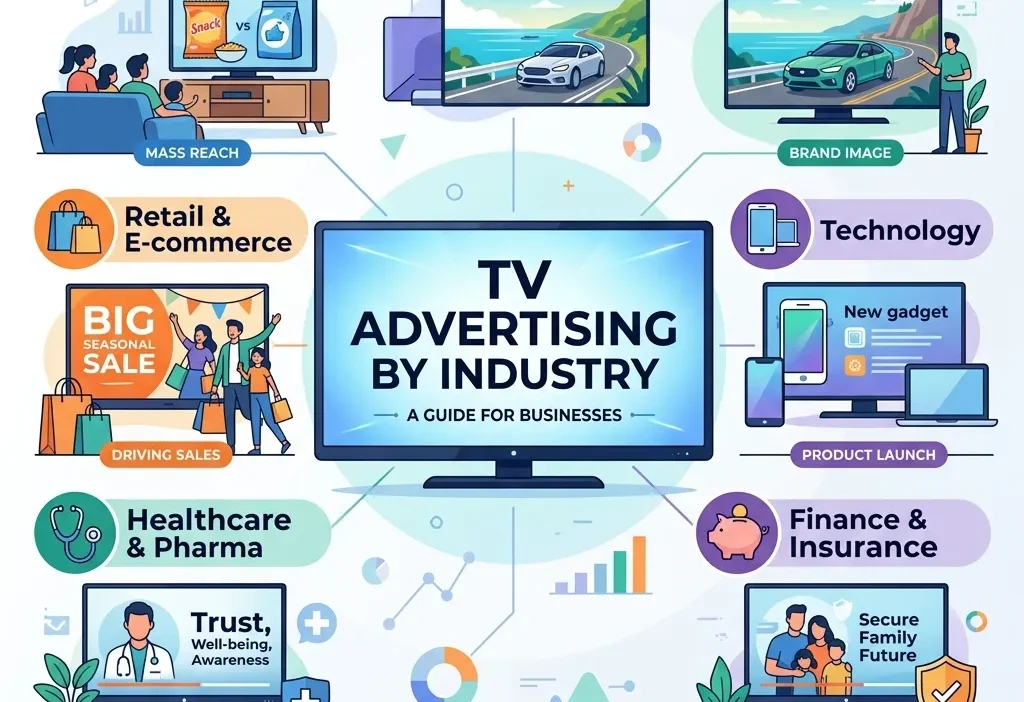
TV Advertising by Industry
Different industries have different customer journeys, competitive environments, and communication requirements.
The following industries can use television advertising in different ways depending on their objectives and audiences.
TV Advertising for Restaurants
Restaurants can use TV advertising to create appetite, showcase their food, promote special offers, and build local brand awareness.
Food is highly visual, making television a natural advertising medium for restaurants.
A commercial can show:
- Signature dishes
- Food preparation
- Restaurant atmosphere
- Happy customers
- Chef demonstrations
- Special promotions
- New menu items
- Dining experiences
Restaurant TV Advertising Ideas
New Menu Launches
Restaurants can introduce new dishes or seasonal menus through attractive food photography and video.
Limited-Time Offers
Restaurants can promote special deals that encourage customers to visit within a specific period.
Brand Storytelling
A commercial can show the restaurant’s personality, history, ingredients, or cooking philosophy.
Local Awareness
Restaurants can highlight their location and make it easy for viewers to remember the brand.
Special Events
Restaurants can promote holiday menus, live music, family events, weekend specials, and seasonal promotions.
For a dedicated strategy, see TV Advertising for Restaurants: Complete Guide.
Restaurant TV Advertising CTA Examples
A restaurant commercial could end with:
- Visit Us Today
- Order Now
- Reserve Your Table
- Find a Location Near You
The CTA should be simple and easy to remember.
TV Advertising for Real Estate
Real estate companies can use television advertising to build trust, promote properties, attract buyers, and establish a strong local presence.
Real estate is highly visual, making TV particularly useful for showcasing properties.
A commercial can display:
- Property exteriors
- Interior spaces
- Neighborhood locations
- Amenities
- Lifestyle scenes
- Agent introductions
- New developments
- Open houses
Real Estate TV Advertising Ideas
Property Showcase
Use high-quality video to highlight the strongest features of a property.
New Development Promotion
Developers can advertise new residential or commercial projects to potential buyers and investors.
Local Market Branding
Real estate firms can use TV to establish themselves as recognizable experts within a specific market.
Agent Branding
A commercial can introduce an agent and communicate their experience, local knowledge, and services.
Open House Promotion
Television advertising can help promote major property launches or open-house events.
For more detailed information, see TV Advertising for Real Estate: Complete Guide.
Real Estate TV Advertising Tips
Real estate advertisements should make the location and value proposition clear.
Instead of trying to communicate every property detail, focus on the features that are most important to the target audience.
For example:
“Modern 3-Bedroom Homes Near Downtown.”
This is more memorable than a commercial filled with too many details.
TV Advertising for Law Firms
Law firms can use TV advertising to increase awareness, establish credibility, and generate potential client inquiries.
Legal advertising requires a careful balance between persuasive messaging and responsible communication.
A law firm commercial may focus on:
- Legal expertise
- Practice areas
- Client service
- Attorney introductions
- Local presence
- Consultation opportunities
Law Firm TV Advertising Ideas
Practice Area Advertising
A firm can focus on specific areas such as:
- Personal injury
- Family law
- Criminal defense
- Employment law
- Business law
- Estate planning
Attorney Branding
Introducing attorneys through television can make a firm feel more familiar and approachable.
Educational Advertising
Instead of relying entirely on promotional messaging, law firms can explain common legal problems and encourage viewers to seek appropriate professional guidance.
Local Authority
A law firm can use television to build recognition within its service area.
For a dedicated strategy, see TV Advertising for Law Firms: Complete Guide.
Law Firm TV Ad Messaging
A law firm should avoid making unrealistic promises.
Instead, the commercial can focus on:
- Experience
- Service
- Practice area
- Location
- Consultation
Clear and responsible communication can help protect the firm’s reputation while building trust.
TV Advertising for Automotive Businesses
Automotive businesses have traditionally used television advertising to promote vehicles, dealerships, financing offers, service departments, and special events.
Vehicles are visually compelling products, making television a useful medium for showing:
- Exterior design
- Interior features
- Driving experiences
- Technology
- Performance
- Safety features
- Dealership environments
Automotive TV Advertising Ideas
New Vehicle Launches
A commercial can introduce a new model and highlight its major features.
Promotional Events
Dealerships can promote:
- Weekend sales
- New model events
- Trade-in campaigns
- Service promotions
- Seasonal offers
Brand Advertising
Automotive businesses can use TV to build long-term brand recognition rather than focusing exclusively on immediate sales.
Service Department Promotion
Dealerships can promote maintenance, repair, tire, and seasonal vehicle services.
For a complete industry-specific strategy, see TV Advertising for Automotive Businesses: Complete Guide.
Automotive Advertising and Offers
Automotive advertising often includes pricing, financing, discounts, or other promotional claims.
Businesses should make sure that promotional claims are accurate and properly supported.
The FTC’s Advertising and Marketing guidance provides information about truthful and non-deceptive advertising practices.
TV Advertising for Healthcare
Healthcare organizations can use television advertising to build awareness, educate audiences, promote services, and establish trust.
Healthcare advertising is different from many other industries because consumers may make decisions involving important health considerations.
Healthcare organizations may advertise:
- Hospitals
- Clinics
- Dental services
- Medical specialists
- Preventive services
- Healthcare facilities
- Diagnostic services
- Wellness programs
Healthcare TV Advertising Ideas
Patient Education
A commercial can explain a health-related topic in clear and accessible language.
Service Awareness
Healthcare providers can introduce services and explain how patients can access them.
Facility Branding
Hospitals and clinics can showcase:
- Facilities
- Technology
- Staff
- Patient experience
- Community involvement
Specialist Branding
A healthcare organization can introduce physicians or specialists and explain their areas of practice.
Community Outreach
TV can also support public awareness campaigns and community initiatives.
For a detailed industry strategy, see TV Advertising for Healthcare: Complete Guide.
Healthcare TV Advertising Requires Care
Healthcare claims should be handled particularly carefully.
Advertisers should avoid unsupported promises or misleading statements about health outcomes.
Businesses should review applicable advertising requirements before launching campaigns.
TV Advertising for Insurance
Insurance companies can use television to explain complex products through simple stories and relatable situations.
Insurance advertising commonly focuses on:
- Protection
- Financial security
- Risk management
- Family protection
- Property coverage
- Vehicle coverage
- Business coverage
Insurance TV Advertising Ideas
Storytelling
An advertisement can show a fictional situation where insurance protection becomes important.
Brand Awareness
Insurance companies can use memorable characters, slogans, or storytelling formats to build recognition.
Product Education
Insurance products can be complicated, so TV can simplify concepts through examples.
Customer Trust
Insurance advertising can emphasize:
- Reliability
- Service
- Claims support
- Coverage options
- Long-term relationships
Seasonal Campaigns
Insurance businesses can create campaigns around travel seasons, severe weather periods, vehicle purchasing seasons, and business planning periods.
For a more detailed strategy, see TV Advertising for Insurance Companies: Complete Guide.
How to Create an Effective TV Advertisement
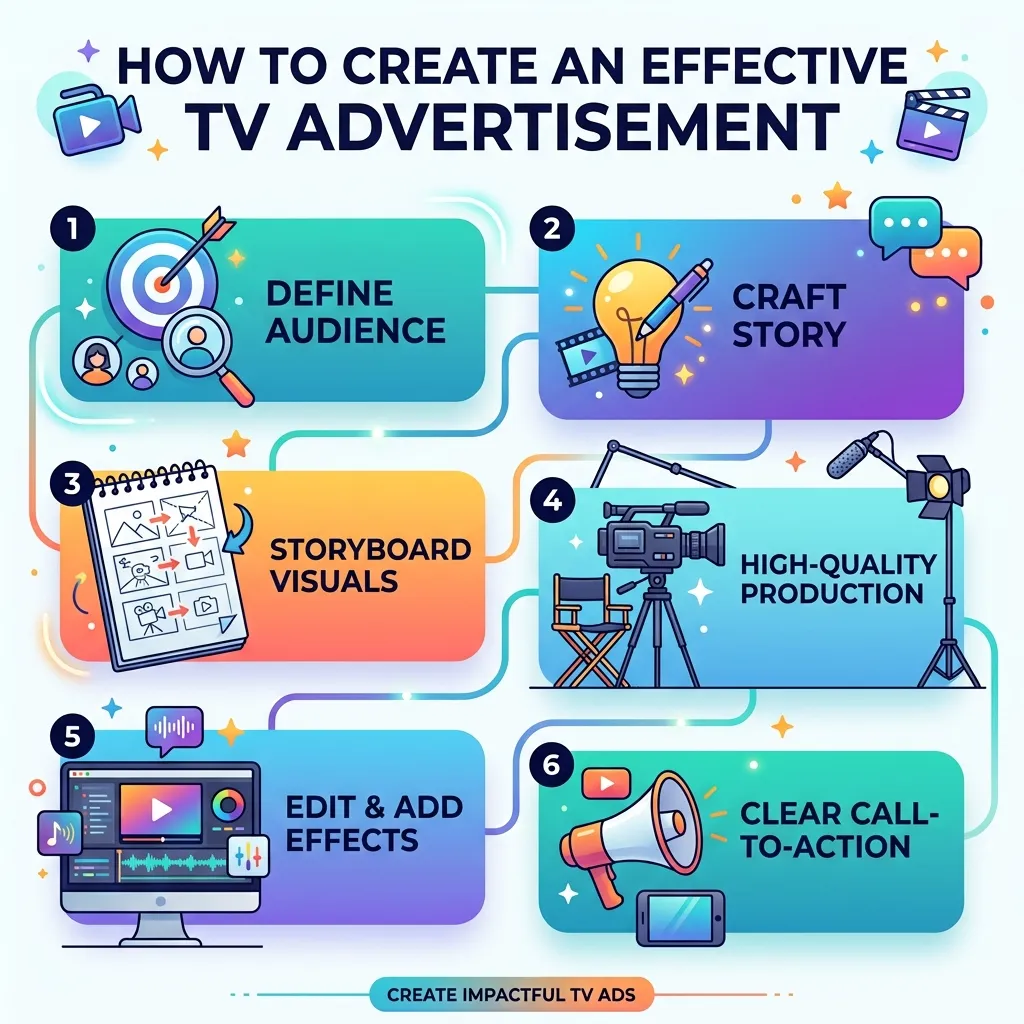
Regardless of industry, successful TV advertisements usually share several characteristics.
Start With One Clear Objective
Before producing the commercial, determine what you want the campaign to achieve.
Possible objectives include:
- Brand awareness
- Lead generation
- Sales
- Store visits
- Website traffic
- Phone calls
- Appointments
Trying to achieve everything in one commercial can make the message confusing.
Understand Your Target Audience
A TV commercial should be created for a specific audience.
Consider:
- Age
- Location
- Interests
- Income
- Needs
- Buying behavior
- Problems
- Motivations
A commercial for first-time homebuyers should not necessarily use the same messaging as one targeting luxury property investors.
Create a Strong Opening
The first few seconds are important.
A strong opening can use:
- A question
- A surprising visual
- A customer problem
- A compelling statement
- A product demonstration
- An emotional moment
The goal is to capture attention quickly.
Communicate the Value Proposition
After gaining attention, explain why the audience should care.
Answer:
- What problem do you solve?
- What benefit do you provide?
- Why should customers choose you?
Keep the Message Simple
Television viewers cannot pause a commercial and reread every sentence.
Use short, clear messages.
Instead of communicating ten benefits, focus on one or two important reasons to consider the brand.
Use Strong Visuals
Television is a visual medium.
Use visuals that support the message.
For example:
- Restaurant: Show the food.
- Real estate: Show the property.
- Automotive: Show the vehicle.
- Healthcare: Show the facility or service environment.
- Insurance: Show relatable real-life situations.
- Law firm: Show the attorney and the people the firm serves.
End With a Clear CTA
The viewer should know what to do next.
Possible CTAs include:
- Visit our website
- Call today
- Book a consultation
- Visit our location
- Schedule an appointment
- Get a quote
- Learn more
- Order now
TV Advertising Formats
Businesses can choose from different television advertising formats depending on their goals.
Traditional Commercials
Short commercials are one of the most recognizable forms of TV advertising.
Sponsorships
A brand may sponsor a program, segment, or event.
Product Placement
Products can appear within television programming or entertainment content.
Local TV Advertising
Local businesses can target audiences within specific geographic markets.
Connected TV Advertising
Connected TV allows advertisers to reach audiences through internet-connected television environments.
This can create opportunities for more targeted advertising compared with traditional broadcast approaches.
TV Advertising vs Digital Advertising
TV and digital advertising do not necessarily need to compete.
Businesses can use them together.
For example:
TV Advertisement → Brand Awareness → Online Search → Website Visit → Retargeting → Conversion
A viewer may see a commercial and later search for the brand online.
Digital advertising can then support the customer journey.
Combining TV With Search Marketing
Businesses can encourage viewers to search for a memorable brand name or visit a simple website.
For example:
“Search [Brand Name] to learn more.”
This can connect television exposure with online activity.
Combining TV With Social Media
TV campaigns can also encourage social engagement.
Businesses can promote:
- Hashtags
- Social contests
- Product launches
- Customer stories
- Behind-the-scenes content
This can extend the life of a TV campaign beyond the commercial itself.
How to Measure TV Advertising Performance
Measuring television advertising can be more complex than measuring some digital campaigns.
Businesses can monitor several indicators.
Website Traffic
Look for increases in traffic during and after the campaign.
Branded Search
An increase in searches for the company or product name may indicate increased awareness.
Phone Calls
For local businesses such as law firms, healthcare providers, and real estate companies, call volume can be an important metric.
Lead Generation
Track inquiries, consultation requests, quote requests, and appointments.
Sales
Ultimately, businesses should evaluate whether the campaign contributes to revenue.
QR Codes and Custom URLs
TV commercials can use:
- QR codes
- Dedicated landing pages
- Short URLs
- Campaign-specific offers
These can make response tracking easier.
How to Choose the Right TV Advertising Strategy
The right strategy depends on several factors.
Industry
Different industries require different messaging.
Audience
Know who you want to reach.
Geography
Decide whether you need:
- Local coverage
- Regional coverage
- National coverage
Budget
Production and media costs should both be considered.
Campaign Objective
Define whether the priority is:
- Awareness
- Leads
- Sales
- Appointments
- Store visits
Creative Approach
Choose a style that fits the brand.
For example:
- Restaurant: Visual food storytelling
- Real estate: Property showcase
- Law firm: Trust and expertise
- Automotive: Product experience
- Healthcare: Education and credibility
- Insurance: Protection and relatable storytelling
TV Advertising Budget Considerations
A TV advertising budget generally needs to account for more than media placement.
Potential costs include:
- Creative development
- Scriptwriting
- Production
- Actors or presenters
- Voiceover
- Video editing
- Music
- Studio or location
- Media placement
- Campaign management
Businesses should define a realistic budget before beginning production.
A high-production-value commercial is not automatically a successful commercial.
The message, audience, placement, offer, and overall strategy matter just as much.
Common TV Advertising Mistakes
Too Much Information
Trying to explain everything can overwhelm viewers.
Weak CTA
If viewers don’t know what to do next, the campaign may lose potential responses.
Poor Targeting
A great commercial shown to the wrong audience may produce limited results.
Inconsistent Branding
The TV advertisement should match the brand’s website, social media, and other marketing channels.
Unsupported Claims
Businesses should avoid claims they cannot substantiate.
Ignoring the Customer Journey
TV should ideally connect with other marketing channels rather than operating completely independently.
TV Advertising Compliance and Responsible Marketing
Advertising should not only be persuasive; it should also be responsible.
Businesses should review the claims made in their commercials before broadcasting them.
The FTC Advertising FAQs for Small Business provides additional information about truth-in-advertising principles and advertising claims.
Industry-specific regulations may also apply depending on the product, service, location, and type of claim.
For that reason, businesses should review applicable requirements before launching a campaign.
How TV Advertising Fits Into a Full Marketing Strategy
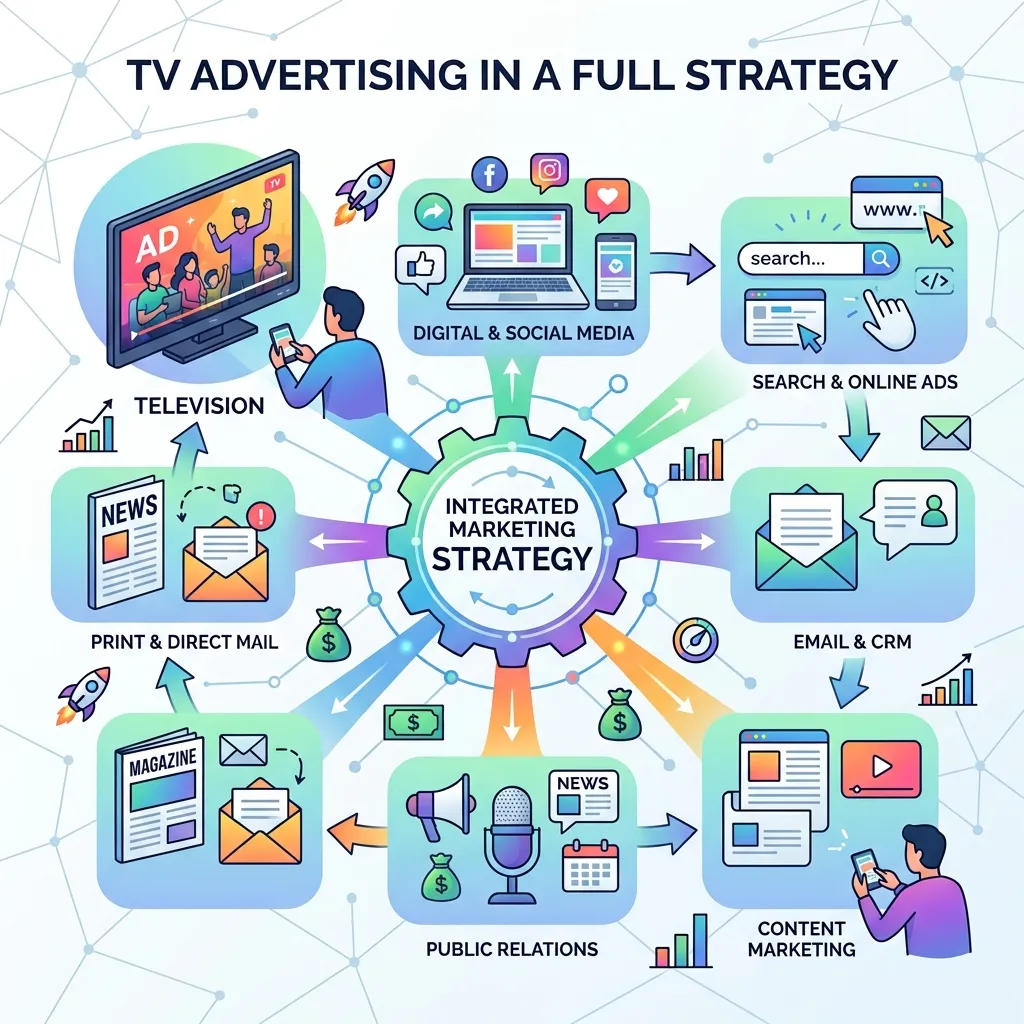
TV advertising should rarely exist in isolation.
A stronger strategy connects television with other marketing channels.
Stage 1: TV
The viewer discovers the brand.
Stage 2: Search
The viewer searches for the company or product.
Stage 3: Website
The viewer visits the website.
Stage 4: Social Media
The customer interacts with the brand.
Stage 5: Retargeting
Digital campaigns can reconnect with potential customers where appropriate.
Stage 6: Conversion
The customer makes a purchase, books an appointment, submits a lead, or visits a location.
This integrated approach can help businesses get more value from their television investment.
Final Thoughts
TV advertising by industry requires more than simply creating a commercial and purchasing airtime.
Every industry has different audiences, customer journeys, expectations, and communication challenges.
Restaurants can use television to showcase food and create appetite. Real estate companies can showcase properties and build local awareness. Law firms can establish expertise and trust. Automotive businesses can demonstrate vehicles and promote offers. Healthcare organizations can educate audiences and communicate services. Insurance companies can simplify complex products through relatable stories.
The strongest campaigns begin with a clear objective, identify the right audience, communicate one compelling message, use memorable visuals, and finish with a clear call to action.
TV advertising can also become more powerful when integrated with digital marketing.
A viewer may see a commercial, search for the brand, visit the website, interact on social media, and eventually become a customer.
That means the real opportunity is not simply TV advertising. It is creating a connected marketing journey where television works together with search, websites, social media, and other channels to move customers from awareness toward action.
Frequently Asked Questions About TV Advertising by Industry
What industries benefit most from TV advertising?
Many industries can benefit from TV advertising, including restaurants, real estate, law firms, automotive businesses, healthcare organizations, and insurance companies. Effectiveness depends on the target audience, campaign objective, creative quality, media placement, and budget.
Is TV advertising still effective for small businesses?
Yes. Small businesses can use local or regional television advertising to build awareness within a specific geographic market.
How long should a TV commercial be?
Commercial length depends on the campaign, media placement, budget, audience, and objective. Short commercials can communicate a focused message quickly, while longer formats provide more room for storytelling.
How much does TV advertising cost?
TV advertising costs vary based on production requirements, market, audience size, programming, timing, frequency, and campaign duration.
How can I measure the ROI of TV advertising?
Businesses can measure TV campaign performance through website traffic, branded searches, phone calls, leads, sales, appointments, QR-code scans, custom URLs, and campaign-specific offers.
Can TV advertising work with digital marketing?
Yes. TV and digital advertising can complement each other. TV can create awareness while search, social media, email, and website campaigns can support customers later in the buying journey.
What makes a successful TV advertisement?
A successful TV advertisement generally has a clear objective, well-defined audience, strong opening, simple message, memorable visuals, consistent branding, credible claims, and a clear call to action.
Do TV advertisements need to follow advertising regulations?
Businesses need to follow applicable advertising laws and regulations. Requirements vary depending on the country, industry, product, service, and advertising claims.
Should every industry use the same TV advertising strategy?
No. Different industries have different customer needs and buying journeys. Industry-specific messaging is generally more appropriate.
What should businesses do before launching a TV advertising campaign?
Start by defining the campaign objective, target audience, geographic market, budget, core message, creative concept, CTA, media strategy, and measurement plan. Businesses should also review applicable advertising requirements before the campaign goes live.


[…] For a broader understanding of television advertising, see this complete guide to TV advertising. […]
[…] For a broader understanding of industry-specific television advertising, see this complete guide to TV advertising by industry. […]
[…] be using sustainability purely as a temporary marketing angle, a principle worth applying to every industry-specific TV advertising approach, not just campaigns explicitly built around environmental […]