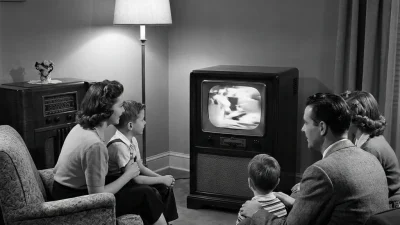
Automotive TV advertising remains a powerful way for car dealerships, manufacturers, auto service businesses, and automotive brands to reach large audiences and build trust. While digital channels provide precise targeting, television advertising can create broad awareness, emotional connections, and memorable brand experiences that influence vehicle-buying decisions.
An effective automotive TV ad does more than show a vehicle driving down a highway. It combines compelling visuals, a clear message, strong branding, and a persuasive reason for viewers to take action.
This automotive TV ad guide explains how automotive businesses can plan, create, target, and measure television advertising campaigns. You will learn how to develop effective car commercials, choose the right audience, structure your message, control costs, and connect TV advertising with digital marketing.
What Is Automotive TV Advertising?
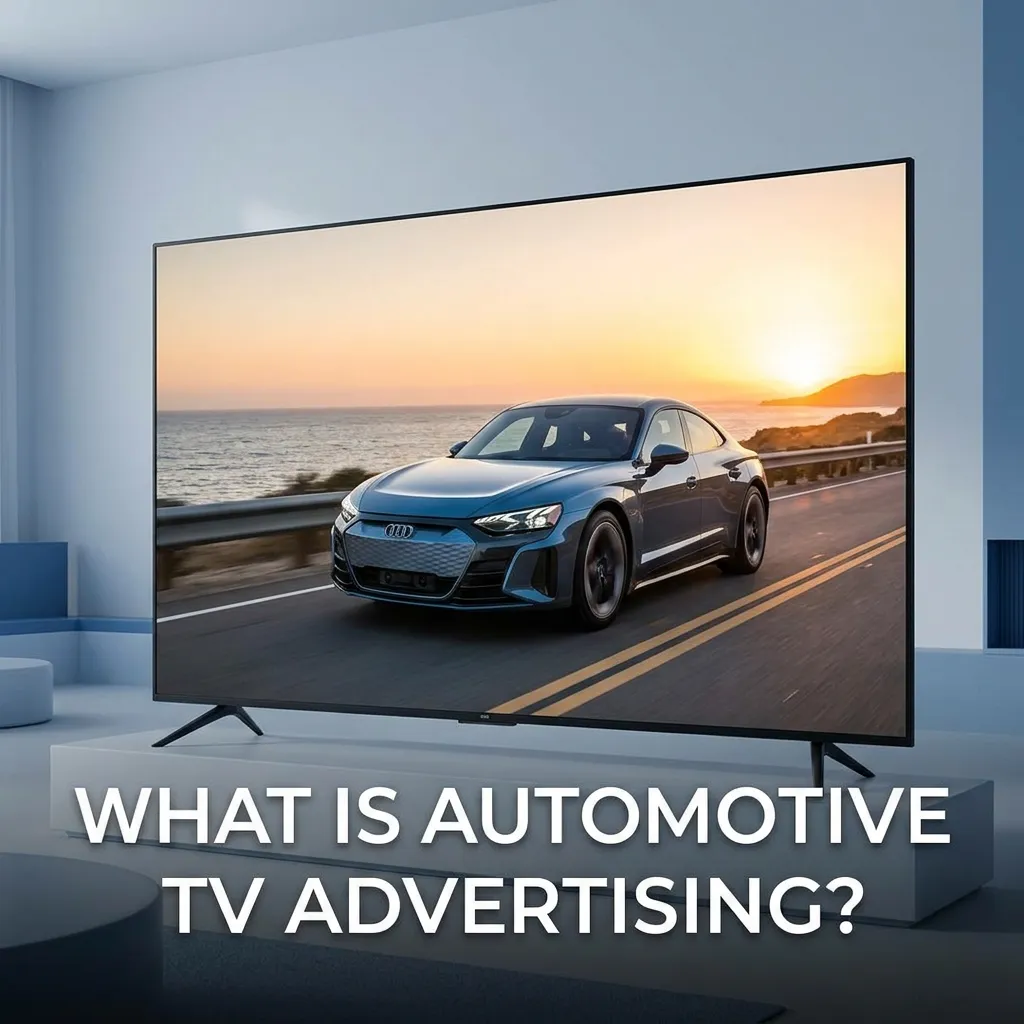
Automotive TV advertising refers to television commercials created specifically to promote vehicles, dealerships, automotive services, financing offers, accessories, or automotive brands.
These advertisements can appear during local programming, sports broadcasts, news, entertainment programs, cable channels, connected TV environments, and other television placements.
The primary goals of automotive TV ads may include:
- Increasing dealership awareness
- Promoting new vehicle launches
- Generating showroom visits
- Advertising special offers
- Building automotive brand recognition
- Promoting financing or leasing options
- Increasing test-drive requests
- Supporting seasonal sales campaigns
- Promoting automotive services and maintenance
Because vehicle purchases often involve significant financial and emotional considerations, television provides an opportunity to communicate both practical benefits and emotional value.
For a broader understanding of industry-specific television advertising, see this complete guide to TV advertising by industry.
Why Automotive TV Ads Still Matter
Automotive brands compete in a crowded marketplace. Consumers can compare models, prices, features, reviews, and dealerships online within minutes. However, television can still play an important role in creating awareness before consumers begin actively researching vehicles.
Builds Strong Brand Awareness
Television allows automotive brands to place their name, vehicles, visual identity, and value proposition in front of a large audience.
Repeated exposure can make a dealership or vehicle brand more familiar, particularly in local markets.
Creates Emotional Connections
Buying a vehicle is not always a purely rational decision. People may associate vehicles with freedom, family, independence, achievement, adventure, safety, or lifestyle.
Automotive TV commercials can use storytelling, music, scenery, and human experiences to communicate these emotions.
For additional ideas on using emotion in advertising, this guide to emotional advertising strategies can provide useful inspiration.
Demonstrates Vehicle Features
A television commercial gives advertisers the ability to show a vehicle in motion.
Instead of simply saying that a vehicle is spacious, powerful, comfortable, or technologically advanced, an advertisement can demonstrate those characteristics visually.
Supports Local Dealership Marketing
Local dealerships can use television advertising to promote inventory, sales events, financing offers, trade-in opportunities, and service departments.
The combination of recognizable local branding and a clear call to action can encourage viewers to visit a nearby dealership.
Types of Automotive TV Ads
Automotive TV advertising is not limited to one commercial format. Different formats serve different marketing objectives.
Vehicle Showcase Commercials
These commercials focus primarily on a particular vehicle or model.
A typical vehicle showcase may highlight:
- Exterior design
- Interior features
- Performance
- Technology
- Safety features
- Fuel efficiency
- Comfort
- Cargo space
- Available trims
The objective is to make the vehicle visually attractive while communicating its most important selling points.
Dealership Sales Ads
Dealership advertisements are generally more promotion-focused.
They may feature:
- Limited-time discounts
- New inventory
- Used vehicle sales
- Financing offers
- Trade-in programs
- Holiday promotions
- End-of-month sales events
These commercials should make the offer easy to understand and provide a direct next step.
Brand-Building Automotive Commercials
Large automotive manufacturers often use television to strengthen brand identity rather than promote one immediate transaction.
These commercials may focus on:
- Brand values
- Innovation
- Performance
- Sustainability
- Family
- Adventure
- Reliability
- Automotive heritage
The goal is to influence long-term consumer perception.
Automotive Service Ads
Dealership service departments and independent automotive businesses can also use TV advertising.
Service advertisements may promote:
- Oil changes
- Tire services
- Brake repairs
- Maintenance packages
- Seasonal inspections
- Vehicle detailing
- Collision repair
- Parts and accessories
How to Create an Effective Automotive TV Ad
Creating a successful automotive commercial requires more than attractive footage. Every element should contribute to a specific marketing objective.
Define the Advertising Goal
Start by determining what the campaign should accomplish.
For example, the goal might be:
Increase test-drive appointments for a newly launched SUV.
This objective is more useful than simply saying the campaign should “increase sales.”
Once the goal is clear, the creative concept, offer, targeting, and measurement strategy become easier to develop.
Identify the Target Audience
A vehicle rarely appeals equally to everyone.
Consider factors such as:
- Age range
- Household composition
- Income level
- Geographic location
- Vehicle ownership
- Lifestyle
- Purchase intent
- Family needs
- Business requirements
For example, a luxury SUV campaign may target an entirely different audience from a compact economy vehicle.
Develop a Strong Creative Concept
The commercial needs a central idea that viewers can understand quickly.
Possible creative concepts include:
- A family discovering a new vehicle
- A road-trip adventure
- A dramatic vehicle performance demonstration
- A safety-focused story
- A technology showcase
- A customer success story
- A limited-time dealership event
The concept should support the brand rather than distract from it.
Show the Vehicle Clearly
Automotive TV ads are highly visual, so the vehicle should remain central to the commercial.
Show multiple perspectives, including:
- Front profile
- Side profile
- Interior
- Dashboard
- Seating
- Cargo area
- Driving footage
- Important technology
- Signature design elements
Avoid creating a beautiful commercial in which viewers remember the story but cannot remember the vehicle or brand.
Use a Clear Value Proposition
A viewer should quickly understand why the advertised vehicle or offer deserves attention.
The value proposition might focus on:
- Affordability
- Performance
- Safety
- Comfort
- Technology
- Reliability
- Luxury
- Fuel efficiency
- Electric driving
- Family practicality
Try to emphasize the benefits that matter most to the intended audience.
Automotive TV Ad Script Structure
A well-structured script helps ensure that the commercial communicates its message efficiently.
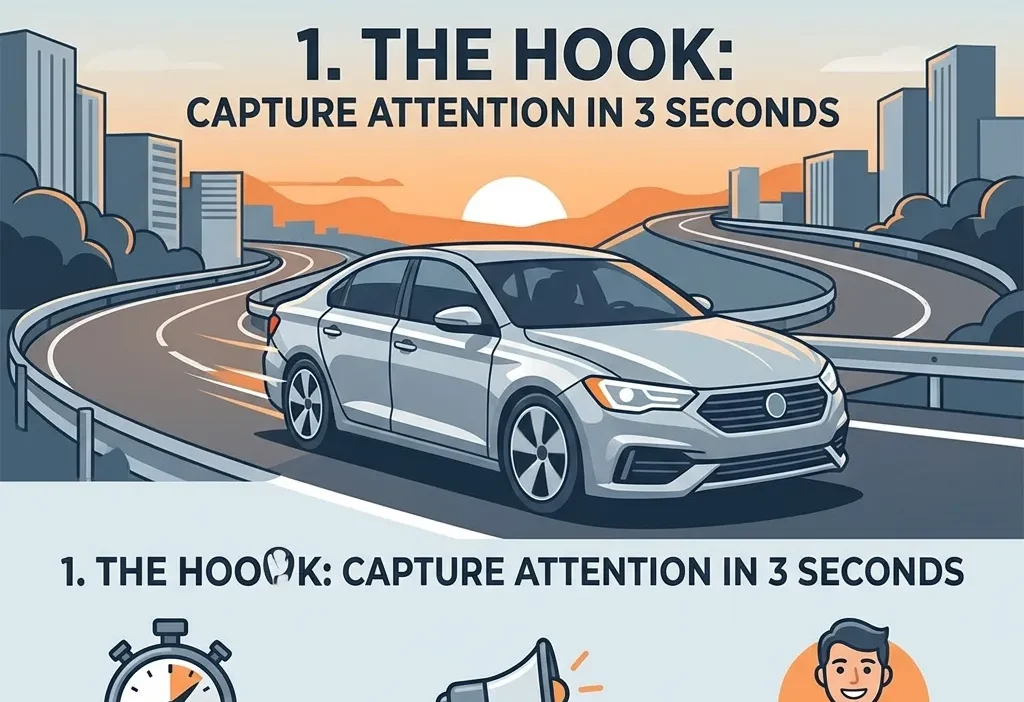
Opening Hook
The first few seconds need to capture attention.
Possible hooks include:
- A dramatic driving scene
- An unexpected visual
- A family moment
- A bold statement
- A vehicle feature demonstration
- A compelling promotional offer
The opening should immediately establish visual or emotional interest.
Feature and Benefit Section
After gaining attention, introduce the vehicle and its most important benefits.
Instead of listing every specification, focus on the features that directly support the target audience’s needs.
For example:
Feature: Advanced driver-assistance technology.
Benefit: Helps provide additional confidence during everyday driving.
Offer or Differentiator
Give viewers a compelling reason to consider the advertised brand.
This could be:
- Special financing
- Lease offer
- Trade-in opportunity
- New model availability
- Warranty
- Service package
- Unique vehicle capability
Call to Action
End with a clear action.
Examples include:
- Visit your local dealership
- Schedule a test drive
- Explore the new model
- Visit the dealership today
- Call for current offers
- Learn more online
The call to action should be simple enough for viewers to remember.
Automotive TV Advertising Targeting Strategies
Effective targeting helps automotive advertisers avoid wasting impressions on audiences unlikely to become customers.
Geographic Targeting
Local dealerships can prioritize viewers within a practical driving distance.
Geographic targeting may include:
- Cities
- Suburbs
- ZIP or postal areas
- Regional markets
- Dealer territories
This is particularly important for dealerships because a viewer located hundreds of miles away may have little immediate value.
You can also review this guide on how to target your audience with TV advertising for broader targeting principles.
Demographic Targeting
Advertisers can consider demographic characteristics such as:
- Age
- Household income
- Family status
- Employment
- Home ownership
- Geographic market
The appropriate demographic profile depends on the vehicle and campaign objective.
Behavioral and Interest-Based Targeting
Connected TV and addressable television can provide additional opportunities to reach audiences based on viewing behavior and other available signals.
For automotive campaigns, advertisers may focus on audiences showing interest in:
- Cars
- Automotive content
- Travel
- Family activities
- Technology
- Luxury products
- Outdoor recreation
Programmatic and Addressable TV
Modern TV advertising can provide more sophisticated audience targeting than traditional broadcast buying.
Programmatic and addressable approaches can help advertisers deliver campaigns to selected audience segments instead of relying solely on broad programming audiences.
For more information, explore this guide to programmatic TV advertising strategies.
How to Make Automotive TV Ads More Persuasive

The most effective automotive commercials connect vehicle features with real consumer needs.
Sell the Experience, Not Just the Vehicle
Instead of focusing entirely on specifications, demonstrate what owning the vehicle can enable.
A family SUV can represent convenience and family experiences.
A sports car can represent excitement and performance.
An electric vehicle can represent innovation and a different approach to mobility.
The emotional experience should complement the practical information.
Use Strong Visual Storytelling
Automotive commercials naturally lend themselves to visual storytelling.
Consider showing the vehicle:
- On highways
- In cities
- On scenic roads
- In family environments
- In challenging weather
- During daily commutes
- In outdoor environments
The environment should reinforce the vehicle’s positioning.
Keep the Message Focused
Trying to communicate ten different selling points can weaken the commercial.
Choose two or three major benefits and build the advertisement around them.
Make Branding Memorable
The audience should remember the brand after the commercial ends.
Use consistent:
- Logos
- Brand colors
- Voice
- Music
- Taglines
- Visual identity
- Dealership information
A memorable brand ending can increase recall.
For broader digital campaign planning that can complement TV advertising, explore this guide to mastering a digital marketing strategy.
Automotive TV Advertising Costs
The cost of an automotive TV advertising campaign depends on several variables.
Major cost factors include:
| Cost Factor | Impact |
|---|---|
| Commercial production | Script, filming, actors, locations, editing |
| Media placement | Cost of purchasing TV inventory |
| Market size | Larger markets generally require larger budgets |
| Time slot | Premium programming can cost more |
| Audience size | Larger audiences can increase media costs |
| Campaign frequency | More impressions increase total spending |
| Creative complexity | More complex production can increase costs |
| Targeting | Advanced targeting may affect media pricing |
Businesses should consider both production and media expenses when building the campaign budget.
For additional context, review this guide on how much television advertising costs.
Measuring Automotive TV Ad Performance
A TV campaign should be measured against defined business objectives rather than impressions alone.
Brand Awareness
Brand awareness metrics can help determine whether the campaign is increasing recognition of the automotive brand or dealership.
Website Traffic
Monitor whether website traffic increases during and after the campaign.
Useful metrics include:
- Direct traffic
- Branded searches
- Landing-page visits
- Model-page visits
- Test-drive page visits
Leads and Test Drives
For dealerships, lead generation can be a stronger performance indicator than general impressions.
Track:
- Test-drive bookings
- Contact forms
- Phone calls
- Appointment requests
- Dealership visits
Sales and Revenue
Ultimately, automotive advertisers want marketing activity to contribute to business results.
Where tracking capabilities allow it, compare sales activity before, during, and after the campaign.
Cross-Channel Impact
TV advertising can influence digital behavior even when viewers do not immediately convert.
A viewer may see a commercial on television and later:
- Search for the vehicle.
- Visit the manufacturer’s website.
- Compare models.
- Visit a dealership.
- Schedule a test drive.
- Complete a purchase.
This means automotive TV advertising should be evaluated as part of the broader customer journey.
Common Automotive TV Advertising Mistakes
Even well-funded campaigns can fail when the strategy is unclear.
Focusing Only on Features
A long list of specifications does not necessarily persuade viewers.
Connect important features to meaningful consumer benefits.
Using a Weak Call to Action
If viewers do not know what to do next, the commercial can lose potential customers.
Always provide a clear next step.
Overloading the Commercial
Too much information can make the advertisement difficult to remember.
Keep the message focused.
Forgetting Local Relevance
National-style creative may not always work for a local dealership.
Local campaigns should make the dealership’s location, offer, and value clear.
Ignoring Digital Follow-Up
Many viewers will search online after seeing an automotive commercial.
Your website, landing pages, search campaigns, and social profiles should support the TV campaign.
Failing to Test Creative
If possible, test different messages, offers, opening hooks, and calls to action.
Creative testing can help identify what resonates most with the target audience.
Automotive TV Ad Campaign Checklist
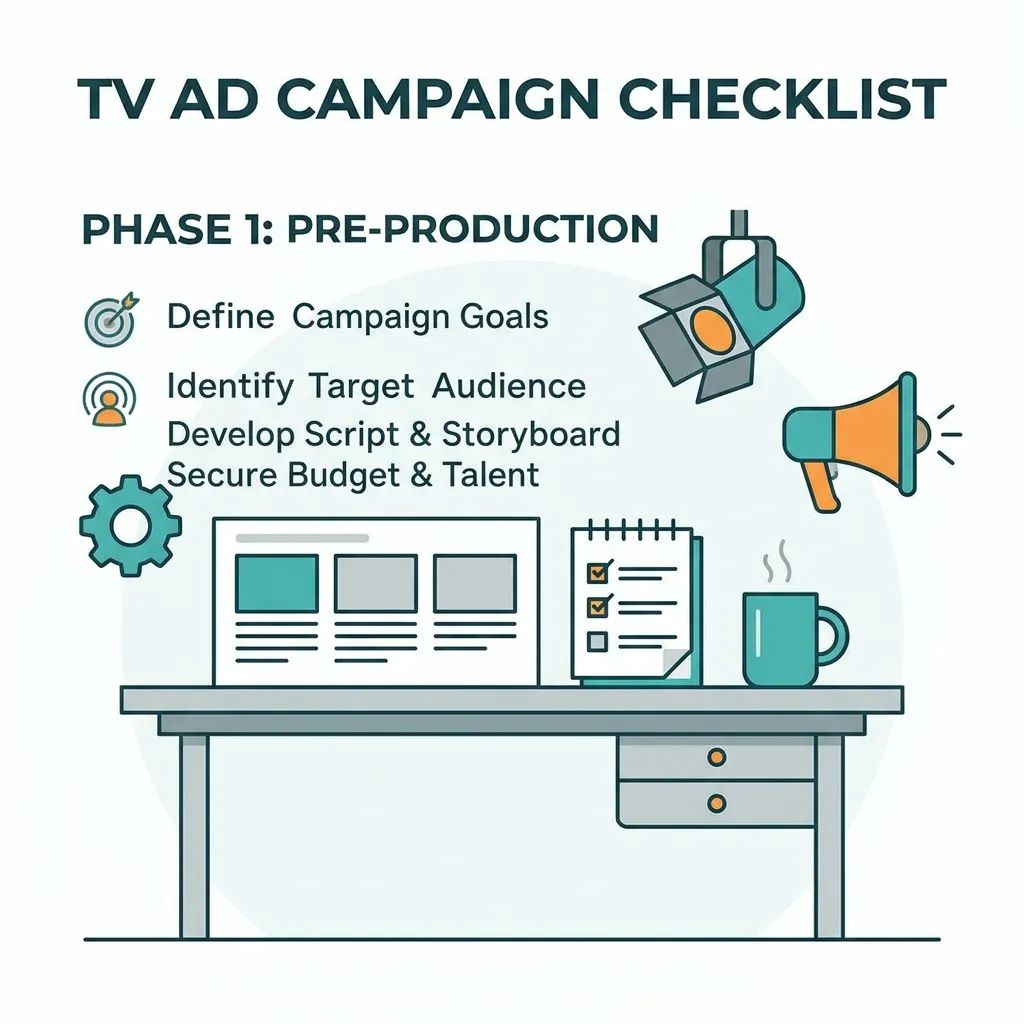
Before launching an automotive television campaign, review the following checklist:
- Campaign objective is clearly defined
- Target audience is identified
- Geographic market is selected
- Creative concept supports the objective
- Vehicle is clearly visible
- Key benefits are easy to understand
- Brand appears prominently
- Offer is clearly communicated
- Call to action is memorable
- Commercial length fits the media placement
- Landing page is ready
- Tracking is configured
- Campaign budget is established
- Performance metrics are defined
- Digital follow-up strategy is prepared
Conclusion
An effective automotive TV ad guide should ultimately focus on one principle: the commercial must connect the right vehicle with the right audience and give viewers a compelling reason to act.
Successful automotive TV campaigns combine strong storytelling, attractive vehicle visuals, focused messaging, audience targeting, memorable branding, and measurable calls to action. Dealerships and automotive brands can strengthen results further by connecting television campaigns with websites, search marketing, landing pages, and other digital channels.
Whether the objective is launching a new model, promoting a dealership sale, increasing test drives, or building long-term brand awareness, television can remain an important part of an integrated automotive marketing strategy when it is planned strategically and measured consistently.
Frequently Asked Questions About Automotive TV Ads
What is an automotive TV ad?
An automotive TV ad is a television commercial designed to promote a vehicle, automotive brand, dealership, financing offer, or automotive service.
Are TV ads effective for car dealerships?
Yes. TV advertising can help dealerships build local awareness, promote inventory, communicate offers, and generate interest in vehicles when the campaign is properly targeted and measured.
How long should an automotive TV commercial be?
Common commercial lengths include 15, 30, and 60 seconds. The best length depends on the campaign objective, budget, message complexity, and media placement.
What should a car commercial include?
A strong car commercial typically includes the vehicle, key benefits, branding, a compelling creative concept, an offer when appropriate, and a clear call to action.
How much does an automotive TV ad cost?
Costs vary according to production expenses, market size, programming, audience, placement, frequency, and campaign duration.
Should dealerships use local TV advertising?
Local TV can be particularly useful for dealerships because their potential customers are generally concentrated within a defined geographic area.
Can automotive TV ads generate website traffic?
Yes. TV commercials can encourage viewers to search for a vehicle, visit a dealership website, explore inventory, or access a dedicated campaign landing page.
What emotions work well in automotive advertising?
Depending on the vehicle, effective emotional themes can include freedom, excitement, confidence, safety, family, adventure, achievement, and innovation.
Should automotive brands use connected TV?
Connected TV can provide additional targeting and measurement opportunities, making it a useful component of a modern automotive advertising strategy.
How can dealerships measure TV advertising results?
Dealerships can track metrics such as website traffic, branded searches, calls, leads, test drives, appointments, showroom visits, and sales.
What makes an automotive commercial memorable?
A memorable automotive commercial usually combines a strong creative idea, distinctive visuals, emotional relevance, clear branding, and a simple message.
Can TV advertising work with digital marketing?
Yes. TV and digital marketing can work together by using television to build awareness and digital channels to capture searches, website visits, leads, and conversions.