A Healthcare TV ad guide helps hospitals, clinics, healthcare providers, pharmaceutical companies, and medical brands create television advertising campaigns that attract attention while building trust. Effective healthcare TV advertising combines audience research, empathetic messaging, professional production, clear calls to action, compliance, and measurable campaign goals. This guide explains how to plan, create, launch, and measure healthcare TV ads that connect with viewers and encourage meaningful action.
Healthcare advertising is different from promoting ordinary consumer products. People make healthcare decisions based on trust, credibility, emotions, convenience, and perceived outcomes. A television commercial can bring these elements together through storytelling, visuals, sound, and a memorable message.
A well-designed Healthcare TV ad guide should therefore cover much more than writing a commercial script. Healthcare marketers need to understand their target audience, choose the right television placements, communicate benefits responsibly, avoid misleading claims, and create advertisements that encourage viewers to take the next step.
Whether you represent a hospital, dental practice, urgent care center, specialist clinic, medical service, healthcare technology company, or pharmaceutical brand, television can provide a powerful way to introduce your services to a broad audience.
This guide explains the major steps involved in developing a successful healthcare TV advertising campaign.
What Is Healthcare TV Advertising?
Healthcare TV advertising refers to television commercials designed to promote healthcare-related products, services, organizations, or medical information.
Healthcare television ads can be used by:
- Hospitals and healthcare systems
- Private medical clinics
- Dental practices
- Urgent care centers
- Specialty physicians
- Rehabilitation centers
- Senior care facilities
- Pharmaceutical companies
- Medical device companies
- Health insurance providers
- Diagnostic laboratories
- Telehealth companies
- Wellness and preventive-care organizations
Unlike traditional product advertising, healthcare advertising often needs to address sensitive concerns. Viewers may be dealing with pain, illness, anxiety, uncertainty, or concerns about their families.
As a result, successful healthcare commercials usually focus on trust, empathy, credibility, clarity, and action.
For broader information about television advertising, businesses can also explore this complete guide to television advertising.
Why Healthcare TV Advertising Still Matters
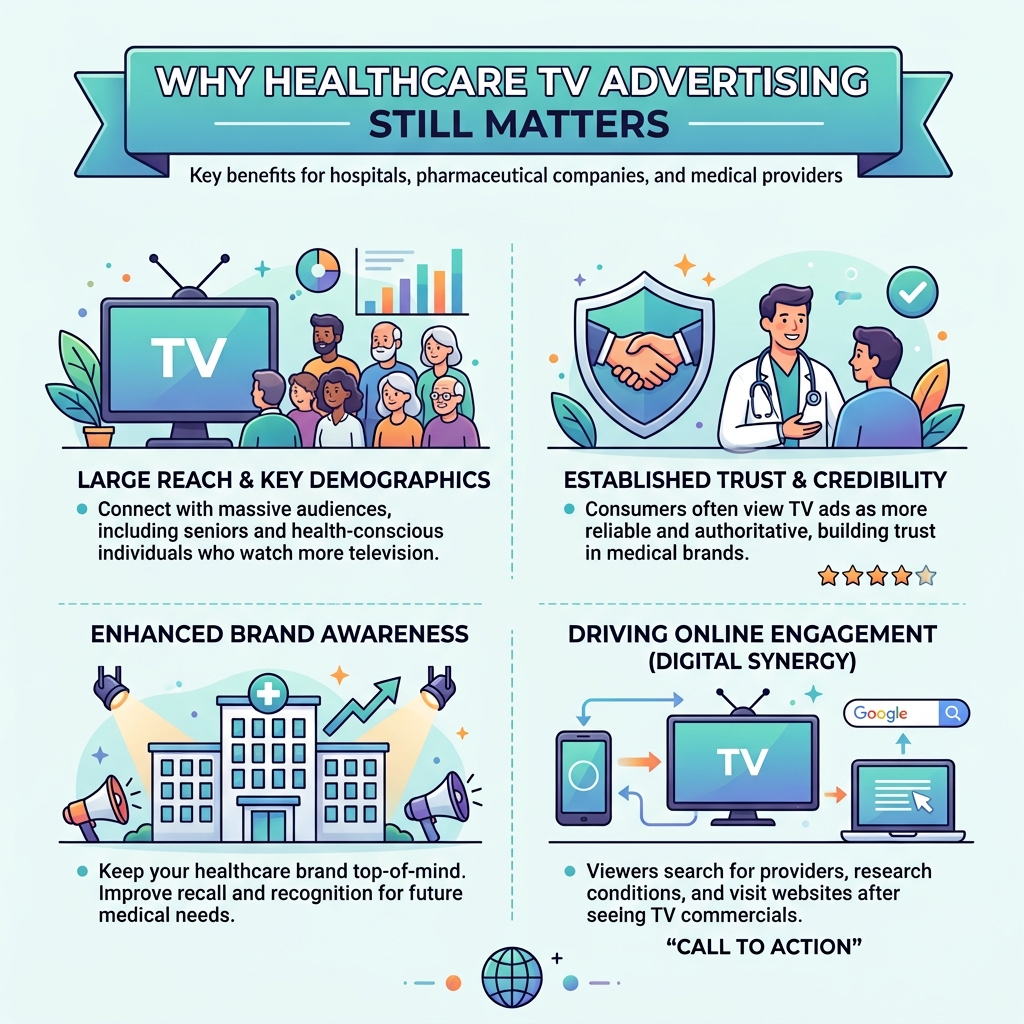
Television remains useful for healthcare organizations because it combines visual storytelling with audio communication and broad reach.
A healthcare commercial can show:
- Doctors interacting with patients
- Modern medical facilities
- Treatment environments
- Family interactions
- Patient success stories
- Healthcare professionals explaining services
- Technology and equipment
- Preventive healthcare messages
- Simple calls to action
This combination can make healthcare services easier to understand than text-based advertising alone.
Builds Brand Awareness
Healthcare decisions are rarely made immediately. Someone may see a hospital commercial today and remember the brand weeks later when they need medical assistance.
Consistent television exposure can therefore help healthcare organizations build recognition over time.
Creates Emotional Connections
Healthcare is naturally emotional. Patients want to feel safe, understood, respected, and cared for.
A thoughtful television advertisement can communicate these qualities through storytelling instead of relying only on promotional claims.
Reaches Local Audiences
Hospitals and clinics often serve specific geographic communities. Local television advertising allows healthcare organizations to focus campaigns around the areas they serve.
For more information, see this guide on how to advertise on local television.
Supports Multi-Channel Marketing
Television does not need to work alone. A TV commercial can encourage viewers to visit a website, search for a healthcare provider, call a clinic, or interact with a social media account.
This creates opportunities to connect traditional television advertising with digital marketing.
How to Build a Healthcare TV Advertising Strategy
A successful healthcare campaign starts with strategy rather than production.
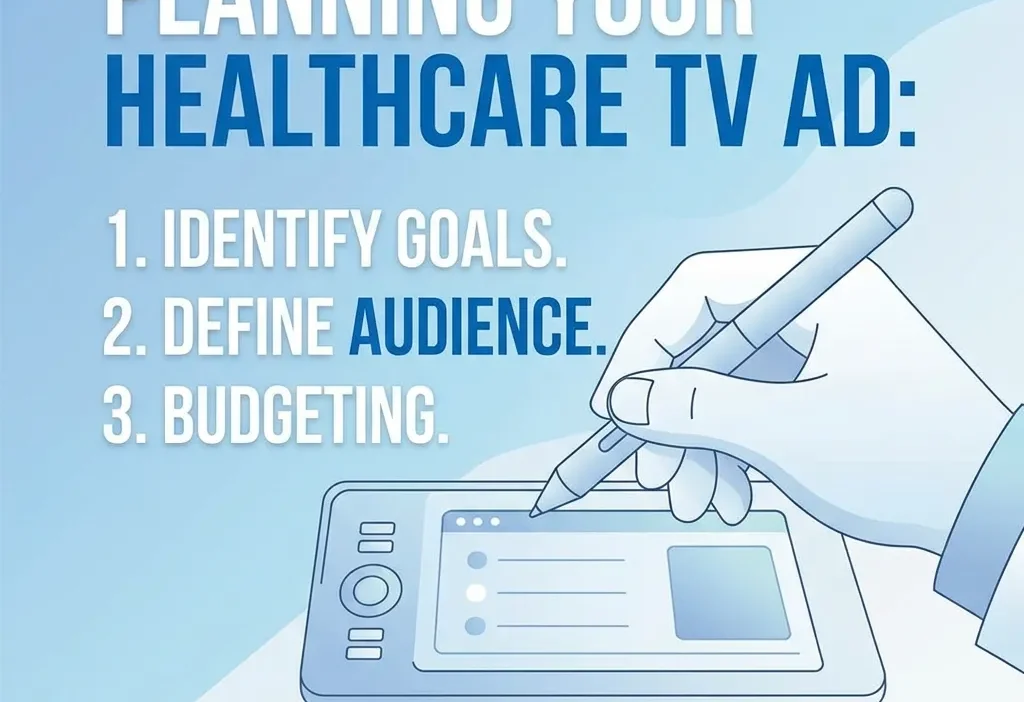
1. Define Your Advertising Objective
Before producing a commercial, decide exactly what the campaign needs to accomplish.
Common objectives include:
- Increasing hospital awareness
- Promoting a new healthcare service
- Generating appointments
- Increasing phone inquiries
- Promoting preventive healthcare
- Introducing a new facility
- Increasing awareness of specialists
- Promoting seasonal services
- Educating consumers
- Increasing website traffic
A specific objective makes it easier to develop the right message and measure campaign performance.
2. Identify Your Target Audience
Healthcare audiences can vary significantly.
For example, a pediatric clinic may target parents, while a senior care organization may focus on older adults and their family members.
Consider factors such as:
- Age
- Location
- Healthcare needs
- Family status
- Income
- Lifestyle
- Existing awareness
- Common concerns
- Healthcare decision-making behavior
The CDC recommends identifying a specific intended audience and conducting audience research rather than making assumptions about what people need.
3. Understand the Patient’s Problem
Strong healthcare advertising starts with the audience’s needs.
Ask:
- What problem does the patient have?
- What concerns them most?
- What prevents them from seeking care?
- What information do they need?
- What makes them trust a healthcare provider?
- What action should they take?
Answering these questions helps create a more relevant advertisement.
Create a Strong Healthcare TV Ad Message
The message should be simple enough for viewers to understand after seeing the commercial once.
A strong healthcare TV message usually includes:
Problem → Solution → Benefit → Trust → Call to Action
For example:
Feeling persistent joint pain? Our orthopedic specialists provide personalized care designed around your needs. Schedule a consultation today.
The exact message depends on the service, but the structure helps keep the commercial focused.
Focus on One Primary Message
Trying to promote every healthcare service in one commercial can make the advertisement confusing.
Instead, focus on one primary objective.
For example:
- A hospital commercial can focus on emergency care.
- A dental commercial can focus on family dentistry.
- A cardiology commercial can focus on heart-health screening.
- A clinic commercial can focus on same-day appointments.
A focused message is easier to remember.
Use Empathy in Healthcare TV Ads
Empathy is especially important in healthcare communication.
Patients may already feel worried or vulnerable. A commercial that uses aggressive sales language can reduce trust.
Instead, healthcare advertising should communicate understanding and respect.
The CDC notes that empathy can help healthcare communication build connections and trust, while recommending clear, audience-focused language.
Use Patient-Centered Language
Instead of focusing entirely on medical terminology, explain what the service means for the patient.
For example:
Weak approach:
“Advanced diagnostic imaging with next-generation technology.”
Patient-centered approach:
“Get the answers you need with advanced diagnostic imaging and compassionate care.”
The second version connects the technology with the patient’s need.
Avoid Unnecessary Medical Jargon
Healthcare professionals may understand complicated terminology, but television audiences may not.
Use:
- Simple words
- Short sentences
- Familiar concepts
- Clear explanations
- Easy-to-understand benefits
If technical language is necessary, explain it quickly.
Build the Story Around the Patient
Storytelling can make healthcare TV advertising more memorable.
A simple healthcare story might follow this structure:
The Challenge
A patient experiences a problem.
The Concern
The patient worries about what the problem means.
The Solution
A healthcare professional provides guidance or treatment.
The Outcome
The patient receives care and feels supported.
The Action
The commercial tells viewers what to do next.
This approach allows viewers to see themselves in the story.
Essential Elements of an Effective Healthcare TV Commercial
Several components work together to create a strong commercial.
Professional Visuals
Healthcare advertising should look credible.
Use:
- Clean facilities
- Professional staff
- Natural patient interactions
- High-quality lighting
- Realistic environments
- Appropriate medical equipment
Avoid visuals that look excessively staged.
Strong Voiceover
The voice should match the emotional tone of the advertisement.
For healthcare campaigns, a calm, confident, and trustworthy voice is often more appropriate than an overly energetic delivery.
On-Screen Text
Important information can appear visually, including:
- Phone numbers
- Website addresses
- Locations
- Service names
- Appointment instructions
- Disclaimers where required
Keep text readable and visible long enough for viewers to process it.
Clear Call to Action
Every healthcare commercial should tell viewers what to do next.
Examples include:
- Call today
- Schedule an appointment
- Visit our website
- Find a location near you
- Talk to a healthcare professional
- Learn more online
A commercial without a clear next step may generate awareness without generating action.
Healthcare TV Ad Production Process
Producing a healthcare commercial usually involves several stages.
Step 1: Research
Understand the audience, competitors, healthcare service, regulations, and campaign objectives.
Step 2: Script Development
Create a concise script that communicates the central message.
Step 3: Storyboarding
Plan the scenes, camera angles, dialogue, voiceover, graphics, and transitions.
Step 4: Casting
Select appropriate actors, patients, healthcare professionals, or spokespersons.
Step 5: Production
Film the commercial using professional equipment and appropriate locations.
Step 6: Editing
Combine video, audio, music, graphics, voiceover, and on-screen information.
Step 7: Compliance Review
Review medical claims, disclaimers, risk information, testimonials, and other relevant requirements.
Step 8: Testing
Show the commercial to representative viewers and identify confusing or unclear elements.
Step 9: Distribution
Deliver the approved commercial to selected television networks, stations, or advertising platforms.
Step 10: Measurement
Track campaign performance and use the results to improve future advertising.
Choosing the Right TV Advertising Format
Healthcare organizations have several television advertising options.
Local TV Advertising
Local TV can work well for:
- Hospitals
- Clinics
- Dentists
- Urgent care centers
- Local specialists
- Medical practices
It can help organizations reach people within their actual service areas.
National TV Advertising
National advertising may make sense for large healthcare brands, pharmaceutical companies, health insurance providers, or healthcare products with broad geographic demand.
Connected TV
Connected TV allows healthcare advertisers to reach audiences through internet-connected television environments.
It can complement traditional television by providing additional targeting and measurement opportunities.
Addressable TV
Addressable television advertising can allow advertisers to deliver different advertisements to different households based on audience characteristics.
For more advanced approaches, see this guide to addressable TV advertising strategies.
Healthcare TV Advertising Compliance and Trust
Compliance is one of the most important parts of healthcare advertising.
Healthcare marketers should never treat compliance as an afterthought.
Avoid Misleading Claims
Healthcare advertising should not make unsupported promises about outcomes.
Be especially careful with claims involving:
- Cures
- Guaranteed results
- Treatment effectiveness
- Patient outcomes
- Comparative superiority
- Medical technology
- Drug benefits
- Side effects
Claims should be supported by appropriate evidence.
Prescription Drug Advertising
Prescription drug television advertising has additional requirements in the United States.
The FDA states that certain direct-to-consumer prescription drug TV and radio advertisements must present major information about side effects and contraindications in a clear, conspicuous, and neutral manner.
Advertisers should review the applicable requirements for their product, audience, market, and advertising format before broadcasting.
FDA guidance on prescription drug TV and radio advertising
Review Local Requirements
Healthcare advertising requirements can differ depending on:
- Country
- State or region
- Healthcare category
- Product type
- Advertising channel
- Professional licensing rules
- Pharmaceutical regulations
Therefore, organizations should obtain appropriate legal or regulatory review before launching campaigns.
How to Use Patient Testimonials
Patient stories can make healthcare advertising feel authentic, but testimonials should be handled carefully.
A strong testimonial should:
- Feel genuine
- Avoid unrealistic promises
- Clearly communicate the patient’s experience
- Avoid implying guaranteed outcomes
- Respect privacy
- Follow applicable consent requirements
Instead of saying:
“Everyone will get the same result.”
A safer approach is:
“My experience with the care team helped me feel more confident about my treatment.”
The focus remains on the individual’s experience rather than promising the same result to everyone.
How to Use Digital Channels With TV Advertising
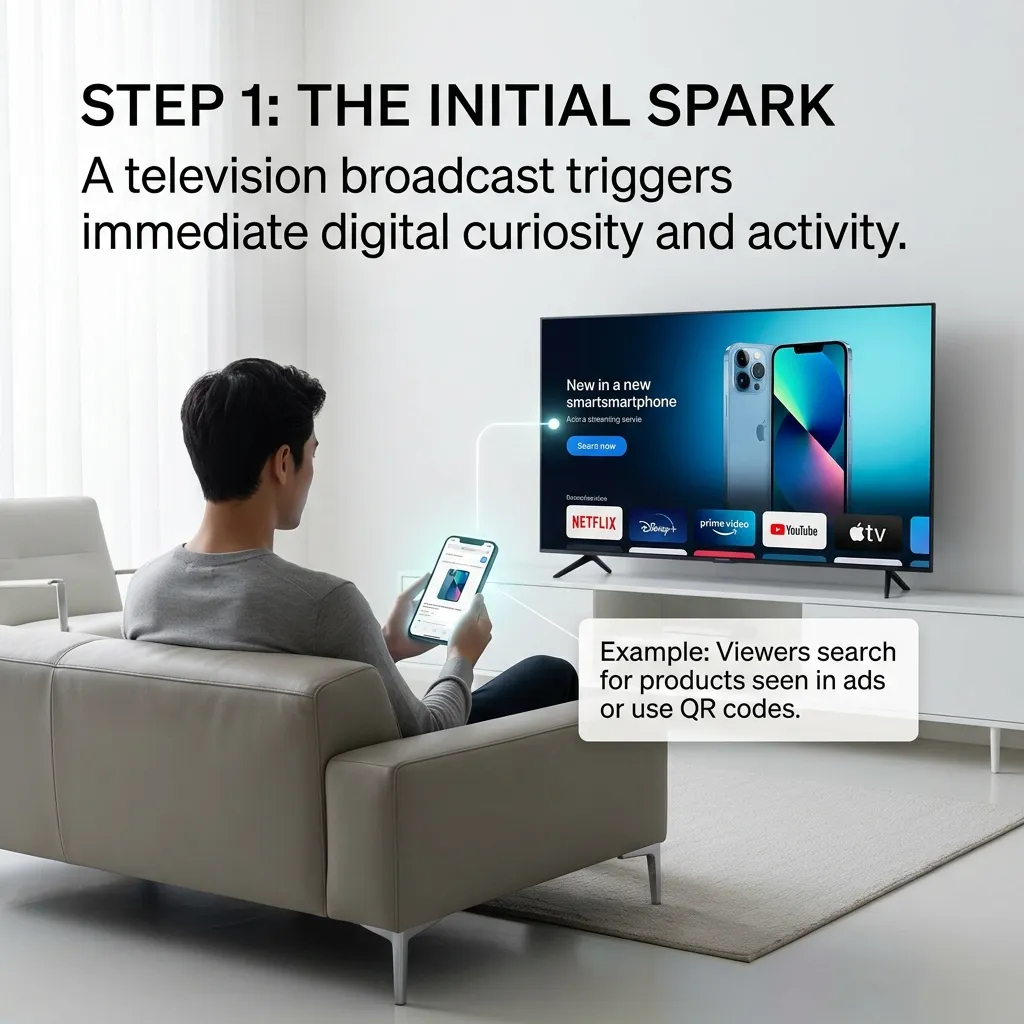
Modern healthcare TV advertising can become more effective when connected with digital channels.
A commercial might encourage viewers to:
- See the television advertisement.
- Remember the healthcare brand.
- Visit the website.
- Search for a service.
- Schedule an appointment.
- Receive follow-up communication.
Use a Memorable URL
If possible, make the website address easy to remember.
Use Search Campaigns
People may search for the healthcare organization immediately after seeing a commercial.
Search visibility can therefore support television campaigns.
Retarget Interested Audiences
Where legally and technically appropriate, digital advertising can help reconnect with audiences who interact with healthcare websites or online content.
Create Consistent Messaging
The television commercial, website, social media content, and landing pages should communicate a consistent brand message.
Measuring Healthcare TV Advertising Performance
Healthcare advertising should be measured using more than television impressions.
Useful performance indicators include:
Brand Awareness
Measure whether more people recognize the healthcare organization after the campaign.
Website Traffic
Monitor increases in direct and branded website traffic during the campaign.
Phone Calls
Track whether calls increase after advertisements air.
Appointment Requests
For healthcare organizations, appointment requests may be more meaningful than general traffic.
Search Volume
An increase in branded searches can indicate that television advertising is generating interest.
Conversion Rate
Measure how many visitors or leads complete the desired action.
Cost Per Acquisition
Calculate how much the campaign costs to generate a qualified patient inquiry or other desired conversion.
For a broader discussion of television campaign measurement, see the guide to television advertising effectiveness.
Common Healthcare TV Advertising Mistakes
Even well-funded campaigns can underperform when the strategy is unclear.
1. Using Too Much Medical Jargon
Complex terminology can confuse viewers.
2. Making Too Many Claims
Trying to communicate every benefit can weaken the main message.
3. Ignoring Emotional Concerns
Healthcare decisions often involve fear, uncertainty, and vulnerability.
4. Using Unrealistic Patient Stories
Overly perfect stories can make advertisements feel artificial.
5. Weak Calls to Action
Viewers should know exactly what to do after watching.
6. Poor Production Quality
Low-quality video or audio can reduce perceived credibility.
7. Ignoring Compliance
A creative idea is not useful if the final advertisement violates applicable rules.
8. Failing to Measure Results
Without measurement, advertisers cannot determine which placements, messages, or creative elements are working.
Healthcare TV Ad Checklist
Before launching a campaign, review the following checklist:
- Campaign objective is clearly defined
- Target audience is identified
- Patient needs are understood
- Main message is clear
- Script is concise
- Medical claims are reviewed
- Visuals look professional
- Voiceover is easy to understand
- On-screen text is readable
- Call to action is clear
- Testimonials have appropriate consent
- Required disclosures are included
- Regulatory review is complete
- TV placements match the audience
- Website and landing pages are ready
- Tracking is configured
- Campaign KPIs are established
30-Second Healthcare TV Ad Example
A simple 30-second structure could look like this:
0–5 seconds:
Show a patient dealing with a relatable healthcare concern.
5–12 seconds:
Introduce the healthcare organization and explain how it helps.
12–20 seconds:
Show healthcare professionals providing personalized care.
20–25 seconds:
Present the primary service benefit using simple language.
25–30 seconds:
Display the logo, phone number, website, and clear call to action.
The commercial should move quickly while giving viewers enough time to understand the message.
Future Trends in Healthcare TV Advertising
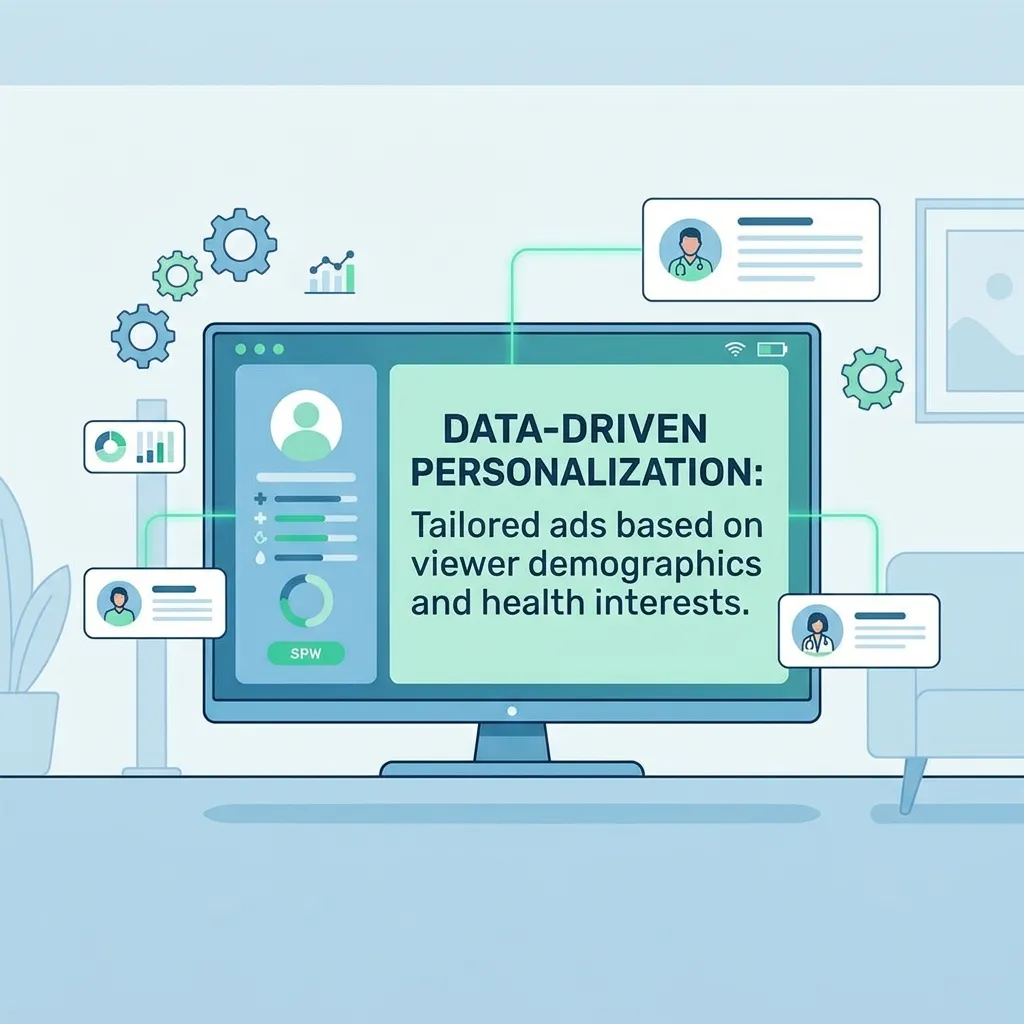
Healthcare television advertising is becoming increasingly connected with digital technology.
Connected TV Targeting
Internet-connected televisions provide advertisers with additional targeting and measurement possibilities.
AI-Assisted Personalization
Artificial intelligence can help marketers analyze audience behavior and improve campaign targeting and creative development.
Data-Driven Measurement
Advertisers increasingly want to connect television exposure with online searches, website activity, inquiries, and conversions.
Interactive Advertising
Interactive formats can encourage viewers to take additional actions beyond simply watching.
Omnichannel Healthcare Marketing
Television can increasingly operate as one component of a larger ecosystem involving search, social media, websites, email, and other digital channels.
For more information, explore this guide to harnessing AI in TV advertising personalization.
Conclusion
A successful Healthcare TV ad guide is ultimately about more than producing an attractive commercial. Healthcare organizations need to combine strategic audience research, patient-centered messaging, empathy, professional production, responsible claims, regulatory awareness, and measurable objectives.
The strongest healthcare TV advertisements make viewers feel that the organization understands their needs. They communicate information clearly, avoid unnecessary complexity, establish credibility, and provide a simple next step.
Whether the campaign is designed for a local clinic, hospital, pharmaceutical brand, or national healthcare organization, the same principle applies: build trust first, communicate clearly, and make the advertisement useful to the audience.
When television advertising is integrated with digital channels and supported by proper measurement, healthcare brands can create campaigns that generate awareness while encouraging meaningful patient action.
Frequently Asked Questions
1. What is a Healthcare TV ad guide?
A Healthcare TV ad guide explains how healthcare organizations can plan, create, produce, distribute, and measure television advertising campaigns while maintaining clear communication and appropriate compliance practices.
2. Why is TV advertising effective for healthcare?
TV advertising combines video, audio, storytelling, and brand exposure. These elements can help healthcare organizations build awareness and communicate their services to specific audiences.
3. What should a healthcare TV commercial include?
A healthcare commercial should generally include a clear message, relevant visuals, trustworthy information, an appropriate call to action, and any required disclosures or disclaimers.
4. How long should a healthcare TV ad be?
Common commercial lengths include 15, 30, and 60 seconds. The ideal length depends on the campaign objective, message complexity, budget, and media placement.
5. Can hospitals advertise on television?
Yes. Hospitals commonly use television advertising to promote services, facilities, specialists, emergency care, community programs, and healthcare awareness campaigns, subject to applicable advertising rules.
6. How much does a healthcare TV ad cost?
Costs vary depending on production quality, commercial length, location, talent, media placement, audience size, frequency, and television market. Production and media costs should be considered separately when developing a budget.
7. Should healthcare TV ads use patient testimonials?
Patient testimonials can increase authenticity, but they should be genuine, appropriately authorized, and presented without implying guaranteed outcomes.
8. What makes a healthcare commercial trustworthy?
Clear communication, professional presentation, realistic visuals, credible information, transparent claims, empathy, and an easy-to-understand message can contribute to trust.
9. How can healthcare TV advertising generate appointments?
A commercial can generate appointments by targeting the right audience, presenting a relevant healthcare need, communicating a clear benefit, and providing a simple call to action such as calling or booking online.
10. Are prescription drug TV advertisements regulated?
Yes. Prescription drug advertising is subject to specific requirements. In the United States, FDA requirements include rules concerning the presentation of important risk information in certain direct-to-consumer television advertisements.
11. How do you measure healthcare TV advertising?
Healthcare TV campaigns can be evaluated through metrics such as brand awareness, website traffic, branded searches, phone calls, appointment requests, conversions, and acquisition costs.
12. Can healthcare TV advertising work with digital marketing?
Yes. TV advertising can support search, websites, social media, connected TV, and other digital channels. Coordinating messaging and tracking can help marketers understand how television contributes to overall campaign performance.