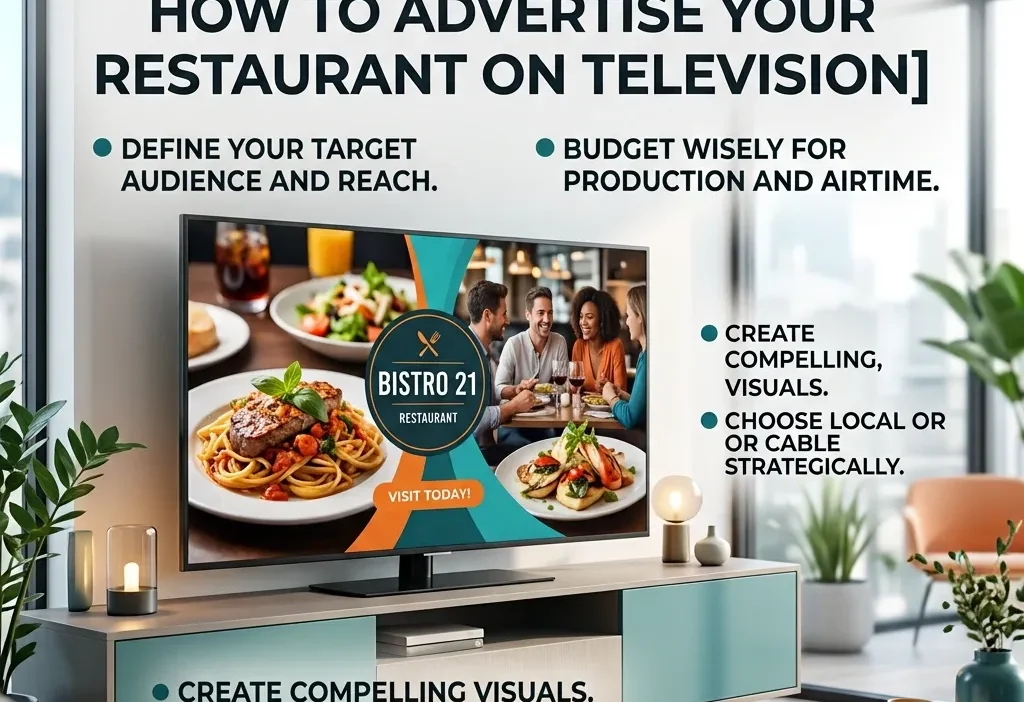
A restaurants TV ad can help local and growing restaurants build awareness, attract new customers, promote special offers, and strengthen brand recognition. This guide explains how to create, target, budget, and measure effective restaurant television advertising campaigns.
Running a restaurant is highly competitive. Customers have countless choices when deciding where to eat, and restaurants need effective ways to stay visible and memorable. While social media, search advertising, and online reviews are important, television advertising can still provide a powerful way to reach a broad local audience.
A well-planned restaurants TV ad can showcase food, atmosphere, service, location, promotions, and the overall dining experience in a few seconds. Unlike static advertising, television combines visuals, sound, storytelling, and motion to create an emotional connection with viewers.
For restaurant owners, the challenge is not simply creating a commercial. The real goal is to create an advertisement that reaches the right audience, communicates a compelling reason to visit, and encourages viewers to take action.
What Is a Restaurants TV Ad?
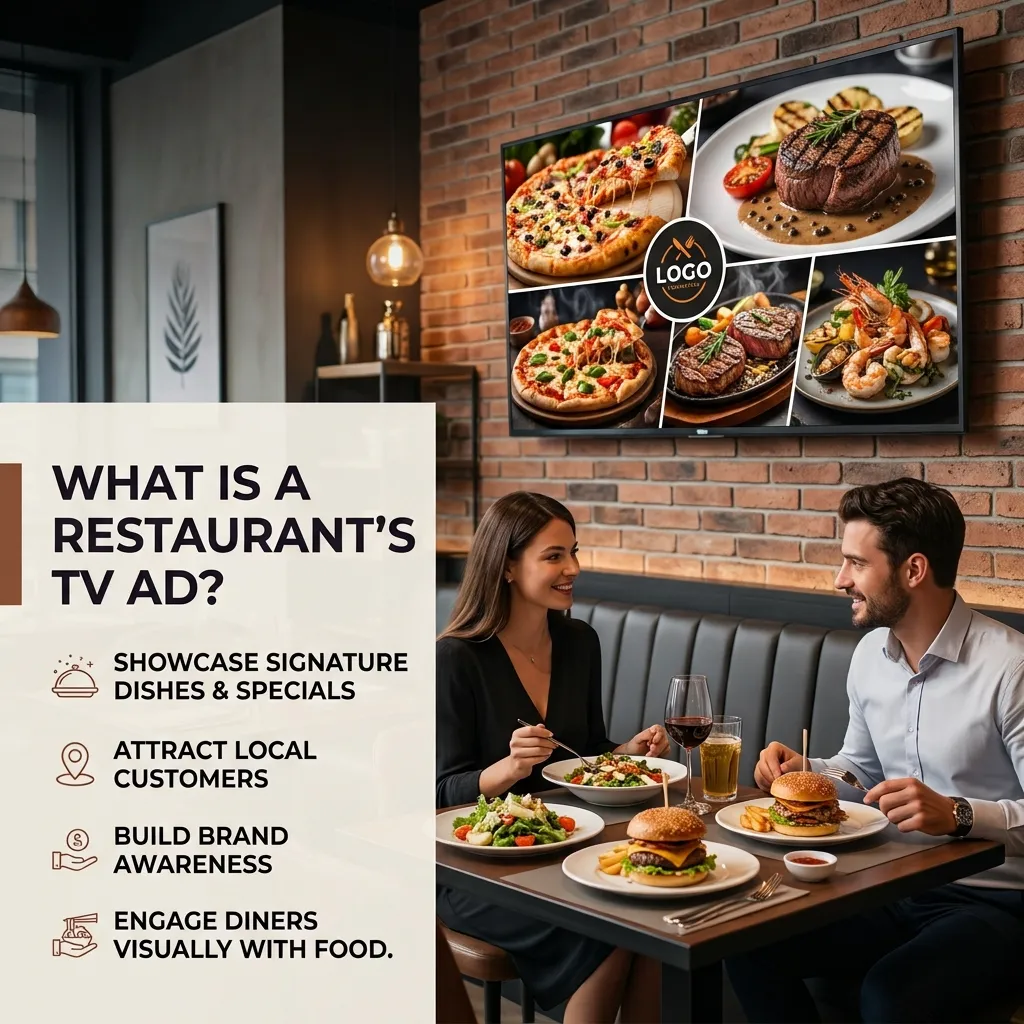
A restaurants TV ad is a television commercial created specifically to promote a restaurant, its food, dining experience, services, special offers, or brand.
Restaurant commercials can promote:
- New menu items
- Special discounts
- Seasonal promotions
- Grand openings
- Restaurant locations
- Delivery services
- Catering
- Family dining
- Fine dining experiences
- Limited-time offers
- Holiday menus
- Events and entertainment
The most effective restaurant advertisements focus on a clear message rather than trying to communicate everything about the business at once.
For a broader understanding of television advertising, see this complete guide to TV advertising.
Why Should Restaurants Advertise on TV?
Television can offer restaurants several advantages that digital-only campaigns may not provide.
1. Build Local Brand Awareness
Restaurants depend heavily on local customers. Television can help put a restaurant’s name, food, location, and brand identity in front of people within its target market.
Repeated exposure can make the restaurant more familiar to viewers.
When someone later decides where to eat, a familiar restaurant name may be easier to remember than an unfamiliar competitor.
2. Showcase Food Visually
Food is highly visual.
A television commercial can show:
- Freshly prepared meals
- Close-up shots of dishes
- Steam rising from hot food
- Grilling and cooking
- Desserts
- Drinks
- Restaurant interiors
- Happy customers
These visuals can make the dining experience feel more tangible.
3. Promote Special Offers
Restaurants can use television commercials to promote limited-time offers.
Examples include:
- Weekend specials
- Family meal deals
- Lunch promotions
- Holiday menus
- Buy-one-get-one offers
- New customer discounts
- Seasonal dishes
A deadline can create urgency and encourage viewers to act.
4. Reach Families and Local Consumers
Restaurants often serve specific demographic groups. A campaign can be planned around programming that attracts the restaurant’s target audience.
For example, a family restaurant may focus on programming with strong household and family viewership, while an upscale restaurant may target audiences that align with premium dining interests.
Audience targeting is an important part of effective television campaigns. Learn more about how to target your audience with TV advertising.
Types of Restaurants That Can Benefit From TV Advertising
Television advertising is not limited to large restaurant chains.
Fast-Food Restaurants
Fast-food businesses can use short commercials to promote:
- New menu items
- Meal combinations
- Limited-time products
- Discounts
- Delivery services
Strong food photography and simple offers work particularly well for short advertisements.
Casual Dining Restaurants
Casual restaurants can highlight the overall dining experience.
A commercial might show:
- Families eating together
- Friends sharing food
- Restaurant atmosphere
- Signature dishes
- Weekend dining
Fine-Dining Restaurants
Fine-dining restaurants can focus more heavily on:
- Food presentation
- Restaurant design
- Chef expertise
- Premium ingredients
- Service
- Ambience
The objective is often to communicate exclusivity and experience rather than price.
Family Restaurants
Family restaurants can use television to emphasize convenience, affordability, menu variety, and an enjoyable environment.
Cafés and Bakeries
Cafés and bakeries can promote:
- Breakfast items
- Coffee
- Pastries
- Desserts
- Seasonal products
- New locations
Strong visual storytelling can make these products particularly attractive on screen.
Restaurant Chains
Multi-location restaurants can use television advertising to strengthen brand awareness across multiple markets while adapting messaging to individual locations.
How to Create an Effective Restaurants TV Ad
Creating an effective restaurant commercial requires more than attractive food footage.
Follow these steps.
Step 1: Define the Objective
Before producing the commercial, determine what you want viewers to do.
Possible objectives include:
- Visit the restaurant
- Order online
- Call for reservations
- Download an app
- Try a new menu item
- Claim an offer
- Visit a new location
A single commercial should have a clear primary objective.
Step 2: Identify Your Target Audience
Define the people most likely to become customers.
Consider:
- Age
- Location
- Household characteristics
- Dining preferences
- Spending habits
- Lifestyle
- Meal preferences
Understanding the target audience helps determine the message, visuals, timing, and placement.
Step 3: Choose a Strong Message
Avoid trying to explain every restaurant feature in one commercial.
Instead, focus on one strong selling point.
For example:
“Fresh family meals at an affordable price.”
or
“Premium steaks, crafted for unforgettable evenings.”
The message should be easy to understand within seconds.
Step 4: Create Appealing Food Visuals
Food should be one of the most important visual elements.
Use high-quality footage showing:
- Preparation
- Ingredients
- Texture
- Presentation
- Portion size
- Finished dishes
Professional lighting and camera work can make a major difference.
Step 5: Use Storytelling
Instead of simply showing food, create a short story.
For example:
A family arrives → orders food → enjoys the meal → shares a memorable moment → restaurant logo and offer appear.
This approach helps viewers connect the restaurant with an experience rather than just a product.
Step 6: Include a Clear Call to Action
Every commercial should tell viewers what to do next.
Examples:
- Visit us today
- Order online
- Reserve your table
- Try our new menu
- Find your nearest location
- Call now
- Visit our website
A clear call to action can make an advertisement more useful and measurable.
What Should a Restaurant TV Commercial Include?
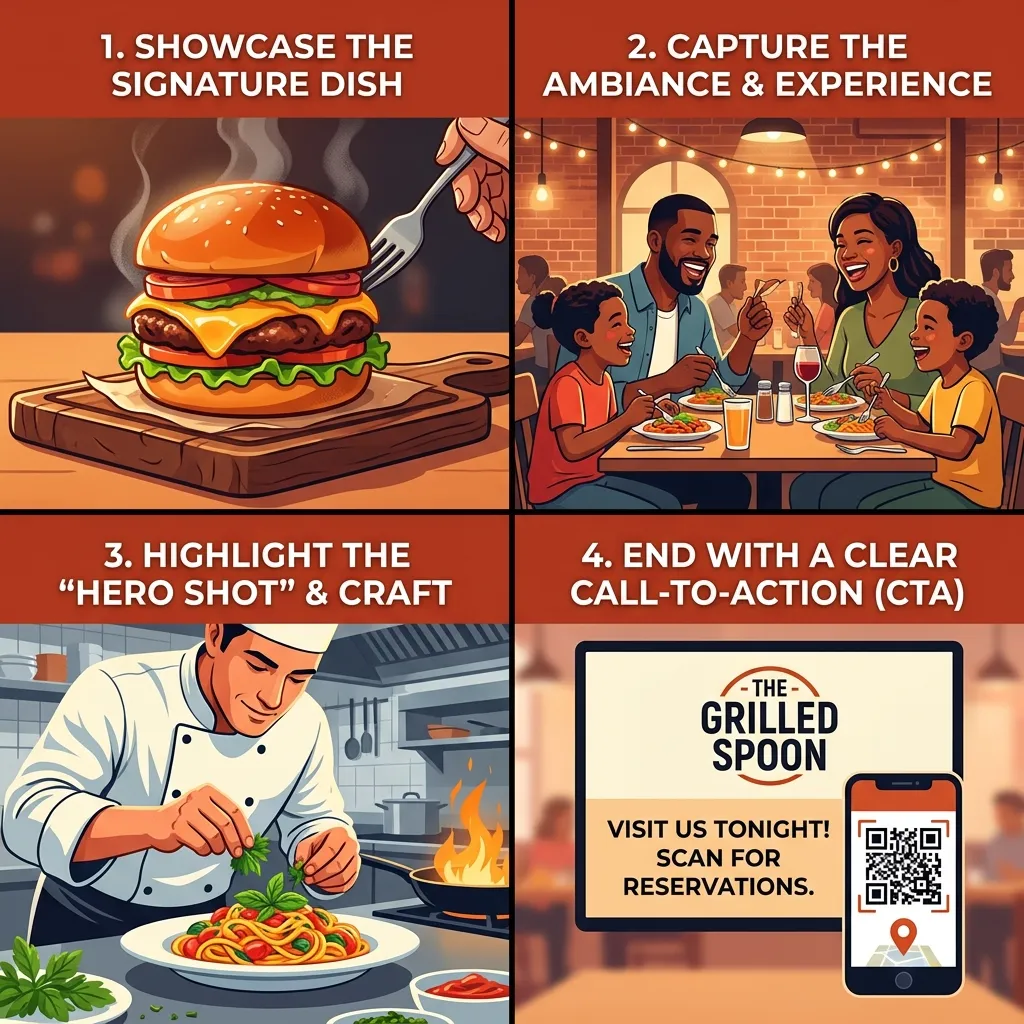
A strong commercial typically includes several essential elements.
| Element | Purpose |
|---|---|
| Restaurant name | Builds recognition |
| Food visuals | Creates desire |
| Unique selling point | Explains why customers should choose you |
| Location | Helps local customers find you |
| Offer | Encourages immediate action |
| Branding | Builds memory |
| Call to action | Tells viewers what to do |
| Website or phone | Provides a response channel |
Not every commercial needs all of these elements equally. The most important components should receive the most screen time.
How Long Should a Restaurant TV Ad Be?
Common commercial lengths include:
- 15 seconds
- 30 seconds
- 60 seconds
A 30-second restaurant commercial can provide a good balance between storytelling and cost.
A 15-second commercial may work well for a simple promotion, while a 60-second advertisement can provide more room for storytelling or brand positioning.
The ideal length depends on the campaign objective, budget, creative concept, and media placement.
How Much Does a Restaurants TV Ad Cost?
The cost of television advertising can vary significantly.
Expenses may include:
- Creative development
- Video production
- Actors or presenters
- Food styling
- Editing
- Voiceover
- Music licensing
- Media placement
- Local or national broadcasting
- Campaign management
Production and media costs should be considered separately.
A restaurant with a limited budget may start with a short, locally targeted commercial rather than investing in an expensive national campaign.
For more information about advertising expenses, see this guide to how much television advertising costs.
Local vs. National TV Advertising for Restaurants
Choosing between local and national television depends largely on the restaurant’s business model.
Local TV Advertising
Local advertising can be appropriate for:
- Independent restaurants
- Local chains
- New restaurant openings
- Restaurants serving specific communities
- Regional promotions
The campaign can focus on customers within a practical travel distance.
National TV Advertising
National television advertising is generally more relevant to:
- Large restaurant chains
- Franchise networks
- National food brands
- Businesses with locations across multiple markets
It can provide extensive reach but typically requires a substantially larger media budget.
Restaurants should not automatically choose national exposure simply because it provides more impressions. Reaching people who are unlikely to visit the restaurant can reduce campaign efficiency.
How to Choose the Right TV Placement
The success of a restaurants TV ad depends partly on when and where it appears.
Consider:
Audience Fit
Choose programming that attracts your target customers.
Geographic Coverage
For a local restaurant, prioritize markets where customers can realistically visit.
Viewing Time
Think about when your target audience is most likely to make dining decisions.
For example, advertising before major meal periods can potentially put a restaurant in front of viewers when they are considering what to eat.
Frequency
A single advertisement may not create strong brand recall.
Consistent exposure can help viewers remember the restaurant.
How to Make Restaurant TV Ads More Effective
Focus on One Main Offer
Too many promotions can confuse viewers.
Choose one primary message.
Make the First Few Seconds Count
Viewers can quickly lose interest, so begin with something visually or emotionally engaging.
A close-up of a signature dish, an exciting restaurant scene, or a compelling statement can capture attention.
Make Branding Consistent
Use recognizable:
- Logo
- Restaurant name
- Typography
- Brand elements
- Voice
- Messaging
Consistency helps build recognition across television and digital channels.
Show the Experience
Don’t only show food.
Show why people enjoy visiting the restaurant.
Make the Offer Easy to Remember
If the commercial includes a promotion, keep the terms simple.
Repeat Important Information
The restaurant name and call to action should be clear enough for viewers to remember after the commercial ends.
Common Mistakes in Restaurant TV Advertising
Restaurants can waste advertising budgets when commercials lack strategic focus.
Mistake 1: Trying to Say Too Much
A 30-second commercial cannot effectively communicate an entire restaurant menu, history, services, and promotions.
Choose the most important message.
Mistake 2: Weak Food Visuals
Poor lighting or low-quality footage can make food look less appealing.
Mistake 3: No Clear Call to Action
If viewers don’t know what to do next, the advertisement may generate awareness without measurable action.
Mistake 4: Ignoring Location
A local restaurant should make its location easy to identify.
Mistake 5: Targeting Everyone
Trying to appeal to every demographic can make the message generic.
Mistake 6: Failing to Measure Results
Without tracking, restaurant owners may not know whether television advertising is generating meaningful business results.
For a broader look at measuring television campaign performance, explore this guide to television advertising effectiveness.
How to Measure a Restaurants TV Ad Campaign
Restaurant TV advertising should be connected to measurable outcomes whenever possible.
Useful metrics include:
- Website traffic
- Branded search volume
- Phone calls
- Reservation requests
- Coupon redemptions
- Online orders
- Store visits
- New customer numbers
- Sales during campaign periods
Restaurants can also create unique promotional codes specifically for television campaigns.
For example:
“Use code TV10 for 10% off your first order.”
This creates a direct way to connect customer actions with the campaign.
Combining TV Advertising With Digital Marketing
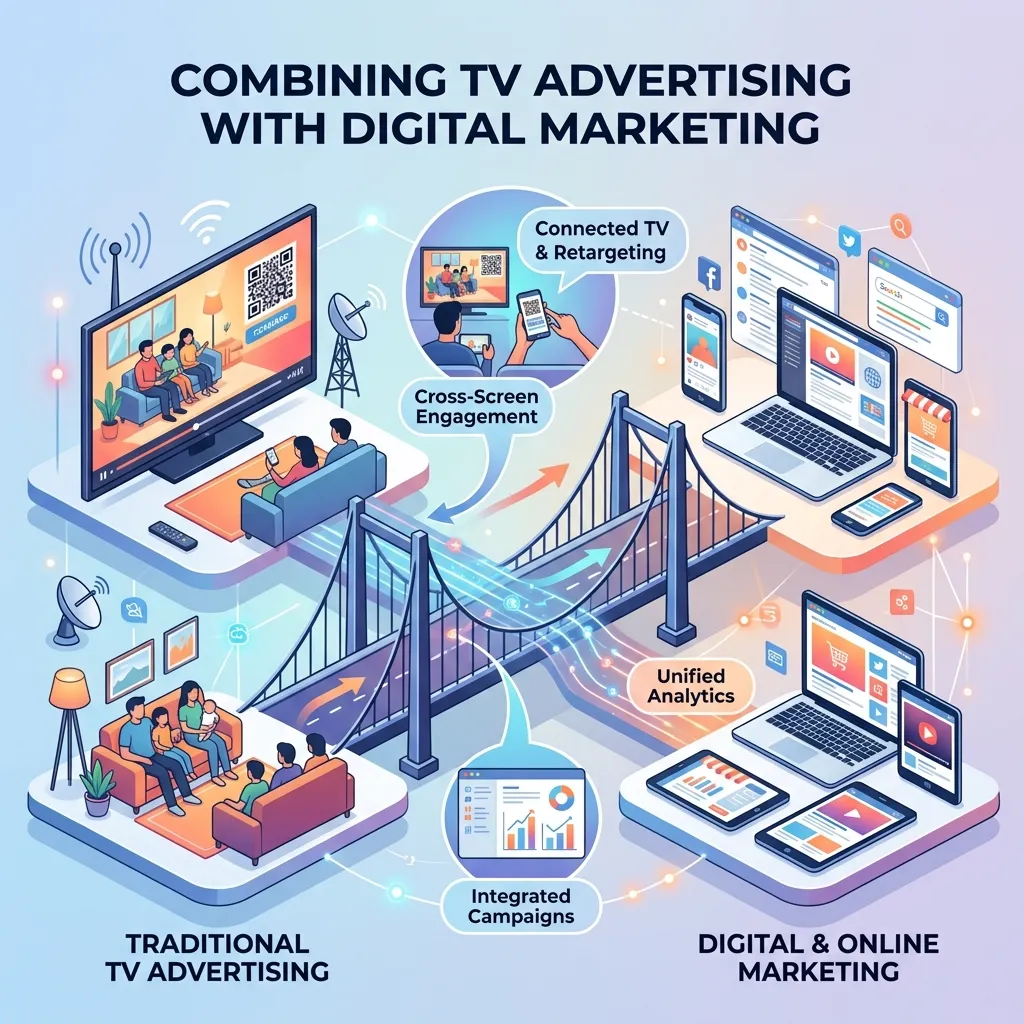
Television does not need to operate independently.
Restaurants can combine TV campaigns with:
- Search advertising
- Social media
- Email marketing
- Online ordering
- Website promotions
- Retargeting
- Influencer marketing
For example, a television commercial could introduce a new menu item while social media provides behind-the-scenes content and online advertising reminds viewers about the promotion.
This creates a connected customer journey across multiple channels.
Restaurant TV Ad Campaign Checklist
Before launching a campaign, review the following:
- Campaign objective is defined
- Target audience is identified
- Main message is clear
- Restaurant branding is visible
- Food visuals are high quality
- Location is easy to find
- Offer is simple
- Call to action is clear
- Commercial length is appropriate
- TV placement matches the audience
- Tracking method is established
- Campaign performance will be reviewed
Conclusion
A well-planned restaurants TV ad can help restaurants build awareness, showcase their food, promote special offers, and create stronger connections with local customers. However, simply appearing on television does not guarantee results.
The strongest campaigns begin with a clear objective and target audience. From there, restaurants can create visually appealing commercials, communicate one compelling message, use a strong call to action, choose appropriate TV placements, and measure the resulting business impact.
Restaurants should also consider integrating television advertising with digital marketing channels. Combining TV exposure with search, social media, online ordering, and other digital touchpoints can create a more complete customer journey.
Ultimately, the goal of restaurant television advertising is not simply to get viewers to watch a commercial. It is to make the restaurant memorable, create a desire to visit, and give customers a clear reason to take action.
Frequently Asked Questions
1. What is a restaurants TV ad?
A restaurants TV ad is a television commercial designed to promote a restaurant, its food, services, location, special offers, or overall dining experience.
2. Are TV ads effective for restaurants?
They can be effective when the campaign has a clearly defined audience, compelling creative, appropriate placement, and measurable objectives.
3. How long should a restaurant TV commercial be?
Common formats include 15, 30, and 60 seconds. A 30-second commercial often provides enough time to communicate a focused message without becoming unnecessarily long.
4. What should a restaurant show in a TV commercial?
Restaurants can show signature dishes, food preparation, restaurant atmosphere, customers enjoying meals, special offers, branding, location, and a clear call to action.
5. How much does a restaurant TV ad cost?
Costs depend on production, broadcast market, commercial length, frequency, programming, and media placement. Local campaigns generally require less investment than national campaigns.
6. Should a small restaurant advertise on TV?
A small restaurant can consider local TV advertising if its target customers are concentrated in a specific geographic market and the campaign can be supported by an appropriate budget.
7. What is the best TV ad length for a restaurant?
There is no universal answer. A 15-second commercial can work for a simple promotion, while 30 or 60 seconds may be better for storytelling and brand-building.
8. How can restaurants target the right TV audience?
Restaurants can select programming, geographic markets, time periods, and audience segments that closely match their ideal customers.
9. Should restaurant TV ads include discounts?
Discounts can encourage immediate action, but they are not required. Restaurants can also promote signature dishes, experiences, new locations, or unique value propositions.
10. How can restaurants measure TV advertising results?
Restaurants can track website visits, calls, reservations, coupon codes, online orders, branded searches, customer surveys, and sales changes during the campaign.
11. Can TV advertising work with digital marketing?
Yes. Restaurants can combine TV advertising with search, social media, online ordering, retargeting, and other digital channels to create a more connected marketing campaign.
12. What makes a restaurant TV ad successful?
A successful restaurant TV ad usually has a clear objective, strong food visuals, memorable branding, relevant targeting, a compelling message, and a clear call to action.