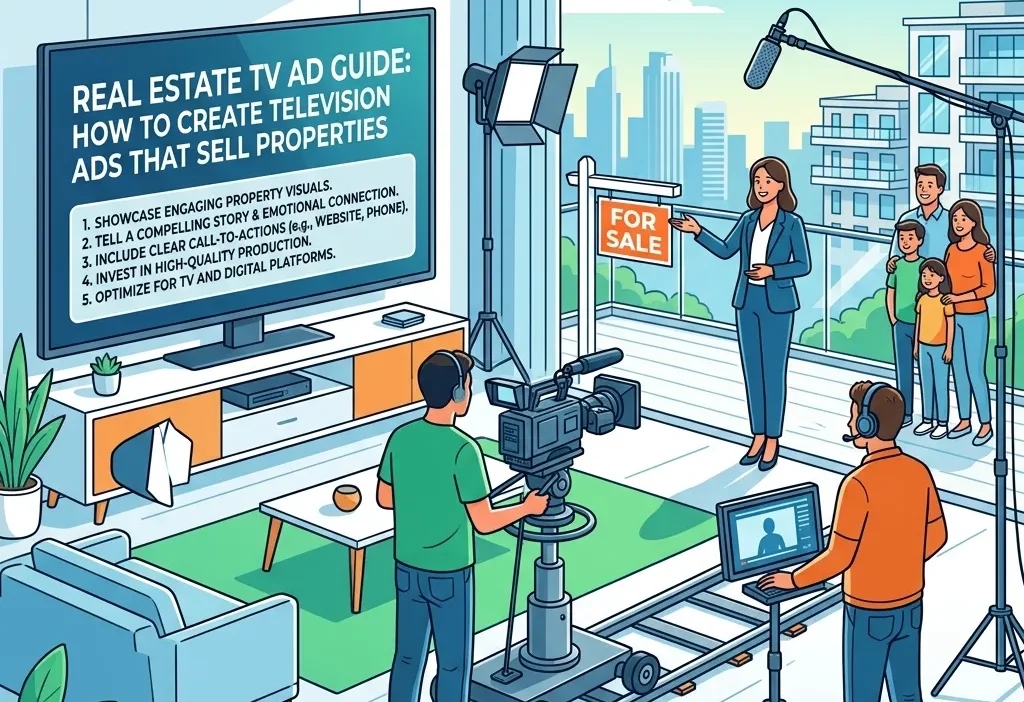
Real estate is an industry built on trust, visibility, and emotional decision-making. Buyers and sellers rarely choose a property based on a single fact. Location, price, design, lifestyle, security, convenience, and the feeling of owning a particular home can all influence the final decision. This is why television advertising can be a powerful channel for real estate companies that want to reach potential buyers at scale.
A well-planned real estate TV ad guide can help agents, brokers, developers, and property marketers understand how to turn a television commercial into a lead-generation tool. Instead of simply showing photographs of houses, an effective real estate commercial tells a story, creates desire, establishes credibility, and gives viewers a clear reason to take action.
Television also combines several communication formats at once. Property marketers can use professional video, voice-over, music, text, graphics, testimonials, neighborhood footage, and calls to action within a short commercial.
This guide explains how real estate TV advertising works, what makes a property commercial effective, how to structure an advertisement, how to target the right audience, and how to measure campaign performance.
What Is a Real Estate TV Ad?
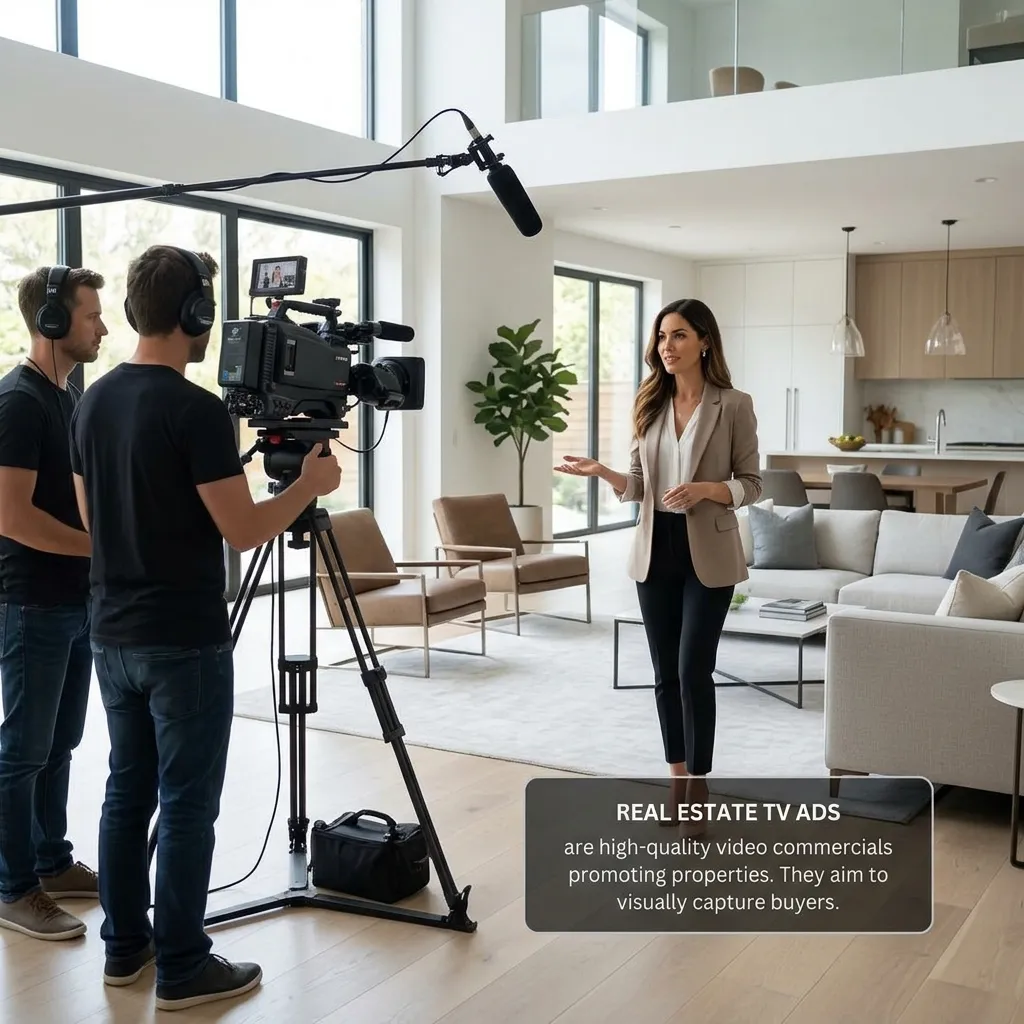
A real estate TV ad is a television commercial designed to promote properties, real estate services, developments, communities, or property-related offers.
Depending on the campaign objective, the advertisement may promote:
- Residential properties
- Luxury homes
- Apartments and condominiums
- Commercial buildings
- New housing developments
- Land and investment properties
- Vacation homes
- Property management services
- Real estate agencies
- Open houses
- New property launches
The purpose is not always to generate an immediate sale. A real estate TV ad can also build brand awareness, generate website visits, increase inquiries, encourage open-house attendance, or establish a company as a trusted property specialist.
For businesses new to television, understanding the fundamentals of television advertising can provide a useful starting point.
Why Real Estate Companies Use TV Advertising
Real estate purchases are highly visual. Buyers want to see rooms, neighborhoods, architecture, outdoor spaces, amenities, and lifestyles before they consider contacting an agent.
Television is particularly useful because it allows advertisers to demonstrate these elements through moving images rather than static property listings.
1. Television Creates Strong Visual Impact
A property can look very different when presented through professional video.
Instead of displaying one photograph of a living room, a commercial can show:
- The exterior of the property
- The entrance
- The living room
- The kitchen
- Bedrooms
- Bathrooms
- Outdoor spaces
- Views
- Nearby amenities
- Local neighborhoods
This creates a more complete impression of the property.
2. TV Builds Brand Recognition
People may not purchase a property immediately after seeing an advertisement. However, repeated exposure can help them remember the agency or development company when they eventually begin searching.
Brand familiarity becomes especially important in competitive real estate markets where multiple agencies advertise similar properties.
3. TV Can Establish Trust
Buying property involves significant financial risk. Consumers therefore look for signals that a real estate company is legitimate and professional.
A polished commercial can communicate credibility through:
- Professional production
- Consistent branding
- Customer testimonials
- Clear contact information
- Recognizable agents
- Property demonstrations
- Strong visual identity
Trust is also closely connected to emotional communication. For additional background, marketers can explore the benefits of emotional marketing.
4. TV Reaches Local Audiences
Real estate is inherently location-based. A residential development may only be relevant to people within a specific city, region, or market.
Local television advertising can therefore help real estate companies focus their message on audiences who are geographically relevant.
Real Estate TV Ad Guide: Start With the Campaign Goal

Before producing a commercial, determine exactly what the advertisement is supposed to accomplish.
A campaign designed to sell luxury apartments will require a different message from a campaign designed to generate open-house visits.
Common objectives include:
| Campaign Goal | Recommended Message |
|---|---|
| Generate property leads | Highlight property benefits and contact options |
| Promote an open house | Emphasize date, location, and urgency |
| Launch a development | Showcase lifestyle, amenities, and future value |
| Build agency awareness | Focus on expertise and trust |
| Sell luxury properties | Emphasize exclusivity and experience |
| Promote investment property | Highlight location, opportunity, and potential |
| Generate website traffic | Use a memorable URL and strong CTA |
A clear objective makes it easier to determine the commercial’s script, visuals, audience, and call to action.
Understand the Real Estate Audience
One of the most important principles in this real estate TV ad guide is audience targeting.
Not every property is suitable for every viewer.
A commercial promoting family homes may focus on parents, schools, parks, safety, and space. A luxury property advertisement may emphasize privacy, architecture, premium amenities, and exclusivity.
Consider audience characteristics such as:
- Age
- Income level
- Family situation
- Location
- Homeownership status
- Investment goals
- Lifestyle
- Property preferences
- Buying timeline
For example, a commercial for affordable first-time-buyer apartments could focus on accessibility, financing options, transportation, and convenience.
A luxury development could instead focus on private amenities, premium materials, views, architecture, and exclusivity.
What Makes a Real Estate TV Ad Effective?
An effective real estate commercial does more than display a property.
It communicates a compelling reason to care.
Several elements can make the difference between an advertisement viewers remember and one they forget within seconds.
Strong Opening
The first few seconds are critical.
Instead of beginning with a long company introduction, start with something visually or emotionally compelling.
For example:
“Imagine waking up to this view every morning.”
The commercial can immediately reveal an attractive property scene.
High-Quality Property Footage
Real estate is a visual product, so production quality matters.
Use:
- Smooth camera movements
- Well-lit interiors
- Exterior drone footage where appropriate
- Wide-angle property shots
- Close-ups of premium features
- Neighborhood footage
- Lifestyle scenes
The objective is to make viewers feel as though they are experiencing the property.
Clear Value Proposition
Viewers should quickly understand why the property deserves attention.
A value proposition might focus on:
- Prime location
- Affordable pricing
- Large living spaces
- Modern amenities
- Energy efficiency
- Security
- Convenient transportation
- Luxury design
- Investment potential
Avoid filling the commercial with too many benefits. Choose the strongest points and communicate them clearly.
How to Structure a Real Estate TV Commercial
A simple structure can make production easier.
1. Hook
Start with an attention-grabbing scene, statement, question, or visual.
2. Property Introduction
Introduce the home, development, or real estate company.
3. Feature Demonstration
Show the most important features through video.
4. Lifestyle Connection
Explain what living in the property could feel like.
5. Trust Element
Use a testimonial, agent introduction, company credentials, or another credibility signal.
6. Call to Action
Tell viewers exactly what to do next.
This structure aligns with the broader principles discussed in guides on creating television ads that captivate.
Use Storytelling Instead of Simply Listing Features
One of the biggest mistakes in property advertising is creating a commercial that sounds like a real estate listing.
A list of features may look like this:
- Three bedrooms
- Two bathrooms
- Modern kitchen
- Large backyard
- Garage
- Swimming pool
While these details are useful, they do not necessarily create an emotional connection.
Instead, turn features into experiences.
For example:
Feature: Large backyard
Experience: A place where children can play and families can spend weekends together.
Feature: Modern kitchen
Experience: A comfortable space for preparing meals and entertaining guests.
Feature: Large windows
Experience: Bright rooms filled with natural light.
This approach gives viewers a reason to imagine themselves living in the property.
The Psychology Behind Real Estate TV Advertising
Property purchases are both logical and emotional.
Buyers may evaluate mortgage costs, square footage, taxes, location, and construction quality. At the same time, they may imagine family memories, social status, comfort, independence, security, and lifestyle.
This makes emotional communication particularly important.
Research and marketing discussions around emotions and consumer behavior demonstrate why emotional factors can influence how people respond to marketing messages.
A real estate commercial can use emotions such as:
- Security
- Belonging
- Pride
- Comfort
- Achievement
- Excitement
- Nostalgia
- Freedom
- Family connection
The emotional message should support the property rather than manipulate the audience.
Use Real People When Appropriate
People can make real estate advertising more relatable.
Consider including:
- Homeowners
- Buyers
- Families
- Real estate agents
- Developers
- Property managers
- Local residents
Customer testimonials can be particularly effective because they provide social proof.
Instead of simply saying, “Our homes are high quality,” a satisfied customer can explain why they chose the property and what they enjoy about it.
Authenticity is important. Testimonials should represent genuine customer experiences.
For more information about the broader psychological role of social proof, marketers can also explore social proof psychology in marketing.
Show the Neighborhood, Not Just the House

A real estate purchase is also a location decision.
This means a commercial should not necessarily spend every second inside the property.
Show relevant surroundings such as:
- Schools
- Parks
- Shopping centers
- Restaurants
- Transportation
- Business districts
- Beaches
- Entertainment areas
- Healthcare facilities
- Community spaces
For a family-oriented development, showing nearby schools and parks may be more persuasive than another shot of a bedroom.
For an urban apartment, transportation, restaurants, offices, and entertainment may be more important.
Create Different TV Ads for Different Property Segments
A single commercial may not work equally well for every audience.
Luxury Real Estate
Luxury advertisements should emphasize:
- Architecture
- Exclusivity
- Privacy
- Premium materials
- Views
- Amenities
- Location
- Lifestyle
The production should feel sophisticated without becoming unnecessarily complicated.
Family Homes
Family-oriented commercials can focus on:
- Space
- Safety
- Schools
- Parks
- Community
- Convenience
- Comfortable living
New Developments
New development campaigns can highlight:
- Construction progress
- Future amenities
- Floor plans
- Community design
- Location
- Launch offers
- Expected completion
Investment Properties
Investment-focused advertisements should emphasize relevant financial and market considerations without making unsupported guarantees.
The message could focus on:
- Location
- Property demand
- Development potential
- Rental market considerations
- Accessibility
- Property type
Choose the Right Commercial Length
Real estate TV ads can be produced in several lengths.
Common formats include:
- 15-second commercials
- 30-second commercials
- 60-second commercials
- Longer branded segments
A 15-second advertisement needs a highly focused message.
A 30-second commercial provides more room for property footage, benefits, branding, and a call to action.
A 60-second advertisement can support a stronger story, testimonial, neighborhood presentation, or property tour.
The right length depends on the campaign objective, media placement, budget, and complexity of the message.
Build a Strong Call to Action
A commercial should never leave viewers wondering what to do next.
A real estate TV ad can encourage viewers to:
- Call an agent
- Visit a website
- Schedule a property tour
- Attend an open house
- Request a brochure
- Book a consultation
- Scan a QR code
- Visit a sales center
Keep the CTA simple.
For example:
“Visit our website today to schedule a private viewing.”
Or:
“Call now to arrange your property tour.”
Repeat the CTA visually and verbally when possible.
Use QR Codes Carefully
QR codes can connect television viewers with digital landing pages.
A viewer can scan the code using a smartphone and immediately access:
- Property details
- Floor plans
- Virtual tours
- Contact forms
- Appointment booking
- Pricing information
- Brochures
However, the landing page must be mobile-friendly. A QR code is only useful if the destination provides a smooth user experience.
Coordinate TV Advertising With Digital Marketing
Television does not have to operate separately from digital campaigns.
A real estate company can create a connected customer journey:
TV Ad → Website → Property Page → Lead Form → Agent Contact → Property Viewing
Television builds awareness while digital channels capture measurable actions.
For example, the commercial might introduce a new development and direct viewers to a dedicated landing page. Digital campaigns can then retarget visitors who explored the property online.
This integrated approach can make television advertising more measurable and efficient.
How to Measure Real Estate TV Ad Performance
Measuring results is essential because television advertising involves significant production and media costs.
Useful metrics include:
Website Traffic
Monitor whether website visits increase during and after the campaign.
Lead Volume
Track:
- Phone calls
- Contact forms
- Property inquiries
- Viewing requests
- Consultation bookings
QR Code Scans
If the commercial includes a QR code, monitor scans and subsequent actions.
Branded Search
An increase in searches for the real estate company or development name can indicate growing awareness.
Property Viewings
For real estate businesses, property tours can be a valuable offline conversion metric.
Cost Per Lead
Calculate how much the campaign costs to generate each qualified inquiry.
For broader guidance on campaign measurement, see this guide to television advertising effectiveness.
Common Mistakes in Real Estate TV Advertising
Even expensive commercials can fail when the strategy is weak.
Too Much Information
Trying to communicate every property feature in 30 seconds can overwhelm viewers.
Focus on the strongest selling points.
Weak Opening
A slow introduction may lose viewer attention before the property appears.
Poor Production Quality
Bad lighting, unstable footage, unclear audio, or weak editing can make an expensive property look less attractive.
No Clear CTA
If viewers do not know what to do next, interest may not turn into leads.
Ignoring the Audience
A generic commercial may fail to connect with a specific buyer segment.
Making Unsupported Claims
Avoid unrealistic statements about investment returns, appreciation, savings, or guaranteed outcomes.
Forgetting the Location
For real estate, location is often one of the most important selling points. Make it clear where the property is located and why the location matters.
Real Estate TV Ad Production Checklist
Before launching a campaign, review the following checklist:
- Define the campaign objective
- Identify the target audience
- Choose the property or service
- Develop the main message
- Write a concise script
- Plan the visual sequence
- Capture high-quality property footage
- Include relevant neighborhood footage
- Add branding
- Use readable on-screen text
- Include contact information
- Add a clear CTA
- Test the landing page
- Test QR codes
- Confirm legal and advertising requirements
- Establish tracking methods
- Select appropriate TV placements
- Monitor campaign results
How to Improve a Real Estate TV Ad Over Time
Your first commercial does not have to be perfect.
Use campaign data to determine what works.
If website traffic increases but leads remain low, the landing page or offer may need improvement.
If viewers remember the company but not the property, the commercial may need stronger property branding.
If viewers engage with one property feature more than others, future commercials can emphasize that feature.
Testing can also involve:
- Different openings
- Different CTAs
- Different property footage
- Different emotional messages
- Different commercial lengths
- Different audience segments
Television campaigns can become more effective when creative decisions are informed by actual performance rather than assumptions.
The Role of Emotional Storytelling in Property Advertising
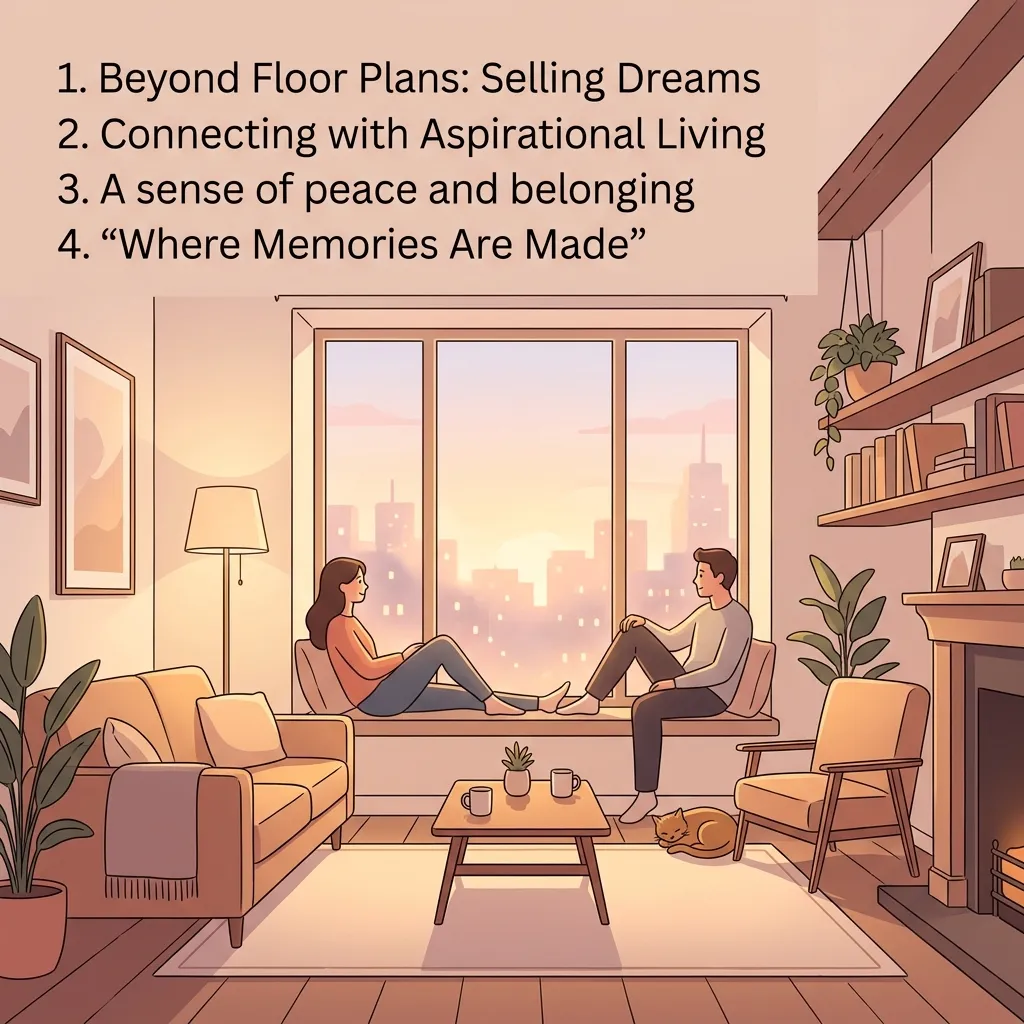
A home is more than a physical structure.
For many buyers, it represents a future.
It can represent:
- Starting a family
- Building financial stability
- Achieving independence
- Entertaining friends
- Creating memories
- Moving to a better neighborhood
- Reaching a personal milestone
This gives real estate advertisers an opportunity to tell stories rather than simply sell square footage.
A strong commercial might begin with a family arriving home after a long day, transition into scenes of the property, show the neighborhood, and end with the family enjoying time together.
The property becomes part of the story.
That is often more memorable than a sequence of disconnected features.
Should Real Estate Companies Still Advertise on TV?
Yes, television can remain valuable for real estate companies when it is used strategically.
The channel is particularly useful when a company wants to:
- Build broad local awareness
- Launch a development
- Establish brand credibility
- Promote premium properties
- Support a major sales event
- Reach audiences beyond search
- Combine mass awareness with digital lead generation
However, TV advertising should not automatically replace other marketing channels.
The strongest campaigns often combine television with digital advertising, search, social media, email, property portals, content marketing, and direct lead follow-up.
The goal is to create a connected marketing system rather than rely on one channel.
Final Thoughts
A successful real estate TV ad guide should ultimately lead to one principle: do not simply show people a property—help them understand why the property matters.
Effective real estate television advertising combines visual storytelling, audience targeting, emotional communication, strong production, clear positioning, and measurable calls to action.
Start with a specific objective. Understand the audience. Showcase the property through high-quality visuals. Demonstrate the lifestyle and location. Build trust with authentic communication, and make the next step obvious.
Most importantly, connect television advertising with the rest of the marketing journey. When TV creates awareness and digital channels capture interest, real estate companies can turn attention into measurable opportunities.
With the right strategy, a television commercial can become more than a property showcase. It can become the first step in a buyer’s journey from seeing a property to imagining life there—and finally taking action.
Frequently Asked Questions
1. What is a real estate TV ad?
A real estate TV ad is a television commercial designed to promote properties, developments, real estate agencies, open houses, or property-related services.
2. How long should a real estate TV commercial be?
Common formats include 15, 30, and 60 seconds. A 30-second commercial is often useful when advertisers need enough time to showcase the property and deliver a clear call to action.
3. What should a real estate TV ad include?
A strong commercial can include property footage, key benefits, location information, branding, trust signals, contact details, and a clear call to action.
4. Can TV advertising generate real estate leads?
Yes. A commercial can generate leads through phone calls, websites, QR codes, landing pages, appointment requests, and open-house registrations.
5. Should real estate ads focus on emotions?
Emotions can help viewers imagine how a property fits into their lives. However, emotional messaging should be supported by accurate and useful property information.
6. Should a real estate commercial show the neighborhood?
Yes. Location is a major part of a property purchase, so relevant neighborhood footage can strengthen the advertisement.
7. Are QR codes useful in real estate TV ads?
QR codes can provide a direct connection between television and mobile experiences, allowing viewers to access property details, virtual tours, or contact forms.
8. How can real estate companies measure TV advertising?
Businesses can monitor website traffic, calls, leads, QR scans, property viewings, branded searches, and cost per lead.
9. Can small real estate agencies use TV advertising?
Yes. Local television advertising can allow smaller agencies to focus on geographically relevant audiences rather than trying to reach a national market.
10. What is the biggest mistake in real estate TV advertising?
One common mistake is trying to communicate too many details. A focused message with strong visuals and one clear CTA is generally easier for viewers to remember.
11. Should real estate TV ads be combined with digital marketing?
Yes. TV can create awareness while websites, landing pages, search, social media, and other digital channels can capture and nurture interested prospects.
12. What makes a real estate TV ad memorable?
Strong visuals, a clear message, emotional relevance, distinctive branding, storytelling, and a memorable call to action can all improve recall.