Advertising is an essential part of modern marketing, helping businesses promote their products, reach potential customers, and increase sales. Understanding the different types of advertising allows companies to choose the right methods for their goals, audience, and budget. From traditional television commercials to digital campaigns on social media, each advertising method offers unique benefits. In this guide, you will discover 15 types of advertising with examples, explore their advantages, and learn how businesses can use them to improve brand awareness and attract more customers.
Types of Advertising with Examples
The types of advertising refer to the different methods businesses use to communicate promotional messages to their target audiences. These methods can include traditional media, such as newspapers and television, as well as digital platforms, such as search engines and social networks.
For example, a clothing brand might use Instagram ads to promote a new collection, while a local restaurant might distribute flyers to attract nearby customers. A large company may combine television commercials with online video campaigns to reach a wider audience.
Choosing the right types of advertising depends on the target market, marketing objectives, and available budget. Businesses should consider where their customers spend time and which advertising channels are most likely to influence their purchasing decisions.
Different Types of Advertising
Different types of advertising help businesses reach customers at various stages of their buying journey. Some methods focus on building brand awareness, while others encourage immediate purchases, website visits, or inquiries.
For instance, search advertising connects businesses with people actively looking for particular products or services. Display advertising introduces brands to audiences while they browse websites, and email advertising promotes offers directly to subscribers.
A successful marketing strategy often combines several methods rather than relying on one channel. Businesses can also improve campaign performance by developing clear promotional messages. Our guide to event marketing messaging and engagement explains how effective messaging can encourage audience participation and strengthen marketing communication.
Traditional Advertising Methods
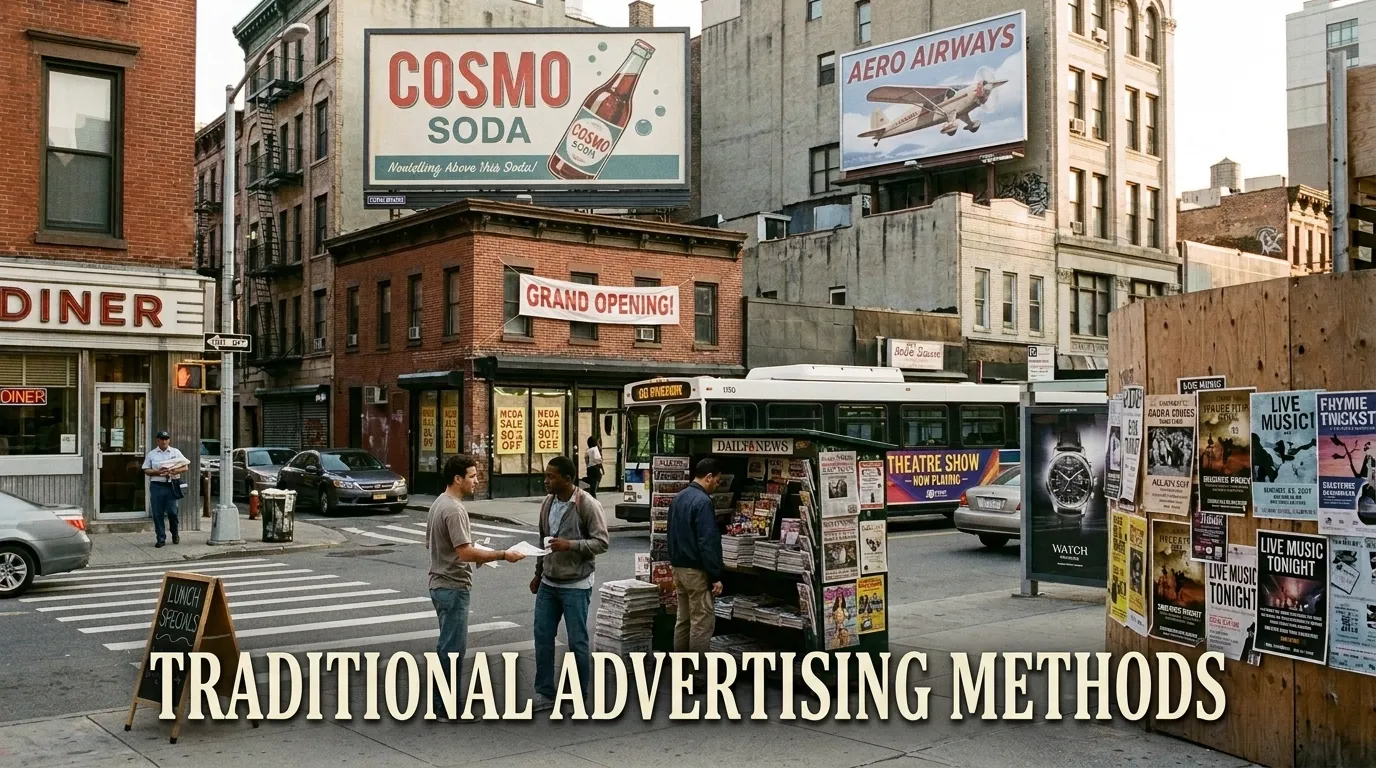 Traditional advertising uses established media channels to reach consumers. Common examples include newspapers, magazines, television, radio, billboards, and printed promotional materials.
A supermarket might advertise weekly discounts in a local newspaper, while a furniture company could use radio commercials to promote a seasonal sale. These approaches remain useful for businesses targeting specific geographic areas or audiences that regularly consume traditional media.
One major advantage of traditional advertising is its ability to reach large audiences and build familiarity with a brand. However, some traditional campaigns can be expensive, and measuring their precise impact may be more difficult than tracking digital advertising results.
Businesses should compare audience reach, production costs, and expected returns before choosing traditional advertising methods.
Digital Advertising Examples
Digital advertising involves promoting products or services through internet-connected platforms. Examples include search engine ads, online video commercials, website banners, sponsored social media posts, and paid influencer promotions.
For example, an online electronics store might display Google search ads when customers search for a particular smartphone. A travel company could use video advertisements to showcase holiday destinations and encourage bookings.
Digital campaigns offer useful targeting options, including location, interests, search intent, and demographic characteristics. Advertisers can also monitor impressions, clicks, conversions, and spending to understand campaign performance.
Businesses planning their marketing expenses should consider how each channel contributes to their objectives. The guide to marketing budgeting, planning, and optimizing spend provides relevant insights into allocating budgets and improving marketing efficiency.
Online Advertising Techniques
Online advertising techniques help businesses attract customers through websites, search engines, digital content, and other internet-based channels. Common approaches include pay-per-click advertising, retargeting, sponsored content, and native advertising.
Pay-per-click advertising allows businesses to pay when someone clicks an advertisement, depending on the platform and campaign model. Retargeting displays ads to people who previously visited a website or interacted with a business.
For example, a customer who views running shoes on an online store may later see advertisements featuring similar products. This reminder can encourage the customer to return and complete a purchase.
The most effective online advertising techniques combine relevant messaging, suitable audience targeting, and clear calls to action. Advertisers should also review campaign results regularly to identify opportunities for improvement.
Offline Advertising Methods
Offline advertising promotes products and services through channels that do not primarily depend on internet delivery. Examples include direct mail, printed brochures, event sponsorships, posters, and promotional displays in physical locations.
A local gym might distribute brochures in nearby residential areas, while a real estate agency could place advertisements in community magazines. Businesses can also sponsor local events to connect with potential customers face-to-face.
These methods are particularly valuable for companies serving specific neighborhoods or customers who prefer physical interactions. Offline advertising can also support digital campaigns by directing people to a website, social media account, or QR code.
Combining online and offline methods creates opportunities to reach customers through multiple touchpoints and reinforce the same brand message.
Types of Digital Advertising
 The types of digital advertising include search engine advertising, display ads, social media promotions, online video ads, native advertising, and programmatic advertising.
Search ads appear alongside relevant search results, while display ads use visual formats across websites and applications. Video advertisements appear before, during, or after online videos, depending on the platform. Programmatic advertising uses automated technology to purchase and deliver digital ad placements.
For example, a software company could use search ads to reach people looking for business tools and video ads to demonstrate its product features. A retailer might use display advertising to promote seasonal offers.
Digital advertising is valuable because it supports audience segmentation and performance measurement. Businesses can test different headlines, images, and offers to discover which combinations produce the best results.
Print Advertising Examples
Print advertising uses physical publications and printed materials to communicate promotional messages. Newspapers, magazines, brochures, catalogs, flyers, and direct-mail postcards are common examples.
A restaurant might publish a coupon in a local newspaper, while a luxury furniture brand could place a full-page advertisement in an interior design magazine. A real estate company might distribute property brochures featuring photographs, prices, and contact information.
Print advertising can be especially effective when the publication reaches a relevant audience. For example, advertisements in a specialist industry magazine may connect businesses with readers interested in a particular product category.
Although print advertising offers fewer immediate tracking options than many digital channels, businesses can measure responses through promotional codes, dedicated phone numbers, and campaign-specific website links.
Television Advertising Examples
Television advertising uses video commercials broadcast through television networks or delivered through connected TV platforms. These advertisements commonly promote consumer goods, services, entertainment, and major retail campaigns.
For example, a beverage company might create a commercial showing friends enjoying a drink during a celebration. A car manufacturer could use cinematic visuals to highlight a vehicle’s design, comfort, and safety features.
Television advertising can combine sound, movement, storytelling, and visual demonstrations to create memorable brand experiences. It may be particularly useful for companies seeking broad awareness among large audiences.
However, production and airtime costs can be significant, so businesses should carefully evaluate audience reach and campaign objectives. For additional information, explore the benefits of TV advertising to understand how television can support brand promotion.
Radio Advertising Methods
Radio advertising promotes products and services through audio commercials broadcast on radio stations or delivered through digital audio platforms. Common formats include prerecorded advertisements, live presenter endorsements, sponsored programs, and short promotional announcements.
For example, a car dealership might advertise special financing offers during morning drive-time programming. A local restaurant could promote lunch discounts to listeners in its service area.
Radio advertising can be useful for reaching commuters, local communities, and audiences who regularly listen to particular stations. It can also communicate a message repeatedly without requiring the visual production associated with television.
To improve results, advertisers should use clear language, memorable brand names, and a simple call to action. Selecting programs that match the target audience is equally important.
Social Media Advertising Examples
Social media advertising uses paid promotional placements on platforms such as Facebook, Instagram, TikTok, LinkedIn, and Pinterest. Advertisements may appear as images, short videos, stories, carousels, or sponsored posts.
For example, a beauty brand could promote a skincare product through Instagram video ads, while a business-to-business software company might use LinkedIn advertising to reach professionals and decision-makers.
These campaigns allow advertisers to target audiences based on factors such as location, interests, professional characteristics, and previous interactions, subject to platform capabilities and privacy rules.
Businesses should develop a consistent social media strategy with relevant content, attractive creative materials, and measurable goals. For practical guidance, read this social media marketing strategy guide to learn how strategic planning can support stronger engagement and business growth.
Outdoor Advertising Techniques
Outdoor advertising, sometimes called out-of-home advertising, promotes brands in public spaces. Examples include billboards, transit advertisements, digital outdoor screens, bus shelters, posters, and advertisements inside shopping centers.
A telecommunications company might place a billboard along a busy highway to promote a new service. A coffee shop could use a sidewalk sign to attract people walking nearby.
Outdoor advertising can increase brand visibility through repeated exposure in high-traffic locations. Digital outdoor displays may also allow businesses to change messages according to schedules or campaign requirements.
The best outdoor advertisements typically use concise wording, recognizable branding, and strong visual elements. Location selection is essential because the advertisement must reach people who are relevant to the business.
Mobile Advertising Examples
Mobile advertising reaches customers through smartphones and other mobile devices. Common formats include in-app advertisements, mobile search ads, SMS promotions, mobile video ads, and location-based advertising.
For instance, a food delivery application might display a promotion for discounted meals, while a retailer could send an SMS coupon to customers who have agreed to receive marketing messages.
Mobile advertising is useful because people frequently use their phones to search for products, compare prices, watch videos, and make purchases. Advertisements can also direct customers to mobile-friendly landing pages where they can learn more or complete transactions.
Businesses should prioritize fast-loading pages, readable content, and simple conversion processes. They must also respect consent requirements and applicable privacy regulations when collecting or using customer information.
Advertising Methods for Businesses
Advertising methods for businesses should match their goals, audience, industry, and budget. Small businesses may benefit from local search advertising, social media campaigns, email promotions, and community-based marketing.
Larger companies may invest in television, programmatic advertising, sponsorships, and coordinated multichannel campaigns. Business-to-business organizations often use search advertising, LinkedIn promotions, industry publications, and sponsored webinars to reach professional buyers.
The right combination depends on whether a company wants to increase awareness, generate leads, drive sales, or retain existing customers.
Businesses should establish measurable objectives before launching campaigns. They can then evaluate performance through indicators such as cost per lead, conversion rate, customer acquisition cost, and return on advertising spend.
For a broader understanding of how online promotion supports business growth, explore the benefits of digital marketing. This resource complements the discussion of advertising by explaining the wider value of digital marketing activities.
Advantages of Different Types of Advertising
 The advantages of different types of advertising depend on how well each method supports a company’s marketing objectives. Traditional advertising can provide broad exposure, while digital advertising often offers more detailed targeting and measurable campaign results.
Print advertising can deliver detailed information in a physical format, and television can combine storytelling with memorable visuals and sound. Radio provides audio-based reach, while outdoor advertising increases visibility in public spaces.
Social media advertising encourages interaction and can help businesses connect with defined audiences. Mobile advertising can reach customers on devices they use throughout the day, while search advertising connects brands with people actively seeking relevant products or services.
Each approach also has limitations. Some channels require substantial investment, while others face audience competition or limited attention. Businesses should compare the costs, expected reach, relevance, and measurable outcomes of available options.
Ultimately, the most effective advertising strategy is one that reaches the right audience with a clear message at the right time. Testing different channels, monitoring results, and refining campaigns can help businesses improve efficiency and achieve sustainable growth.
Conclusion
Understanding the different types of advertising helps businesses choose the right strategies to reach their target audience, promote their products, and achieve their marketing goals. From traditional methods such as television, radio, and print advertising to modern approaches such as social media, mobile, and search engine advertising, each method offers unique benefits. The best choice depends on your budget, target audience, industry, and business objectives.
FAQ
1. What are the 15 types of advertising?
The 15 types covered in this article include traditional, digital, online, offline, print, television, radio, social media, outdoor, and mobile advertising, along with broader advertising categories, techniques, business methods, and their advantages.
2. What is the most effective type of advertising?
The most effective type depends on the business, target audience, budget, and campaign goals. Search ads may work well for customers actively looking for a product, while social media or television advertising may be more suitable for building awareness.
3. What is the difference between traditional and digital advertising?
Traditional advertising generally uses channels such as television, radio, newspapers, and billboards. Digital advertising uses online platforms, including search engines, websites, applications, and social media.
4. What are some examples of digital advertising?
Examples include Google search ads, Instagram sponsored posts, YouTube video commercials, website display banners, and paid advertisements within mobile applications.
5. Is social media advertising suitable for small businesses?
Yes. Social media advertising can help small businesses reach relevant audiences with flexible budgets. Campaign success depends on audience selection, creative quality, offer relevance, and ongoing optimization.
6. What is the cheapest form of advertising?
There is no universally cheapest option. Organic social media content, referrals, and email marketing to an existing permission-based list can have relatively low distribution costs, while paid advertising expenses vary by market and competition.
7. What are the advantages of television advertising?
Television advertising can combine audio, visuals, and storytelling to build awareness and communicate product benefits. However, production and placement costs may be higher than those of some digital alternatives.
8. How can businesses choose the right advertising method?
Businesses should identify their target audience, define campaign objectives, establish a budget, compare available channels, and track relevant performance metrics before expanding their investment.
9. What is the difference between online and offline advertising?
Online advertising is delivered through internet-based channels, whereas offline advertising uses methods such as printed materials, broadcast media, and physical promotional displays. Businesses can combine both to improve overall reach.
10. How can businesses measure advertising success?
Businesses can measure advertising performance through impressions, reach, clicks, leads, conversion rates, sales, customer acquisition costs, and return on advertising spend. The most useful metrics depend on the campaign’s primary objective.