
TV commercial production helps businesses transform their marketing ideas into engaging television advertisements that capture attention, communicate brand value, and encourage customers to take action. From creative planning and scriptwriting to filming, editing, and broadcasting, every stage plays an important role in developing a successful advertisement. Understanding the production process, costs, creative techniques, and emerging advertising trends allows businesses to make informed decisions and create commercials that connect with their target audience.
TV Commercial Production Services
TV commercial production services help businesses create professional advertisements for television networks, cable channels, and other broadcast platforms. These services typically include concept development, scriptwriting, casting, location scouting, filming, editing, sound design, and final delivery. By managing these activities through a coordinated process, production professionals help brands turn their marketing objectives into compelling visual stories.
The right production approach depends on the company’s goals, target audience, budget, and industry. A retail brand may need a product-focused commercial, while a service provider might benefit from a customer testimonial or an emotional storytelling concept. Professional TV commercial production ensures that the message, visuals, and sound work together to create a consistent brand experience. Businesses can also connect television campaigns with their broader digital efforts by exploring email marketing automation, which can help nurture potential customers after an advertisement generates interest.
Television Advertising Production
Television advertising production involves developing advertisements that communicate a brand’s message within a limited amount of time. Because television combines moving images, dialogue, music, and storytelling, it offers businesses an opportunity to build awareness and establish an emotional connection with viewers. However, effective advertising requires more than attractive visuals. The commercial must deliver a clear message that viewers can understand and remember.
The process begins with identifying the target audience and defining the campaign’s primary objective. A company may want to introduce a new product, increase brand recognition, promote a seasonal offer, or encourage consumers to visit its website. Once the objective is established, the creative team develops a concept that supports the intended outcome. Successful television advertising production combines audience research, creative direction, technical expertise, and consistent brand messaging to produce an advertisement that supports measurable marketing goals.
TV Commercial Production Company
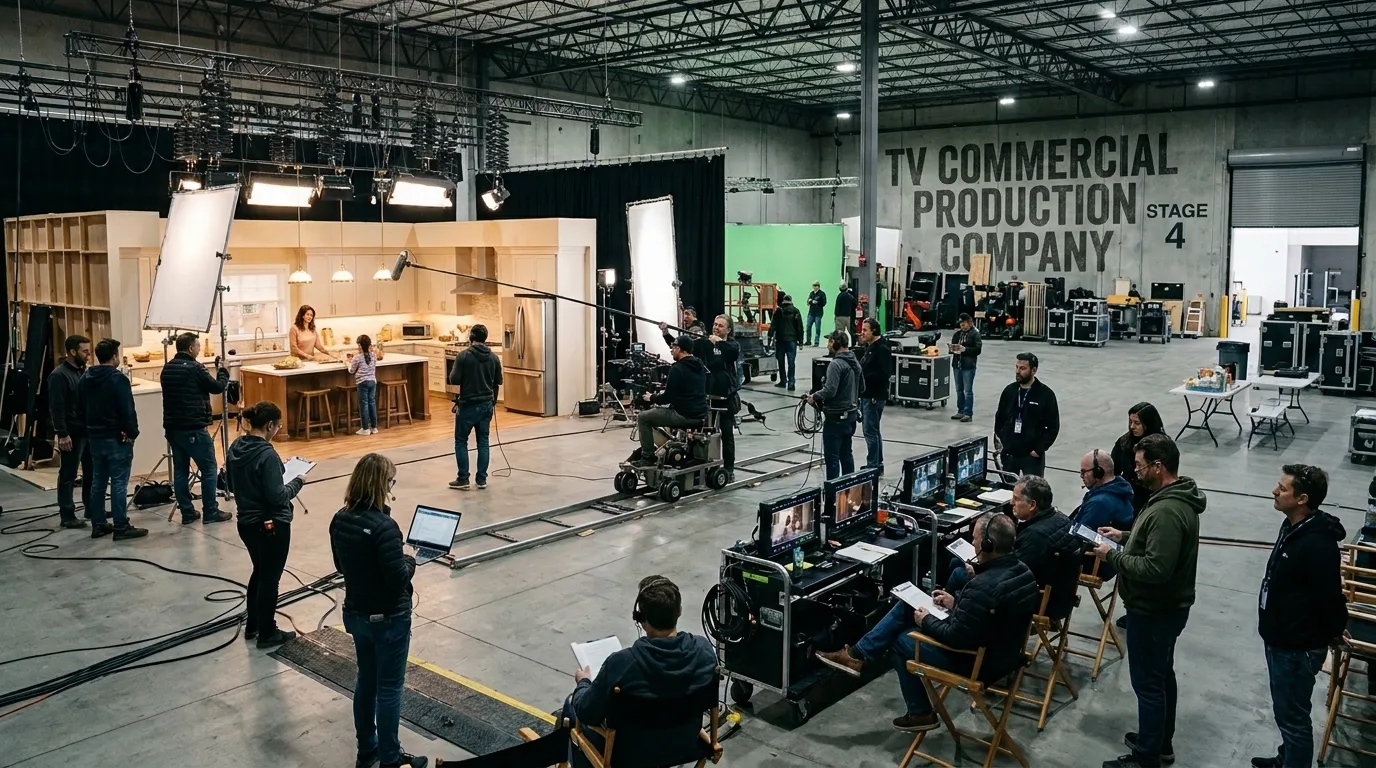 Choosing a reliable TV commercial production company is an important decision for businesses that want professional results. An experienced company can guide clients through creative planning, production scheduling, talent selection, filming, editing, and delivery. It can also help identify potential challenges before filming begins, reducing unnecessary delays and expenses.
When evaluating a production partner, businesses should review its portfolio, storytelling ability, technical capabilities, communication practices, and experience with similar projects. It is equally important to discuss timelines, revision policies, licensing, and the intended distribution channels. A strong production partner listens carefully to the client’s objectives instead of relying on a one-size-fits-all approach.
Companies planning larger marketing campaigns should also consider how television advertising fits into their overall business strategy. For example, businesses exploring online sales can use insights from e-commerce business ideas to identify opportunities for connecting commercial campaigns with digital storefronts and customer acquisition efforts.
Commercial Video Production Services
Commercial video production services cover the planning and creation of promotional videos designed to support business objectives. Although television commercials are one important category, commercial video production can also include online advertisements, product demonstrations, corporate videos, brand stories, and promotional content for social media.
Many businesses benefit from developing multiple versions of the same creative concept. A 30-second commercial may be suitable for television, while shorter edits can support digital campaigns and longer versions can provide additional product information online. This approach helps maintain consistent messaging across channels while making better use of the original production investment.
A well-planned commercial should have a recognizable visual identity, a compelling opening, and a clear call to action where appropriate. Professional lighting, careful framing, clean audio, and polished editing improve the viewing experience. When these elements support a relevant message, commercial video production services can help businesses communicate their value more effectively and strengthen audience engagement.
TV Advertisement Production Process
The TV advertisement production process generally moves through three major stages: pre-production, production, and post-production. Each stage contributes to the quality, consistency, and effectiveness of the final commercial.
Pre-production begins with research, campaign planning, concept development, scriptwriting, budgeting, and scheduling. The team determines what the advertisement should communicate, who will appear in it, where filming will take place, and what equipment will be required. Storyboards and shot lists help everyone understand the creative direction before the cameras start rolling.
Production is the filming stage. Directors, cinematographers, actors, lighting technicians, and other crew members work together to capture the planned scenes. Good coordination is essential because filming time can be expensive, and unexpected changes may affect the schedule.
During post-production, editors assemble the footage, refine the pacing, adjust colors, mix audio, add graphics, and prepare the final versions. The commercial is then reviewed for technical specifications, brand accuracy, legal requirements, and broadcast suitability. A structured TV commercial production process reduces confusion and helps ensure that the finished advertisement meets the campaign’s objectives.
Professional TV Ad Production
Professional TV ad production combines creativity with technical precision. Experienced teams understand how camera movement, lighting, music, dialogue, editing, and performance influence the way viewers interpret a message. Their role is not simply to make an advertisement look polished but to communicate the brand’s value in a memorable and persuasive way.
The most effective commercials usually focus on one central idea. Trying to explain every product feature or business benefit within a short advertisement can overwhelm viewers. Instead, a focused message supported by relatable situations, distinctive visuals, or an engaging story is more likely to leave a lasting impression.
Professional teams also consider accessibility, audience expectations, and brand consistency. Clear dialogue, readable on-screen text, appropriate pacing, and accurate product representations contribute to a stronger result. Businesses should establish their creative objectives early and maintain open communication throughout production to ensure that the final advertisement reflects their identity.
For a more comprehensive approach, companies can align their commercial campaigns with a broader digital marketing strategy guide. Integrating television with online channels makes it easier to reinforce campaign messages, guide interested viewers toward relevant content, and evaluate performance across different marketing activities.
Television Commercial Filming
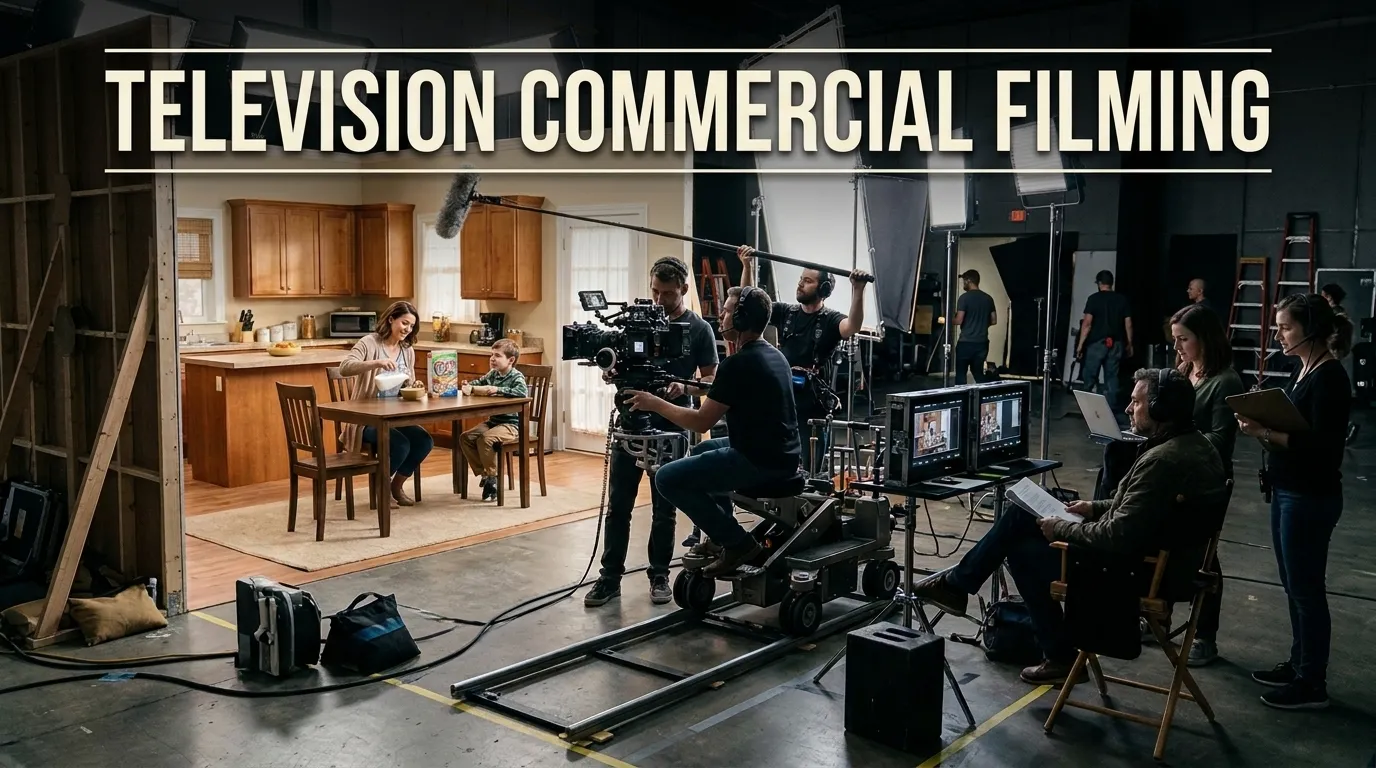 Television commercial filming transforms a prepared script and storyboard into actual footage. This stage requires careful coordination between the director, camera operators, lighting crew, performers, and production managers. Every scene should support the intended message while maintaining the visual quality expected from a professional advertisement.
Location selection can significantly influence the commercial’s appearance and production requirements. A studio offers greater control over lighting, sound, and background details, while an outdoor location may provide a more natural or distinctive setting. The decision should reflect the creative concept, budget, schedule, and practical filming conditions.
Lighting and sound are especially important because technical problems can distract viewers from the message. Clear dialogue, balanced exposure, consistent framing, and appropriate camera movement help produce professional footage. The crew may capture multiple takes and alternative shots so editors have enough material to build a smooth final sequence.
Preparation is essential for keeping filming on schedule. Confirming talent availability, obtaining location permissions, checking equipment, and planning backup options can help prevent costly interruptions. Careful execution during filming also reduces the need for extensive corrections during post-production.
TV Commercial Production Cost
TV commercial production cost varies according to the complexity of the concept, filming duration, crew size, talent fees, equipment, locations, editing requirements, and distribution needs. A simple studio advertisement featuring a product may require fewer resources than a commercial involving multiple locations, professional actors, elaborate sets, special effects, or extensive visual effects work.
Businesses should distinguish production expenses from media buying costs. Production covers the creation of the advertisement, while media buying refers to the money spent securing airtime on television networks or other advertising placements. Depending on the campaign, additional expenses may include music licensing, voice-over talent, travel, insurance, usage rights, and alternate versions for different markets.
The most effective way to manage costs is to establish a realistic budget before production begins. A clear brief, approved script, defined revision limits, and detailed schedule help reduce unexpected expenses. Businesses should request an itemized estimate and confirm which services are included in the quoted price.
A lower production budget does not automatically mean a weaker advertisement. A focused idea, skilled execution, and effective storytelling can outperform a more expensive commercial that lacks a clear message. The goal is to allocate resources according to the campaign’s priorities and expected business value.
Creative TV Advertising Agency
A creative TV advertising agency helps businesses develop campaign ideas that communicate brand identity and connect with the right audience. In addition to developing concepts and scripts, an agency may support audience research, media planning, campaign positioning, production coordination, and performance evaluation.
Creativity is most effective when it addresses a genuine audience need or interest. Humor, emotional storytelling, memorable characters, demonstrations, and distinctive visual concepts can all make advertisements more engaging. However, the creative direction should remain relevant to the product and the people the campaign is intended to reach.
An agency should also consider how the advertisement fits into broader marketing activities. Seasonal offers, product launches, and major promotional events may require different messages and schedules. Businesses can strengthen this planning by reviewing seasonal marketing strategies to understand how timing, audience behavior, and seasonal demand influence campaign development.
The best agency relationships are built on collaboration, transparency, and measurable objectives. When creative teams understand the brand’s positioning and business goals, they can produce commercials that are distinctive without sacrificing clarity or consistency.
Brand Advertising Video Production
Brand advertising video production focuses on building awareness, communicating values, and establishing a recognizable identity rather than simply promoting an immediate sale. These advertisements often use storytelling, visual symbolism, music, and relatable experiences to help audiences understand what a company represents.
For example, a sustainable product brand might emphasize responsible materials and everyday environmental choices, while a family-oriented business may focus on trust, convenience, and shared experiences. The creative approach should reflect the brand’s actual values and provide credible reasons for customers to believe its message.
Consistency is essential across every campaign. Colors, typography, tone of voice, logo placement, and messaging should align with existing brand guidelines. At the same time, each advertisement needs a fresh idea that gives viewers a reason to pay attention.
Businesses should also consider how television advertising interacts with other channels. A commercial can introduce a brand story, while a website provides further information and digital campaigns encourage continued engagement. This coordinated approach helps reinforce brand recognition and gives interested viewers more opportunities to explore the company’s products or services.
TV Commercial Production Techniques
Effective TV commercial production techniques help capture attention, communicate information, and maintain audience interest. These techniques include visual storytelling, thoughtful camera angles, controlled lighting, purposeful editing, sound design, color grading, and the strategic use of graphics. The best combination depends on the message, audience, and creative concept.
Storytelling is particularly valuable because it gives viewers a reason to care about the advertisement. A commercial might introduce a common problem, demonstrate a useful solution, and finish by showing how the product improves the situation. This structure helps audiences understand the benefit without requiring lengthy explanations.
The opening seconds deserve special attention. A compelling visual, relatable question, surprising moment, or recognizable situation can encourage viewers to keep watching. However, the introduction should connect naturally to the product or brand rather than relying on attention-grabbing content without a clear purpose.
Sound also influences how a commercial feels. Music can establish energy or emotion, while sound effects and voice-over can clarify important details. Editing should maintain a suitable rhythm, and on-screen text should remain easy to read. As technology and audience habits evolve, advertisers should stay informed about the future of TV advertising and emerging trends, including the growing relationship between traditional television, connected TV, and digital targeting.
Corporate TV Advertising Production
 Corporate TV advertising production helps organizations communicate their services, expertise, reputation, and business values to a wider audience. Unlike advertisements focused entirely on a single consumer product, corporate commercials may emphasize company credibility, industry leadership, customer service, recruitment, or the benefits of working with a particular organization.
A successful corporate advertisement should avoid overly technical language and unsupported claims. Instead, it should explain what the organization does, whom it serves, and why its approach matters. Interviews, workplace footage, customer experiences, and carefully selected visuals can make complex business information more accessible.
Corporate campaigns should also reflect the organization’s identity and communication standards. The tone may be formal and authoritative for a financial services company or more approachable for a consumer-facing business. Whatever the style, accurate information and a consistent message are essential.
Measuring campaign results is another important consideration. Depending on the objective, businesses can assess brand awareness, website visits, inquiries, lead generation, or changes in audience response. Understanding the differences between traditional marketing and digital marketing can help organizations determine how television advertising complements other promotional channels.
Conclusion
TV commercial production remains a valuable way for businesses to tell their stories, introduce products, and build recognizable brands. Successful campaigns depend on thoughtful planning, strong creative concepts, professional filming, effective editing, and a realistic budget. By choosing an appropriate production partner and aligning television advertising with broader marketing objectives, businesses can create commercials that communicate clearly and make a lasting impression.
The key is to focus on the audience rather than the production alone. A memorable advertisement begins with a relevant message, delivers it through compelling storytelling, and gives viewers a clear understanding of the brand. With careful preparation and ongoing performance evaluation, television commercials can become an effective part of a long-term marketing strategy.
FAQ
1. What is TV commercial production?
TV commercial production is the process of planning, filming, editing, and preparing advertisements for television broadcasting. It typically includes concept development, scriptwriting, casting, filming, sound design, and final delivery.
2. How long does it take to produce a TV commercial?
The timeline depends on the concept and production requirements. A straightforward commercial may take a few weeks from planning to delivery, while complex projects involving multiple locations, elaborate sets, or extensive post-production may take longer.
3. How much does TV commercial production cost?
Costs vary according to the crew, talent, equipment, filming locations, editing, licensing, and creative complexity. Businesses should request a detailed quote based on their specific requirements and keep production costs separate from television airtime expenses.
4. What are the main stages of TV commercial production?
The main stages are pre-production, production, and post-production. These cover planning and preparation, filming the advertisement, and editing and finalizing the footage for broadcast.
5. Why should a business hire a professional TV commercial production company?
A professional company provides creative expertise, technical resources, and production management. It helps businesses communicate their messages effectively while coordinating the different activities required to create a polished commercial.
6. What makes a television commercial effective?
An effective commercial has a clear message, a strong opening, engaging visuals, appropriate sound, and a memorable brand identity. It should address the audience’s interests and support a specific marketing objective.
7. What is the difference between TV commercial production and commercial video production?
TV commercial production specifically focuses on advertisements prepared for television broadcasting. Commercial video production is broader and may include television commercials, online ads, product videos, corporate promotions, and social media campaigns.
8. Can small businesses afford TV commercial production?
Yes. Small businesses can develop commercials within limited budgets by using simple concepts, fewer filming locations, smaller crews, and focused scripts. The most important factors are message clarity, production quality, and choosing advertising placements that suit the budget.
9. How can businesses measure the success of a TV commercial?
Success can be measured through brand awareness studies, audience reach, website traffic, customer inquiries, sales trends, and other campaign-specific indicators. Using tracking links, dedicated landing pages, or promotional codes can help connect viewer responses to a campaign.
10. Is TV advertising still relevant in the digital marketing era?
Yes. Television can help businesses build broad awareness and credibility, while connected TV and digital channels offer additional targeting and measurement opportunities. Combining television with online marketing can create a more consistent customer journey across multiple platforms.