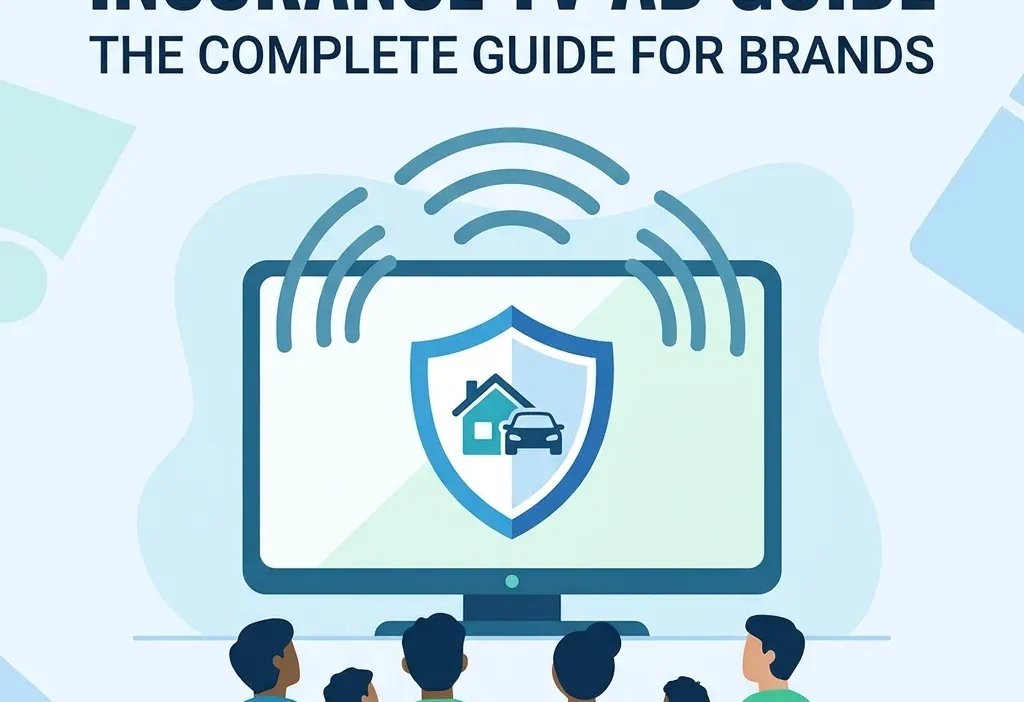
This insurance TV ad guide walks through everything an insurance company needs to know about television advertising — from cost and audience targeting to creative strategy and measuring results. Whether you sell auto, home, health, or life insurance, this insurance TV ad guide will help you build campaigns that build trust and drive real conversions.
Insurance is one of the most competitive advertising categories on television, and for good reason — trust is everything in this industry, and television remains one of the most effective ways to build it at scale. This insurance TV ad guide is built specifically for insurance brands trying to understand whether TV advertising is worth the investment, and if so, how to do it right.
Unlike many other products, insurance is rarely bought on impulse. Customers need to feel confident and secure before they commit, which is exactly why this insurance TV ad guide focuses so heavily on trust-building creative, smart targeting, and long-term brand consistency rather than short-term direct response tactics alone.
If you want broader context before diving into the specifics, our TV advertising by industry guide offers a useful comparison of how different sectors approach television campaigns.
Why Television Still Works for Insurance Brands
Some marketers assume TV advertising has been replaced by digital, but for insurance specifically, that’s far from true. This insurance TV ad guide exists because television continues to deliver something digital struggles to replicate: mass reach paired with high perceived credibility. A well-produced TV commercial signals stability and legitimacy — qualities that matter enormously when someone is choosing a company to protect their home, health, car, or family’s financial future.
Our broader analysis of why TV advertising still matters covers this trust dynamic in more depth, and it applies especially strongly to financial and insurance categories.
Understanding Your Audience Before You Advertise
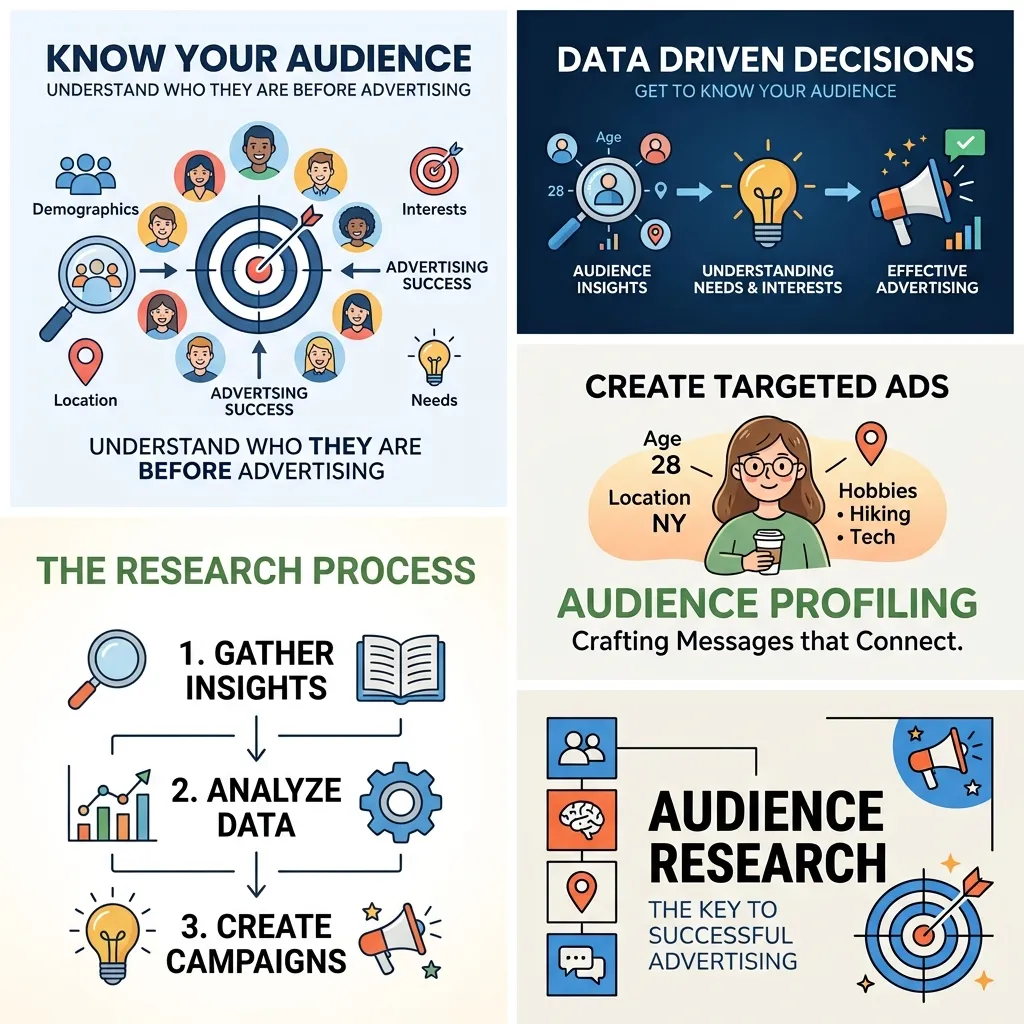
Every effective insurance TV ad guide has to start with audience targeting, because insurance products vary so widely by demographic. A life insurance ad aimed at new parents looks completely different from an auto insurance ad aimed at young drivers, or a Medicare supplement ad aimed at retirees.
Key targeting considerations for insurance advertisers include:
- Life stage — new homeowners, new parents, retirees, and young drivers all have different insurance needs and emotional triggers.
- Geography — local and regional insurance providers benefit heavily from local TV spot buying tied to specific service areas.
- Time of day — health and Medicare ads often perform well during daytime programming, while auto and home insurance ads can perform across a broader range of dayparts.
- Program context — news programming often pairs well with insurance ads because of the trust and seriousness associated with the surrounding content.
Our guide on how to target your audience with TV advertising goes deeper into building precise audience segments for campaigns like these.
Creative Strategy: What Makes Insurance TV Ads Work
The creative approach is where most of this insurance TV ad guide’s real value lives, since insurance ads succeed or fail based on how well they build emotional trust. The most effective insurance commercials typically rely on:
Storytelling Over Statistics
Rather than leading with numbers and policy details, strong insurance ads tell a short story — a family protected after an accident, a homeowner relieved after a claim was handled smoothly. Emotional storytelling makes the brand memorable in a category where products are otherwise hard to differentiate.
Color and Tone
Color choices matter more than most advertisers realize. Calming blues and greens are common in insurance advertising because they subconsciously signal safety and reliability. Our breakdown of color psychology in TV ads explains why these choices aren’t accidental — they’re a deliberate part of building trust within seconds.
Consistent Branding and Mascots
Recognizable spokespeople, mascots, or jingles help insurance brands stand out in a crowded, often visually similar category. Repetition across multiple airings reinforces recall, which matters enormously for a purchase decision that customers often delay for months before acting on.
Clear, Simple Messaging
Insurance products can be complicated, but the best TV ads simplify the message into one clear benefit — peace of mind, savings, or fast claims service — rather than trying to explain every policy detail in a 30-second spot.
How Much Does Insurance TV Advertising Cost?
Cost is one of the most common questions this insurance TV ad guide needs to answer, and the answer depends heavily on market size, time slot, and whether you’re buying local or national spots. National insurance brands often spend heavily on primetime and news slots precisely because of the trust those placements confer, while regional insurers can achieve strong results with more targeted local buys.
For a full cost breakdown applicable across industries, see our detailed guide on how much television advertising costs, which covers the variables that apply directly to insurance campaigns as well.
Measuring the ROI of Insurance TV Campaigns
Because insurance purchase decisions often happen weeks or months after someone first sees an ad, measurement requires patience and the right metrics. This insurance TV ad guide recommends tracking:
- Brand recall and awareness lift, measured through surveys before and after a campaign
- Website traffic spikes during and immediately after ad airings
- Call center volume, since many insurance leads still come through phone inquiries
- Quote requests and policy starts tied back to campaign flight dates
Our guide on measuring whether TV advertising actually works covers attribution methods that apply well to the insurance industry’s longer consideration cycles. It’s also worth reviewing how emotional impact can be measured beyond simple impressions, since trust-building campaigns don’t always show immediate performance the way direct-response ads do.
Lessons From Other Financial Categories
Insurance shares many similarities with other financial services when it comes to television advertising — both categories rely heavily on trust, long consideration periods, and brand consistency over time. Our resource on how financial companies master TV advertising offers strategies that translate directly to insurance marketing, particularly around building credibility through consistent, repeated messaging.
Understanding customer behavior is equally important here — our external resource on consumer behavior in digital marketing explains the psychology behind long-consideration purchases, which applies just as much to TV-driven insurance decisions as it does to online buying behavior.
Common Mistakes Insurance Advertisers Make on TV
Even with a solid strategy, insurance brands often run into avoidable problems:
- Overloading the ad with policy details instead of a single clear emotional message
- Inconsistent creative across campaigns, which weakens brand recognition over time
- Ignoring local market nuances by running a one-size-fits-all national creative in every region
- Underinvesting in measurement, making it difficult to prove ROI to internal stakeholders
- Chasing short-term response metrics in a category that fundamentally depends on long-term trust building
Building a Long-Term Insurance TV Advertising Strategy

The most successful insurance brands don’t treat TV as a one-off campaign — they treat it as an ongoing trust-building investment. This insurance TV ad guide recommends planning creative refreshes every few months while keeping core branding elements consistent, testing different dayparts and programming contexts, and pairing TV campaigns with complementary digital retargeting to capture demand generated by the broadcast exposure.
Brands that follow this approach tend to see TV work not just as an awareness tool, but as a steady contributor to lead generation and policy sales over time.
Insurance TV Ad Guide by Product Line
Not every type of insurance advertises the same way, and a thorough insurance TV ad guide needs to account for these differences.
Auto insurance ads tend to lean on competitive pricing, quote comparisons, and fast, friendly customer service messaging. Humor and memorable characters are common here because auto insurance is a frequent, comparison-shopped purchase, unlike more emotionally sensitive categories.
Home insurance advertising in this insurance TV ad guide typically focuses on protection and peace of mind — showing a family safe after a storm or a homeowner relieved after a covered claim. The tone tends to be warmer and more reassuring than auto insurance creative.
Health insurance ads, especially those aimed at open enrollment periods or Medicare audiences, rely heavily on clarity and simplicity. Because health coverage decisions are complex and stressful, the most effective creative in this part of the insurance TV ad guide avoids jargon and focuses on straightforward benefits like affordability and access to care.
Life insurance advertising often leans into legacy and family protection themes, since the purchase decision is deeply emotional and tied to long-term thinking about loved ones. These ads tend to run longer format spots, since the emotional narrative needs more time to build than a 15-second auto insurance ad would allow.
Business and commercial insurance ads, while less common on broad television, focus on credibility and industry expertise, often featuring testimonials or case-study-style storytelling aimed at small business owners.
Tailoring your approach by product line is one of the most overlooked parts of building an effective insurance TV ad guide strategy, since a single generic creative rarely performs as well across such different buying motivations.
Local vs National Insurance TV Advertising
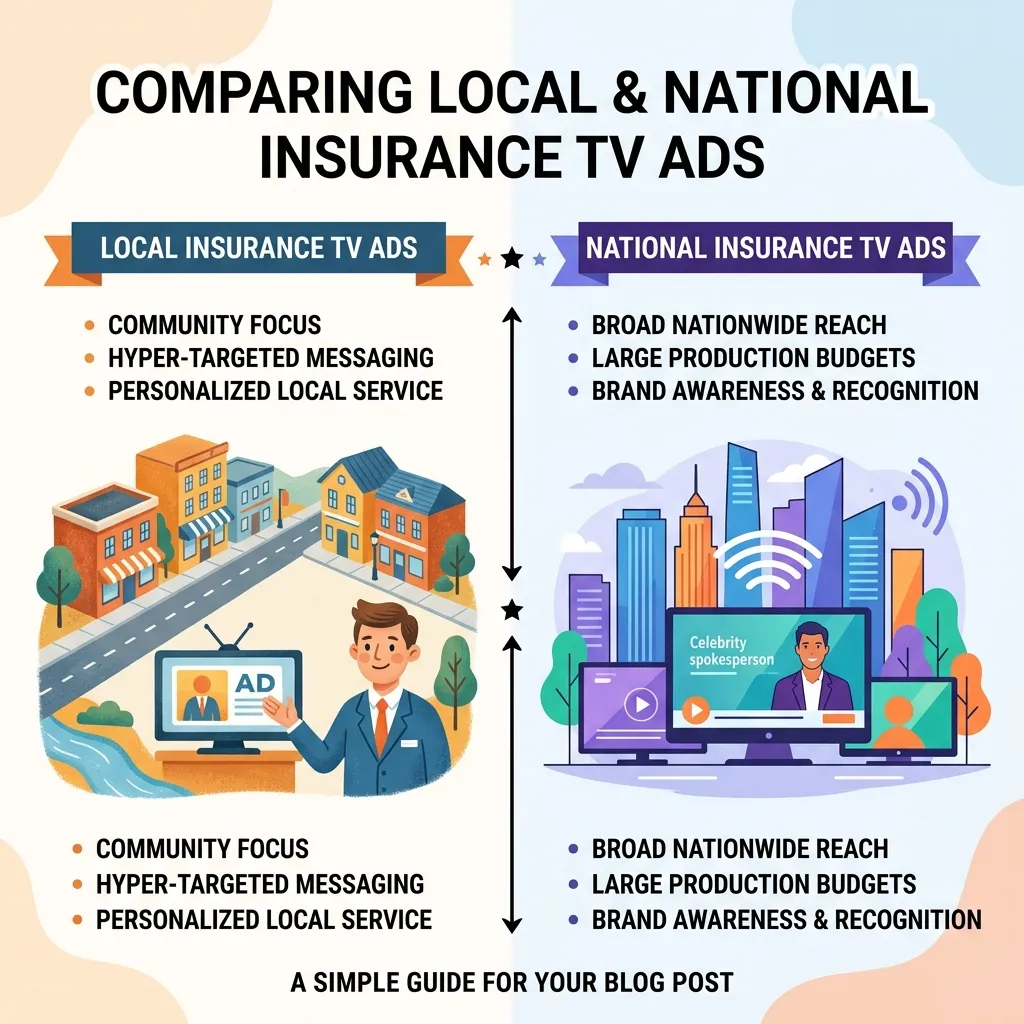
Another important consideration in any insurance TV ad guide is deciding between local, regional, and national buys. National insurers benefit from broad brand recognition campaigns that build long-term trust across large audiences, while regional and local insurance agencies often see stronger returns from geographically targeted spots that speak directly to their specific service areas, local weather risks, or community ties.
A hybrid approach — national brand-building creative paired with locally customized calls to action — is increasingly common among mid-sized insurance providers looking to combine broad credibility with localized relevance. This flexibility is one of the reasons television remains such a durable channel within any modern insurance TV ad guide strategy, regardless of company size.Read another Insurance : Family Travel Insurance
Key Takeaways From This Insurance TV Ad Guide
Before wrapping up, here are the core points this insurance TV ad guide has covered: television remains a powerful trust-building channel for insurance brands, audience targeting should reflect the specific product line being advertised, creative needs to prioritize emotional clarity over policy detail, and measurement should account for the long consideration cycles typical of insurance purchases. Keeping these fundamentals in mind is what separates an insurance TV ad guide that gets followed from one that just gets read.
Conclusion
Television remains one of the most powerful channels available to insurance brands precisely because trust is the product’s core currency, and TV builds trust better than almost any other medium. This insurance TV ad guide has covered audience targeting, creative strategy, cost considerations, and measurement — the full picture needed to run a campaign that doesn’t just get seen, but actually converts. Whether you’re a national insurer or a regional agency, applying the principles in this insurance TV ad guide can help turn broadcast spend into long-term, measurable growth.
Frequently Asked Questions (FAQs)
1. Why should insurance companies advertise on TV instead of just digital channels?
TV builds credibility and mass awareness in a way digital channels often can’t match, which matters enormously for a trust-based purchase like insurance.
2. How much does insurance TV advertising typically cost?
Costs vary widely based on market size, time slot, and whether the buy is local or national, ranging from a few hundred dollars for local spots to significant sums for national primetime placements.
3. What makes an insurance TV ad effective?
Effective insurance ads typically rely on emotional storytelling, calming color choices, consistent branding, and one clear, simple message rather than dense policy details.
4. How do I target the right audience with insurance TV ads?
Targeting should consider life stage, geography, time of day, and program context, since different insurance products appeal to very different demographic groups.
5. How long does it take to see results from an insurance TV campaign?
Because insurance purchase decisions often take weeks or months, results typically build gradually through brand recall, increased website traffic, and rising call volume rather than immediate spikes.
6. Should regional insurance companies invest in national TV ads?
Not necessarily — regional insurers often see stronger ROI from local or addressable TV buys targeted specifically to their service areas.
7. What metrics should I track to measure insurance TV ad performance?
Key metrics include brand awareness lift, website traffic during airings, call center volume, and quote or policy start conversions tied to campaign flight dates.
8. Do insurance TV ads need a mascot or spokesperson?
Not necessarily, but recognizable branding elements like mascots, jingles, or consistent spokespeople help insurance ads stand out in a visually similar, competitive category.
9. How often should insurance brands refresh their TV creative?
Most brands benefit from refreshing creative every few months while keeping core branding consistent, so audiences stay engaged without losing brand recognition.
10. What’s the biggest mistake insurance advertisers make on TV?
Overloading ads with policy details instead of focusing on one clear emotional benefit is one of the most common and costly mistakes.
11. Can insurance TV advertising work alongside digital marketing?
Yes, pairing TV campaigns with digital retargeting often captures demand generated by broadcast exposure, improving overall campaign performance.
12. Is TV advertising still worth it for insurance companies in a digital-first world?
Yes — for a trust-dependent category like insurance, TV’s credibility and reach continue to make it one of the most effective channels for both brand building and long-term lead generation.