


Television advertising remains powerful despite digital fragmentation, combining mass reach, credibility, and emotional storytelling. Modern measurement tools now link TV ads to digital outcomes, proving its continued role in integrated marketing strategies in today’s marketing landscape.
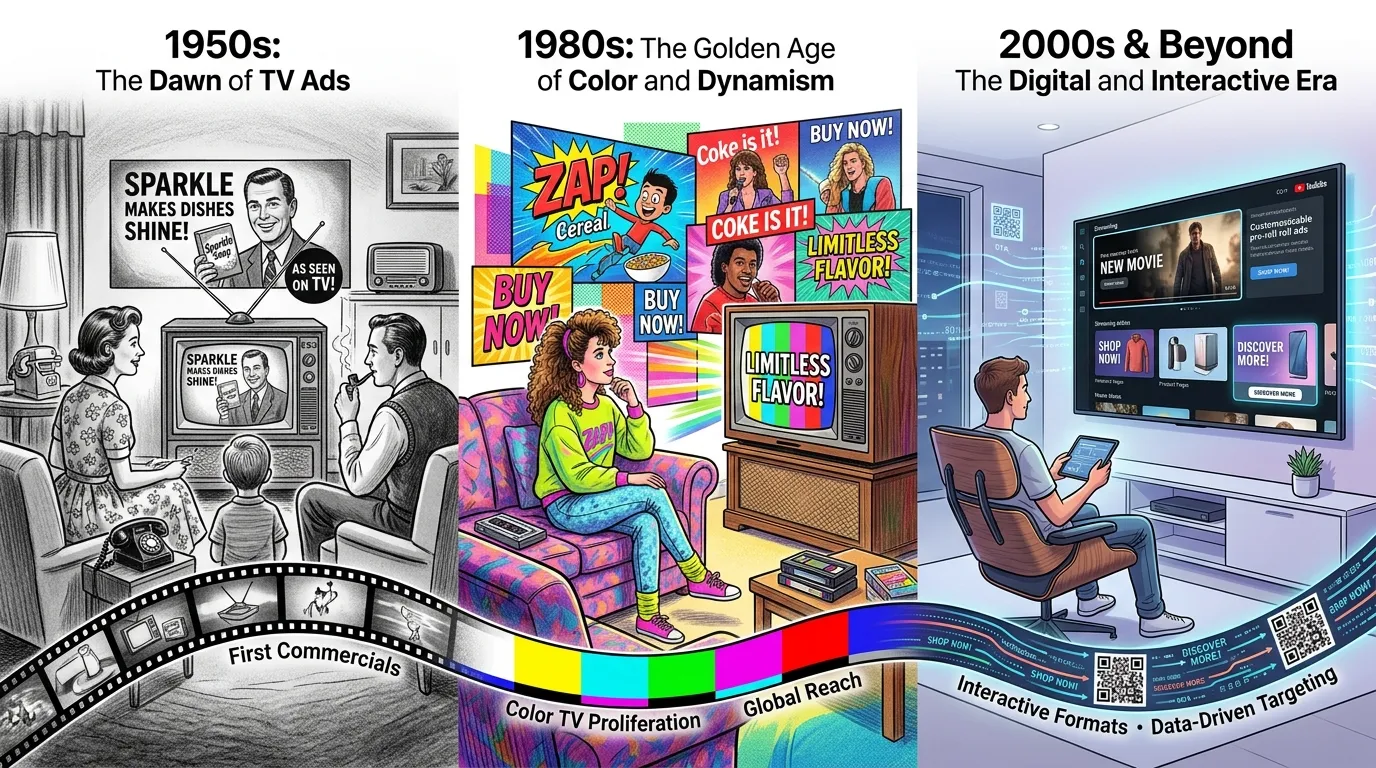
The story of broadcast advertising began in 1941 with a simple ten-second spot for Bulova watches, aired during a baseball game. That brief moment cost the company just a few dollars, but it launched an entirely new industry. For decades, the living room television served as the undisputed king of media. Families gathered around a single screen, sharing cultural moments and watching the same television commercial breaks. Brands built massive empires simply by purchasing airtime during prime-time shows.
Over the decades that followed, television advertising effectiveness was defined by its sheer reach and its cultural impact. Iconic campaigns such as Apple’s “1984” Super Bowl ad and Coca-Cola’s “Mean Joe Greene” spot became larger-than-life pop culture moments that shaped the way brands connected with audiences.
Today, media consumption looks vastly different. Audiences are fragmented across countless streaming platforms, social media apps, and mobile devices. A family might sit in the same room, but each person is often glued to a different screen. With the widespread adoption of connected devices, second-screen behaviors, and on-demand content, the television ad audience has changed forever. This shift has led many marketers to question the value of traditional broadcast media. With digital platforms offering precise targeting and immediate performance data, the old model of buying airtime can seem outdated.
Yet, television advertising remains a cornerstone of major marketing campaigns. It offers a level of scale and prestige that digital channels often struggle to match. Understanding television advertising effectiveness requires a fresh perspective. Marketers must look beyond basic viewership numbers and examine how TV interacts with digital strategies to drive real business growth. In this comprehensive guide, we will explore everything you need to know about television advertising effectiveness and provide practical steps for leveraging it in your marketing plan.
The Enduring Power of Broadcast Advertising
Television continues to hold a unique position in the media landscape. It combines visual storytelling with massive scale, creating an environment where brands can make a lasting impact on consumers. For brands new and old, understanding the enduring qualities of television advertising effectiveness is essential.
Reach and Mass Audience Engagement
Despite the rise of digital alternatives, television still offers unparalleled mass audience appeal. A single prime-time placement or a spot during a major sporting event can reach millions of viewers simultaneously. This rapid accumulation of reach is crucial for launching new products or maintaining top-of-mind awareness for established brands. Maximizing television advertising effectiveness means leveraging this scale.
Super Bowl commercials are a testament to television’s ability to unite millions of people around a shared viewing experience. During these few hours each year, ads become an event in themselves, generating as much buzz as the game. Successful campaigns spark watercooler conversations, trending hashtags, and viral internet moments.
Beyond pure numbers, television provides a canvas for emotional connection and storytelling. The combination of sight, sound, and motion on a large screen captures attention in a way that a scrolling mobile feed rarely does. Viewers are usually in a relaxed state, making them more receptive to compelling narratives. A well-crafted television commercial can evoke laughter, tears, or inspiration, forging a deep emotional bond between the consumer and the brand. For instance, Christmas ads in the UK, such as John Lewis’s annual campaign, have become a cultural institution, with people eagerly anticipating each new spot.
Trust, Prestige, and Credibility
There is an inherent prestige associated with a television commercial. Consumers naturally assume that a company running TV commercials is legitimate, successful, and financially stable. This perception plays a massive role in brand building. When a brand appears on a major network alongside premium programming, it borrows some of that network’s authority and credibility.
For challenger brands looking to make a splash, television advertising effectiveness is often measured by the brand lift it provides. A strong TV presence often signals business maturity, encouraging both consumers and investors to associate the brand with market leaders.
This trust directly influences purchase decisions and boosts television advertising effectiveness. Consumers are more likely to buy from a brand they recognize and trust. Even if a viewer does not immediately jump off the couch to buy a product, the seed of credibility has been planted. When that same consumer later sees a digital ad or encounters the product in a store, the foundational trust built by the television commercial often tips the scale in favor of a purchase.
Understanding Your TV Ad Audience
To maximize television advertising effectiveness, you must deeply understand who is watching. The modern TV ad audience is not a monolith; it is highly segmented across different types of programming, times of day, and platforms. Deep audience profiling helps inform targeting and creative strategies.
Audience Segmentation and Evolving Viewing Habits
Modern TV advertising effectiveness depends on recognizing that audiences aren’t just divided by broad demographics, but by psychographics and behaviors. Streaming platforms provide marketers with a treasure trove of data—viewers’ favorite genres, binge-watching habits, and response to on-screen ads are now all measurable metrics. Advertisers can target households based on life stages, purchase intent, or even prior exposure to a digital campaign.
For more insights on defining your target market, refer to this excellent breakdown on what is audience, which dives deep into segmentation techniques and audience identification.
Demographic and Psychographic Shifts
Historically, a TV ad audience was defined by broad demographics like “adults 18-49.” Today, maximizing TV advertising effectiveness requires a granular approach. Marketers must analyze psychographics—the values, interests, and lifestyles of their viewers.
For example, a family-oriented brand may seek to advertise during family-friendly programming, while a luxury automaker would focus on high-income dramas and sporting events. Custom audience personas are often backed by research on viewing habits, income brackets, and even regional tastes.
Behavioral Targeting in Modern TV
With the advent of advanced data, broadcast advertising has evolved. Marketers can now match household purchasing data with viewing habits. For example, using set-top box data and connected TV platforms, advertisers can tailor ads for pet food to dog owners, or target travel offers to frequent fliers, thereby drastically improving television advertising effectiveness. These advanced targeting techniques reduce wasted impressions, ensure relevancy, and help smaller brands compete on a national scale.
Measuring Television Advertising Effectiveness
Historically, marketers struggled to connect television ad spend directly to sales. The famous quote, “Half the money I spend on advertising is wasted; the trouble is I don’t know which half,” perfectly described the broadcast advertising experience. Fortunately, measurement has evolved significantly. Tracking television advertising effectiveness is now a highly data-driven science.
Traditional Metrics vs. Modern Analytics
To truly grasp television advertising effectiveness, you must understand both the historical metrics and the modern tools used today.
|
Metric Category |
Specific Measurement |
Description |
Impact on TV Advertising Effectiveness |
|---|---|---|---|
|
Traditional |
Reach & Frequency |
How many people saw the ad and how often. |
Sets the baseline for brand awareness. |
|
Traditional |
GRPs and TRPs |
Gross and Target Rating Points based on total viewership. |
Helps compare broadcast advertising costs. |
|
Modern |
Media Mix Modeling (MMM) |
Statistical analysis of historical sales data. |
Shows how TV contributes to overall revenue. |
|
Modern |
Multi-Touch Attribution |
Tracking the consumer journey across touchpoints. |
Connects a television commercial to digital actions. |
|
Modern |
Brand Lift Studies |
Surveys measuring changes in consumer perception. |
Proves the emotional impact of the campaign. |
Advanced Attribution Modeling
The modern approach to television advertising effectiveness incorporates advanced data science. Attribution modeling helps marketers understand how TV contributes to overall sales. MMM analyzes historical data to determine the impact of various marketing channels, while MTA attempts to track the consumer journey across multiple touchpoints. Marketers often use A/B testing in smaller geographic markets to compare the incremental lift provided by a television commercial against markets with no exposure.
Digital integration and cross-platform analytics have revolutionized TV measurement. By monitoring website traffic, search volume, and app downloads in the minutes following a commercial broadcast, advertisers can draw direct correlations between TV spots and digital actions. Real-world case studies show that brands often see a surge in search queries and web traffic during and after a high-profile TV campaign.
Brand lift studies are particularly valuable for understanding the non-direct effects of TV advertising, such as improved brand perception, trust, and intent to purchase. For DTC brands, tracking the use of vanity URLs, QR codes, or unique promo codes in a television commercial is a straightforward way to tie ad exposure to measurable business outcomes.
Factors Influencing TV Ad Effectiveness

Buying airtime does not guarantee a successful campaign. Several critical factors determine whether a television commercial will resonate with the TV ad audience and drive results. To ensure optimal television advertising effectiveness, consider the following elements.
The Creative Quality of a Television Commercial
The creative execution is arguably the most important element of television advertising effectiveness. A brilliant media plan cannot save a boring commercial. Strong storytelling and emotional appeal are essential. Commercials that tell a relatable story or use humor effectively tend to perform the best. The narrative must capture attention within the first few seconds and hold it until the end.
- Emotional Hook: Grab the TV ad audience immediately. Emotional storytelling is what gives commercials staying power and makes them viral. Think of the tear-jerking Budweiser Clydesdales ads or the comedic twist in classic Old Spice campaigns.
- Clear Value Proposition: Tell viewers exactly what problem you solve, how your product improves life, or what makes your brand unique. Simplicity and clarity reign supreme.
- Strong Call to Action (CTA): Tell them what to do next. This could be visiting a website, scanning a QR code, using a promo code, or following the brand on social media.
A commercial must include a clear call to action. Whether the goal is to drive viewers to a website, encourage them to visit a dealership, or simply remember a brand name, the desired action must be obvious. A beautiful, cinematic television commercial that leaves the viewer confused about what the company actually sells is a wasted investment and ruins television advertising effectiveness.
Strategic Media Planning and Placement
Effective media planning ensures that the right TV ad audience sees the commercial. Targeting strategies have evolved beyond broad demographics. Planners now use psychographics and consumer behavior data to select programming that aligns with the target audience’s interests and lifestyle.
Media Placement Examples
- Children’s Products: Airing toy ads on Saturday morning cartoons, ensuring parents and children are both watching.
- Sports Products: Targeting primetime games, especially playoff events, so your commercial appears in front of an engaged and relevant audience.
- Local Services: Leveraging local broadcast stations to reach geographically clustered viewers.
Dayparting and Scheduling
Dayparting plays a major role in television advertising effectiveness. Airing an ad for a children’s toy makes sense on Saturday mornings, while a commercial for a sleep aid is more effective late at night. Strategic scheduling ensures that the broadcast advertising message reaches consumers when they are most likely to be receptive.
It’s also vital to adapt your spot rotation, so viewers don’t suffer ad fatigue. Changing up the creative between time slots, adding seasonally relevant content, and measuring response to different placements can help optimize your buy.
Budget, Reach, and Frequency
A single television commercial rarely changes a business. Sustained presence is vital for television advertising effectiveness. Brands must allocate sufficient budget to run a campaign long enough to build memory structures in the consumer’s mind. Intermittent bursts of advertising followed by long periods of silence often result in lost momentum.
However, marketers must carefully manage frequency to avoid ad fatigue. Seeing the same commercial a few times reinforces the message and boosts TV advertising effectiveness. Seeing it two dozen times in a single weekend frustrates the viewer and can actively damage brand perception. Rotating different creative executions within a campaign helps maintain a sustained presence while keeping the messaging fresh.
Budget tip: For small and mid-sized brands, trial runs and regional campaigns allow you to test effectiveness before making a national investment, especially on targeted cable or streaming inventory.
The Synergistic Relationship: TV and Digital
Treating television and digital marketing as opposing forces is a massive mistake. The most robust television advertising effectiveness comes from leveraging the strengths of both mediums, creating a powerful synergistic effect.
How TV Drives Digital Engagement
Broadcast advertising is an incredible driver of digital activity. A compelling television commercial acts as a massive top-of-funnel trigger. Advertisers routinely see a significant search lift immediately following a TV spot. The TV ad audience pulls out their smartphones to search for the brand, research the product, or look for promotional codes mentioned in the ad.
Real-World Example: A consumer goods brand found that by activating search and social ad campaigns to coincide with the airing times of their commercials, website traffic increased 3x compared to periods when the TV spot ran alone.
Television also generates social media buzz and discussion. Major campaigns, particularly those aired during cultural events, often become trending topics. This organic discussion amplifies the reach of the original television commercial, extending the life of the campaign far beyond the paid broadcast window and skyrocketing television advertising effectiveness.
Optimizing Cross-Channel Campaigns
To maximize this synergy and ensure high television advertising effectiveness, marketers must ensure consistent messaging across all channels. The visual identity, tone, and core message of the television commercial should be immediately recognizable on the brand’s website. If a viewer sees a TV ad and clicks through to a website that looks entirely different, the cognitive disconnect can cost the brand a sale.
Retargeting strategies further bridge the gap between TV and digital. For example, if a TV ad drives users to a specific landing page, digital retargeting can follow up with personalized ads on social channels and search platforms. Multi-step conversion tracking and CRM integrations ensure continued engagement until the sale is closed.
Challenges and Future Trends in Broadcast Advertising

The television industry is undergoing rapid transformation. Marketers must navigate several challenges to maintain television advertising effectiveness in the coming years.
Ad-Blocking and Cord-Cutting
Traditional pay-TV subscriptions have been declining for years. Cord-cutting represents a significant challenge for advertisers relying on traditional broadcast reach. Furthermore, consumers use DVRs to fast-forward through commercials, acting as a form of analog ad-blocking. Advertisers must work harder to create a television commercial that is entertaining enough to prevent viewers from picking up the remote.
In response, there’s a rise in integrating branded content directly into programming or using product placements to reach audiences in less intrusive ways.
The Rise of CTV and OTT Platforms
The shift away from cable has been offset by the massive growth of Connected TV (CTV) and Over-The-Top (OTT) streaming platforms. These environments combine the large-screen experience of traditional television with the targeting capabilities of digital media, redefining television advertising effectiveness. Advertisers can now serve commercials to a specific TV ad audience based on digital behavioral data, rather than relying solely on broad network demographics.
Case Study: A health food brand used OTT to target fitness-minded viewers across streaming workout channels. By analyzing engagement metrics, they refined their ad’s message and creative, ultimately increasing conversions by 40% over traditional TV campaigns.
Personalization and Interactivity
As streaming platforms mature, broadcast advertising is becoming more personalized and interactive. Viewers may soon see different versions of a television commercial based on their location or past purchasing behavior. Interactive ads will further blur the line between brand awareness campaigns and direct-response marketing, driving higher TV advertising effectiveness. Some brands are already embedding shoppable elements that allow viewers to click or scan for instant purchases.
Frequently Asked Questions
What is the effectiveness of television advertising?
Television advertising effectiveness measures how well a TV campaign achieves its business goals. It looks at metrics like brand awareness, website traffic, and overall sales lift. High effectiveness means the ad resonated well with the target audience.
How do you measure TV advertising effectiveness today?
Marketers measure TV advertising effectiveness using digital attribution, website traffic spikes, and Media Mix Modeling. They track how many users visit a site or search for a brand immediately after an ad airs. Surveys and brand lift studies also play a vital role.
Why is broadcast advertising still relevant?
Broadcast advertising remains relevant because it offers unmatched massive reach and builds immediate brand credibility. Consumers inherently trust brands they see on television. It serves as a powerful top-of-funnel engine that fuels digital marketing efforts.
What makes a television commercial successful?
A successful television commercial relies on strong storytelling, high-quality visuals, and a clear call to action. It must capture attention within the first three seconds to prevent channel surfing. Emotional resonance is key to making the ad memorable.
How does color impact a television commercial?
Color heavily influences viewer emotion and brand recall in broadcast advertising. Using the right palette can create a subconscious connection with the audience. To learn more about this strategy, explore color psychology in TV ads.
Who makes up the modern TV ad audience?
The modern TV ad audience is fragmented across traditional cable, streaming platforms, and connected TVs. They are highly distracted, often using a second screen like a smartphone while watching. Targeting them requires precise behavioral data rather than just broad demographics.
How does frequency affect TV advertising effectiveness?
Frequency is crucial for television advertising effectiveness, as viewers need to see an ad multiple times to remember it. However, showing the same ad too often leads to ad fatigue and annoyance. Brands must find a balance to maintain positive sentiment.
Can small businesses achieve high TV advertising effectiveness?
Yes, small businesses can achieve great TV advertising effectiveness by utilizing local cable buys and Connected TV (CTV). These platforms allow for hyper-local targeting and smaller budgets. This ensures they only pay to reach their specific demographic.
How do TV and digital marketing work together?
TV and digital marketing work synergistically to boost overall ROI. A television commercial creates broad awareness and drives viewers to search engines or social media. Digital marketing then captures that intent and guides the user toward a final purchase.
What is the future of television advertising effectiveness?
The future of television advertising effectiveness lies in personalization and interactive commercials. CTV and streaming platforms will allow brands to serve tailored ads to individual households. Viewers will also be able to purchase products directly through their remotes.


[…] For broader guidance on campaign measurement, see this guide to television advertising effectiveness. […]