Why TV Advertising Still Dominates for Brand Awareness

Despite the rise of digital media, television’s unique ability to capture mass attention remains unmatched. Think about the last Super Bowl ad that went viral or a holiday commercial that everyone was talking about. TV creates shared cultural moments in a way that fragmented digital channels often can’t.
Unparalleled Reach and Scale
Television continues to command a massive audience. While viewing habits have changed with the advent of streaming, traditional broadcast and cable TV still reach millions of households daily. According to Nielsen, adults in the U.S. spend several hours per day watching live and time-shifted television. This extensive reach allows brands to introduce themselves to a broad demographic in a short period, a crucial first step in building brand awareness.
The Power of Emotional Connection
TV advertising excels at storytelling. The combination of moving images, sound, and narrative allows brands to forge a strong emotional connection with viewers. An effective TV ad can make you laugh, cry, or feel inspired, creating a memorable experience that stays with the audience long after the commercial ends (interactive TV ads for brand engagement).
Credibility and Trust
Securing a spot on television lends a brand an inherent level of credibility. The high cost and production quality associated with TV advertising signal to consumers that a company is established and serious about its message. This “halo effect” builds trust, making viewers more receptive to the brand’s message and more likely to trust its online presence. A consumer who sees a brand on a reputable TV network is often more confident in clicking its link in search results or following its social media accounts (top digital marketing strategies for e-commerce).
The Bridge Between TV and Digital: Driving Online Activity

The real magic happens when TV viewers pick up their second screens—their smartphones, tablets, or laptops. A compelling TV ad acts as a powerful catalyst, sparking curiosity and prompting immediate digital action. This phenomenon, known as the “second-screen effect,” directly links TV advertising to online brand awareness.
Fueling Search Engine Queries
One of the most direct impacts of a TV ad is an immediate spike in branded search queries. When viewers see an interesting product or a memorable brand name, their first instinct is often to “Google it.” This surge in search traffic sends a strong signal to search engines like Google that your brand is relevant and popular, which can improve your organic search rankings over time. For insights on integrating TV with digital campaigns, see how TV advertising boosts online brand awareness.
For example, a study by the Video Advertising Bureau (VAB) found that TV ads drove a significant lift in search queries for the advertised brands. This direct response demonstrates that TV advertising doesn’t just build passive awareness; it actively encourages consumers to seek more information online, pulling them directly into your digital ecosystem.
Boosting Website Traffic and Conversions
That spike in search activity translates directly into increased website traffic. By creating a memorable and intriguing ad, you give viewers a reason to visit your site. To capitalize on this, it’s crucial to have a clear and memorable URL or brand name in your ad. Some brands even create specific landing pages for their TV campaigns to provide a seamless user experience for incoming visitors. Learn more about direct-response television advertising, which focuses on measurable actions and conversions.
This influx of traffic isn’t just about numbers; it’s about attracting a pre-qualified audience. Viewers who take the step to visit your website after seeing an ad are already interested in what you have to offer, making them more likely to explore your products, sign up for your newsletter, or make a purchase.
Amplifying Social Media Engagement
TV ads are conversation starters. A clever, funny, or thought-provoking commercial can quickly go viral on social media platforms like X (formerly Twitter), Instagram, and TikTok (how TV revolutionized advertising forever). Brands that understand this can amplify their message by creating a hashtag for their campaign and encouraging viewers to share their thoughts online.
This user-generated content and social chatter significantly expands the reach of your campaign beyond the initial TV audience. It creates a community around your brand, fostering engagement and building a loyal following. When people are talking about your brand online, your digital awareness soars. Think of the Oreo “Dunk in the Dark” tweet during the 2013 Super Bowl blackout—a brilliant example of leveraging a TV moment to create a massive social media win.
Crafting a TV Ad Campaign for Maximum Digital Impact

To successfully leverage TV advertising for online brand awareness, you need a strategic approach that bridges the gap between the two mediums.
Align Your Messaging
Consistency is key. The message, tone, and visual identity of your TV ad should align perfectly with your online presence. This creates a cohesive brand experience that reinforces your identity and makes it easier for consumers to recognize your brand across different platforms. Brands can also use insights from digital PR types that move the needle to optimize messaging across both TV and online channels.
Include a Clear Digital Call-to-Action (CTA)
Don’t leave viewers guessing what to do next. Your TV ad should include a clear and simple CTA that directs them to a digital channel. This could be:
- “Visit our website at [YourWebsite.com]”
- “Follow us on Instagram @[YourHandle]”
- “Search for [Your Brand Name] to learn more”
- “Download our app from the App Store”
Make the CTA easy to remember and act upon. Avoid long, complicated URLs or confusing instructions.
Time Your Digital Campaigns Strategically
Coordinate your digital advertising efforts with your TV ad schedule. Run social media ads, paid search campaigns, and other digital initiatives concurrently with your TV spots to capture the wave of interest. By being present and visible online when your ad airs, you can maximize the number of viewers you convert into website visitors and social media followers. This synchronized approach ensures that when a viewer is prompted to act, your brand is right there waiting for them.
Measure and Optimize Your Results
Use analytics tools to track the impact of your TV campaign on your online metrics. Monitor key performance indicators (KPIs) such as:
- Direct and organic website traffic during and immediately after ad airings.
- Branded search query volume.
- Social media mentions, follower growth, and engagement rates.
- Conversion rates on your campaign-specific landing pages.
This data will help you understand what’s working and what isn’t, allowing you to optimize your campaign for better results. You can test different ad creatives, time slots, and CTAs to see what drives the most significant online lift.
Real-World Success Stories
Many brands have successfully used TV advertising to catapult their online brand awareness.
- Dollar Shave Club: Their viral 2012 TV and YouTube ad, “Our Blades Are F***ing Great,” was a masterclass in using humor and a direct value proposition. The ad not only made them a household name but also drove immense traffic to their website, establishing them as a major player in the grooming industry almost overnight.
- Peloton: Peloton’s sleek and aspirational TV commercials showcase the experience of their connected fitness classes. These ads don’t just sell an exercise bike; they sell a lifestyle and a community. The ads consistently drive viewers to their website to learn more about the product and its subscription service, fueling their rapid growth and dominant online presence.
- Chewy: The online pet supply retailer uses heartwarming TV ads featuring adorable animals to build an emotional connection with pet owners. Their slogan, “Where Pet Lovers Shop,” is a simple and memorable CTA that directs viewers to their e-commerce platform. This strategy has helped them build a massive and loyal customer base, driven largely by the brand awareness generated from their TV campaigns.
The Synergy Between TV and Digital Marketing
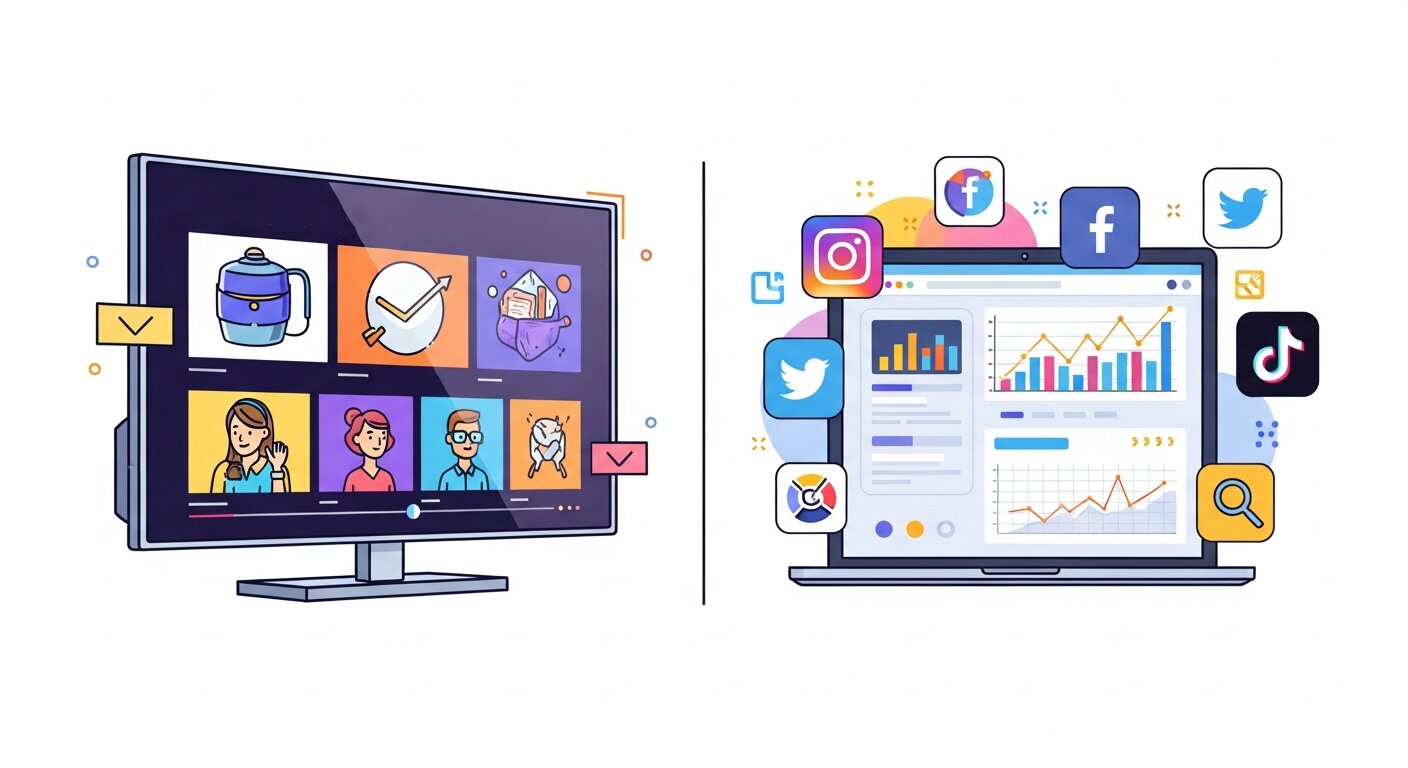
The modern consumer journey is no longer linear. Customers interact with multiple touchpoints—TV, search engines, social media, and e-commerce websites—before making a purchase decision. TV advertising acts as a catalyst in this omnichannel ecosystem, creating awareness and curiosity that translates into digital engagement. When viewers see a memorable TV ad, they are primed to search for your brand, visit your website, and interact with your social media channels. This combination of offline and online marketing amplifies your reach and strengthens your brand’s authority across multiple platforms.
Brands that understand this synergy can effectively use TV as the starting point for digital conversion funnels. For example, a TV ad can introduce a new product line while a synchronized online campaign captures the subsequent surge in interest. Integrating TV campaigns with search engine marketing (SEM), display retargeting, and social media promotions ensures a seamless customer experience that maximizes ROI and long-term engagement.
How TV Advertising Influences Consumer Behavior
Television has a psychological advantage over other media. Humans are visual learners, and the combination of storytelling, sound, and imagery on TV creates strong emotional imprints. Consumers who experience this multisensory stimulation are more likely to recall the brand later and seek it out online.
The “second-screen phenomenon” illustrates this effect clearly. As viewers watch TV, many simultaneously browse on smartphones or tablets, often searching for products or brands they see on screen. This behavior highlights the direct link between TV exposure and digital discovery.
TV ads also encourage social sharing, which further enhances digital engagement. Viral campaigns create conversations on platforms like X (formerly Twitter), Instagram, and TikTok, giving brands additional reach beyond the TV audience. Social buzz reinforces the original TV message, building trust and credibility while driving more targeted traffic to your website.
Your Next Steps
Integrating television into your marketing strategy is a powerful move for any brand looking to expand its digital footprint. TV advertising offers the scale, emotional connection, and credibility needed to cut through the noise and capture consumer attention. By creating a strategic bridge between your on-air message and your online platforms, you can transform passive viewers into active, engaged followers and customers.
The path forward involves a clear, cohesive strategy that aligns your messaging, includes strong digital calls-to-action, and uses data to measure and refine your approach. It’s not about choosing TV over digital, but about leveraging the unique strengths of both to create a marketing engine that is far more powerful than the sum of its parts. By doing so, you can ensure your brand not only gets noticed but becomes a memorable and trusted name in the digital world.
Frequently Asked Questions (FAQ)
How does TV advertising improve digital marketing performance?
TV Advertising Boosts Online Brand Awareness by exposing your brand to large audiences, which encourages viewers to search online, visit your website, and engage with your social media channels.
Why does TV advertising still matter in the digital age?
Even today, TV Advertising Boosts Online Brand Awareness because television builds trust, emotional connection, and mass visibility that later translates into online engagement and conversions.
Can TV ads really increase website traffic?
Yes. TV Advertising Boosts Online Brand Awareness by prompting viewers to search for your brand, leading to spikes in branded searches, direct traffic, and landing page visits.
How does TV influence social media engagement?
TV Advertising Boosts Online Brand Awareness by sparking conversations, hashtags, and shares on social platforms, turning viewers into followers and active brand advocates.
Is TV advertising effective for small and medium businesses?
Absolutely. With targeted placements and regional campaigns, TV Advertising Boosts Online Brand Awareness even for smaller brands, helping them generate search traffic, leads, and local recognition.
How can I measure the digital impact of a TV campaign?
You can track how TV Advertising Boosts Online Brand Awareness using branded search volume, website traffic spikes, QR codes, custom URLs, social mentions, and conversion tracking.
What type of TV ads drive the most online engagement?
Emotionally compelling, story-driven ads with clear digital CTAs work best because TV Advertising Boosts Online Brand Awareness when viewers feel motivated to take immediate online action.
How do TV and digital marketing work together?
TV Advertising Boosts Online Brand Awareness by generating initial interest, while digital marketing captures that interest through search, retargeting, social media, and conversion funnels.
Can interactive TV ads improve online results?
Yes. QR codes, second-screen engagement, and shoppable TV formats enhance how TV Advertising Boosts Online Brand Awareness by making it easier for viewers to instantly connect online.
What is the biggest advantage of combining TV with digital marketing?
The biggest advantage is synergy—TV Advertising Boosts Online Brand Awareness at scale, while digital channels convert that awareness into measurable traffic, engagement, and sales.