
Television advertising is a powerful way to reach audiences, with costs varying by reach, time slot, and production. Strategic planning, creative messaging, and multi-channel integration help businesses maximize ROI and build long-term brand impact.
Television advertising remains one of the most powerful ways to reach mass audiences, but understanding the costs can feel overwhelming. From prime-time slots that command premium prices to local cable spots that fit smaller budgets, television advertising costs vary dramatically based on multiple factors.
Whether you’re a small business owner exploring your first TV campaign or a marketing professional building a comprehensive media strategy, knowing what to expect from television advertising costs helps you make informed decisions and maximize your return on investment.
This guide breaks down everything you need to know about TV advertising expenses, from national network rates to local market pricing, so you can determine if television advertising fits your marketing budget and goals.
How Television Advertising Costs Are Calculated
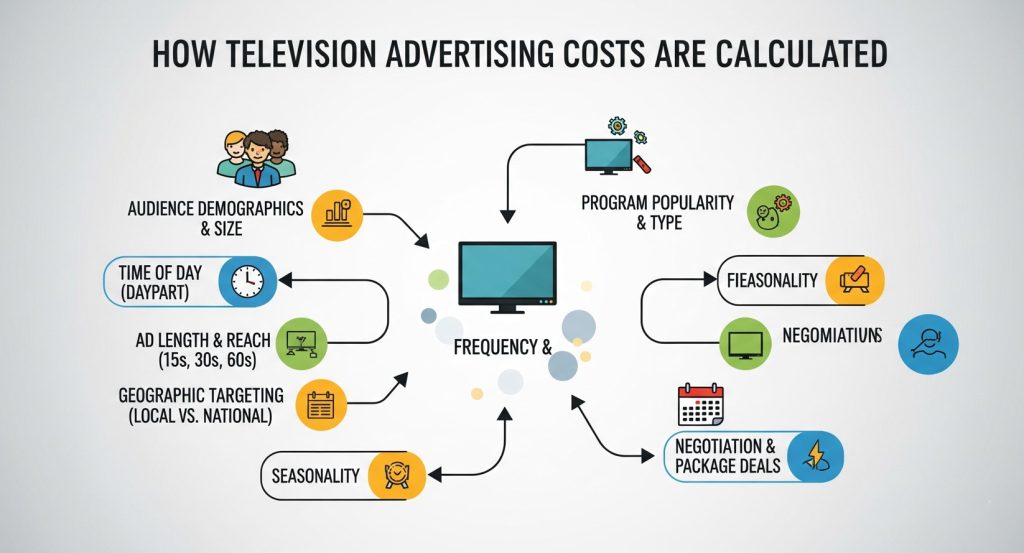
Television advertising costs operate on a cost-per-thousand (CPM) model, where advertisers pay for every 1,000 viewers who see their commercial. However, the final price depends on several interconnected factors that can significantly impact your overall investment.
Audience Size and Demographics
The number of people watching a program directly influences pricing. Shows with larger audiences command higher rates, but advertisers also pay premiums for specific demographic groups. For example, reaching adults aged 25-54 typically costs more than targeting broader age ranges because this group represents key decision-makers with disposable income.
Time Slots and Programming
Prime-time television slots (8-11 PM) generate the highest costs due to maximum viewership. Morning shows, late-night programming, and daytime slots offer more affordable options with smaller but often highly engaged audiences. Sports programming and special events can command premium pricing regardless of time slot.
Geographic Reach
National television advertising reaches millions of viewers across the entire country, while local and regional campaigns target specific markets. Local advertising typically costs less per spot but may require multiple markets to achieve desired reach, which can add up quickly.
National Television Advertising Costs
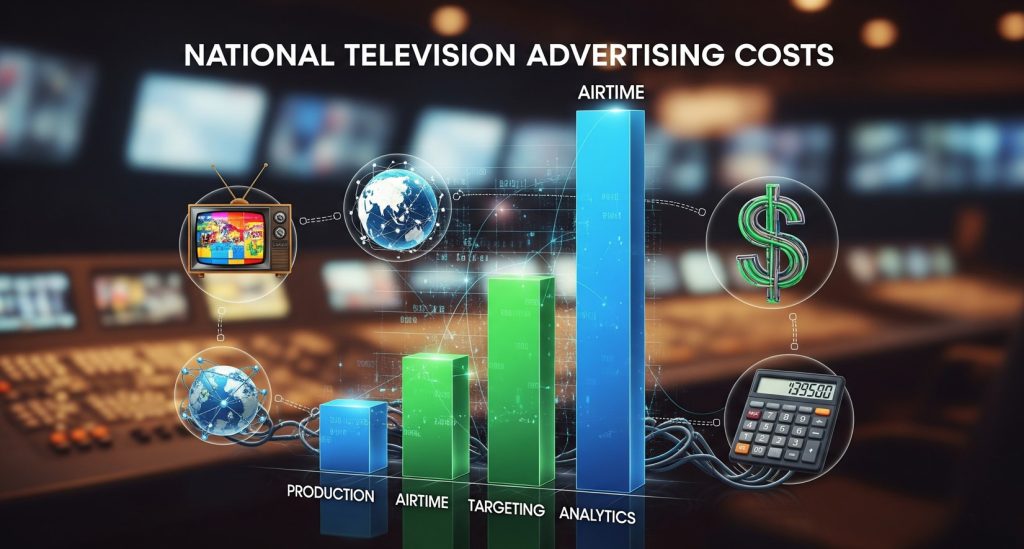
National campaigns reach millions but come at a premium. Major networks charge high rates for prime-time shows, while cable networks offer more affordable options. Special events like the Super Bowl are particularly expensive. For insights on production and creative approaches, refer to Create Television Ad That Captivates
Major Network Pricing
The big four networks—ABC, CBS, NBC, and FOX—charge premium rates for their prime-time programming. A 30-second national commercial during popular shows can range from $100,000 to $500,000, with top-rated programs commanding even higher prices.
Cable networks generally offer more affordable national advertising options, with costs ranging from $5,000 to $50,000 for a 30-second spot, depending on the channel’s popularity and target demographics.
Special Events and Premium Content
Major sporting events like the Super Bowl represent the pinnacle of television advertising costs. A single 30-second Super Bowl commercial can cost over $7 million, not including production expenses. Other premium events like the Olympics, World Series, or season finales of popular shows also command elevated pricing.
Award shows, holiday specials, and breaking news coverage can see temporary price increases due to higher-than-expected viewership and advertiser demand.
Local Television Advertising Costs
Local television advertising offers more accessible pricing for businesses targeting specific geographic markets, making it an attractive option for regional companies and franchises.
Market Size Impact
Television advertising costs in local markets vary significantly based on population size and economic factors. Major markets like New York, Los Angeles, and Chicago charge higher rates due to larger audiences and increased advertiser competition.
Small and medium markets offer more affordable entry points, with 30-second spots potentially costing anywhere from $200 to $5,000, depending on the time slot and program popularity.
Local Programming Advantages
Local news programs often provide excellent value for television advertising because they generate consistent, engaged audiences. Morning and evening news slots typically offer reasonable rates while reaching viewers during key decision-making times of day.
Local sports broadcasts, community programming, and syndicated shows can provide targeted audience access at more manageable price points than national alternatives.
Factors That Influence Television Advertising Costs
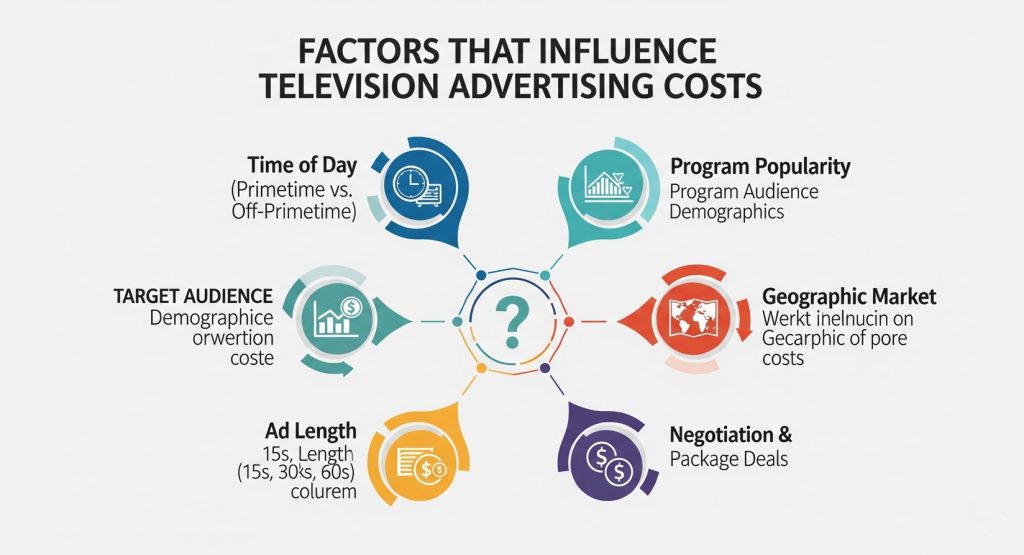
Several key variables determine the final price you’ll pay for television advertising, and understanding these factors helps you optimize your media buying strategy.
Seasonal Demand Fluctuations
Television advertising costs fluctuate throughout the year based on advertiser demand. The fourth quarter (October-December) typically sees the highest prices due to holiday shopping campaigns, while first and third quarters often offer more favorable rates.
Back-to-school periods, summer vacation seasons, and major retail holidays can create temporary price increases in relevant market segments.
Production Quality Requirements
Beyond media placement costs, television advertising requires significant production investment. Professional commercial production can range from $10,000 for basic local spots to several million dollars for high-end national campaigns.
Production costs include scripting, talent, filming, editing, music licensing, and post-production work. Many advertisers overlook these expenses when budgeting for television campaigns, leading to cost overruns.
Frequency and Flight Duration
Television advertising effectiveness often depends on repetition, but increased frequency drives up total costs. Media planners must balance reach and frequency to maximize impact while staying within budget constraints.
Campaign duration also affects pricing, with longer flights potentially qualifying for volume discounts while shorter, intense bursts might command premium rates.
Alternative Television Advertising Options
Traditional television advertising isn’t the only way to reach TV audiences, and emerging alternatives can offer cost-effective solutions for various marketing objectives.
Connected TV (CTV) and streaming platforms provide cost-effective targeting and precise audience measurement. For a deeper understanding of modern TV strategies, see Digital Transformation in TV Advertising. Cable and satellite options also offer local insertion opportunities, making advertising more flexible.
Connected TV and Streaming Platforms
Connected TV advertising allows precise targeting and often costs less than traditional television while reaching cord-cutting audiences. Streaming platforms offer various advertising models, from pre-roll spots to sponsored content integration.
These platforms typically use different pricing models, such as cost-per-view or cost-per-completion, which can provide more predictable budgeting than traditional CPM models.
Cable and Satellite Options
Cable and satellite providers offer local insertion opportunities that can reduce costs while maintaining broad reach within specific markets. These options often include package deals combining multiple channels and time slots.
Regional sports networks, specialty channels, and cable bundles can provide targeted audience access at more affordable rates than major network programming.
Emerging Trends in Television Advertising

The television advertising landscape is evolving rapidly with the rise of streaming platforms, addressable TV, and programmatic buying. Advertisers can now target specific households with precision, optimizing campaigns for maximum efficiency.
Connected TV (CTV) and over-the-top (OTT) platforms allow brands to reach cord-cutting audiences who consume content online rather than through traditional cable. Programmatic TV buying offers real-time bidding and audience targeting, blending the reach of television with the precision of digital marketing. Staying abreast of these trends ensures your television strategy remains competitive and cost-effective.
Getting the Most Value from Television Advertising
Maximizing your television advertising investment requires strategic planning, careful negotiation, and ongoing optimization based on performance data.
Media Buying Best Practices
Working with experienced media buyers can significantly impact your television advertising costs through industry relationships, market knowledge, and negotiation expertise. Professional buyers often secure better rates and added value opportunities that individual advertisers cannot access.
Consider package deals that combine multiple time slots, shows, or even different media types to reduce overall costs while increasing campaign reach and frequency.
Measuring Return on Investment
Television advertising success requires robust measurement strategies that track both immediate response and long-term brand impact. Direct response metrics, website traffic analysis, and brand awareness studies help justify television advertising expenses and optimize future campaigns.
Attribution modeling becomes crucial when television advertising works alongside digital marketing efforts, ensuring you accurately measure each channel’s contribution to your business goals.
Crafting High-Impact TV Commercial Scripts
The script is the backbone of any television commercial. A well-crafted script captures attention within the first few seconds, communicates a clear message, and leaves a lasting impression. Strong scripts balance creativity with clarity, ensuring the brand message is immediately understood.
Effective commercials often follow a storytelling arc, starting with a problem or situation the viewer can relate to, introducing your product or service as a solution, and ending with a compelling call-to-action. Humor, emotional appeal, and memorable catchphrases can make a commercial stand out amidst heavy competition.
Additionally, tailoring scripts for the target demographic is essential. A commercial aimed at younger viewers may include fast-paced visuals and contemporary music, while one targeting older audiences might emphasize clarity, trust, and practical benefits. Pre-testing scripts with focus groups can help ensure resonance before production.
Using Television Advertising to Drive Digital Engagement
Television ads can serve as a gateway to online interactions, bridging traditional and digital marketing channels. Including trackable URLs, QR codes, or social media handles in commercials encourages viewers to visit websites, sign up for newsletters, or engage with social media content.
This integration allows brands to measure the impact of TV advertising in real-time through website traffic, social engagement, and conversions. It also provides opportunities for retargeting, as users who interact online after seeing a TV ad can be further nurtured through digital campaigns.
Creative Production Techniques That Reduce Costs
High-quality production doesn’t always require astronomical budgets. Using animation, motion graphics, or user-generated content can produce appealing commercials at lower costs. Leveraging local talent and efficient production planning ensures maximum ROI. Strategic alliances can help, as described in The Complete Guide to Partnership Marketing.
Leveraging local talent, minimizing set complexity, and shooting multiple versions simultaneously can also reduce expenses. Efficient production planning ensures that each dollar spent contributes directly to commercial quality and audience impact.
The Role of Sponsorship and Product Placement
Beyond traditional commercials, sponsorships and product placement offer alternative ways to integrate your brand into television content. Sponsoring a segment of a popular show or subtly featuring products within programming can provide exposure without the high costs of standalone ad spots.
Product placement often reaches audiences more naturally, as viewers see your brand within content they already enjoy. This approach can be particularly effective for lifestyle brands, consumer goods, and entertainment products. Strategically negotiating these deals can yield substantial brand visibility at a lower cost.
Understanding Audience Analytics for TV Advertising
Knowing who watches your commercials and when is crucial for optimizing ad spend. Television networks provide audience measurement data through Nielsen ratings and other tracking systems, helping advertisers determine which programs and time slots reach their desired demographics.
Analyzing this data allows marketers to focus budgets on programs that deliver the highest engagement for their target audience, rather than just the largest viewership. For example, a luxury brand may prioritize programming with affluent viewers, while a family-oriented product may focus on daytime or weekend programming. Using audience insights strategically maximizes reach while minimizing wasted spend.
Timing Strategies to Maximize Engagement
Timing is a critical factor in television advertising. Prime-time slots deliver broad exposure but are expensive, whereas off-peak slots offer cost savings but smaller audiences. Smart advertisers evaluate the trade-off between cost and impact, often scheduling ads around key audience behaviors.
Seasonal timing is also vital. Retailers can capitalize on holidays and major shopping periods, while service providers may target times when viewers are most receptive to their offerings. Understanding audience routines—such as morning news for commuters or evening entertainment for families—enables strategic placement for maximum effectiveness.
Evaluating the Long-Term Value of Television Advertising
While television advertising is often associated with immediate reach and mass awareness, its true value frequently lies in long-term brand building. TV commercials create visibility, reinforce credibility, and shape consumer perception over time. Even if viewers don’t act immediately, repeated exposure increases familiarity and trust, which can influence purchasing decisions months later.
Tracking this long-term impact requires combining quantitative and qualitative measures. Brand lift studies, surveys, and consumer sentiment analysis help determine how television exposure influences awareness, preference, and intent. Additionally, analyzing sales trends and website traffic patterns following major campaigns provides insight into the delayed effects of advertising.
Strategic use of television advertising as a foundational element in your marketing mix allows brands to command higher engagement across all channels. It establishes authority, differentiates your brand from competitors, and sets the stage for more targeted and cost-effective digital campaigns.
Making Television Advertising Work for Your Budget
Television advertising costs vary tremendously, but opportunities exist for businesses of all sizes to leverage this powerful medium effectively.
Start with local markets, define your target audience, and leverage creative production techniques to manage costs. Working with experienced media professionals can help secure better rates and optimize ROI. For practical guidance on writing effective ads, see How to Write Television Advertisement.
Consider working with experienced media professionals who can help navigate the complex television advertising landscape and secure the best possible rates for your specific needs. The right strategy can make television advertising an affordable and highly effective component of your marketing mix.
Remember that television advertising costs represent just one part of your total investment—factor in production expenses, campaign management, and measurement tools when building your budget. With careful planning and strategic execution, television advertising can deliver exceptional results that justify the investment and drive meaningful business growth.
Frequently Asked Questions (FAQ)
How can small businesses afford TV advertising?
Small businesses can start with local or regional TV markets, off-peak slots, or sponsorships/product placements. Creative production techniques and repurposing content can reduce costs without sacrificing impact.
How do I measure the effectiveness of a TV ad?
Combine direct response metrics (website traffic, promo codes, conversions) with long-term measures like brand lift studies, consumer sentiment, and purchase intent surveys. Attribution modeling helps connect TV exposure with other marketing channels.
What is the difference between traditional and programmatic TV advertising?
Traditional TV requires negotiating fixed slots with networks, while programmatic TV uses automated platforms for precise audience targeting and real-time bidding. Programmatic allows better efficiency and flexibility.
Should I integrate my TV campaigns with digital marketing?
Yes. Linking TV ads to digital channels via QR codes, URLs, or hashtags amplifies engagement, allows tracking, and enables retargeting campaigns to maximize ROI.
How do I choose the best time slots for my audience?
Analyze demographics, viewing habits, and seasonal trends. Prime-time offers broad reach, while off-peak or niche programming may provide more targeted engagement at lower costs.