
Addressable TV delivers personalized ads using data, boosting engagement, ROI, and brand impact while ensuring precise measurement and privacy compliance.
What Is Addressable TV Advertising?
Addressable TV advertising leverages viewer data—such as demographics, purchase history, and viewing behavior—to serve different ads to different households tuning into the same program. Unlike linear TV, which broadcasts one creative to all viewers, addressable TV uses set-top boxes, smart TVs, or over-the-top (OTT) platforms to identify audience segments and dynamically insert tailored ads. The core advantage is relevance: audiences are more likely to engage with content that reflects their interests and needs, boosting ad effectiveness and brand affinity.
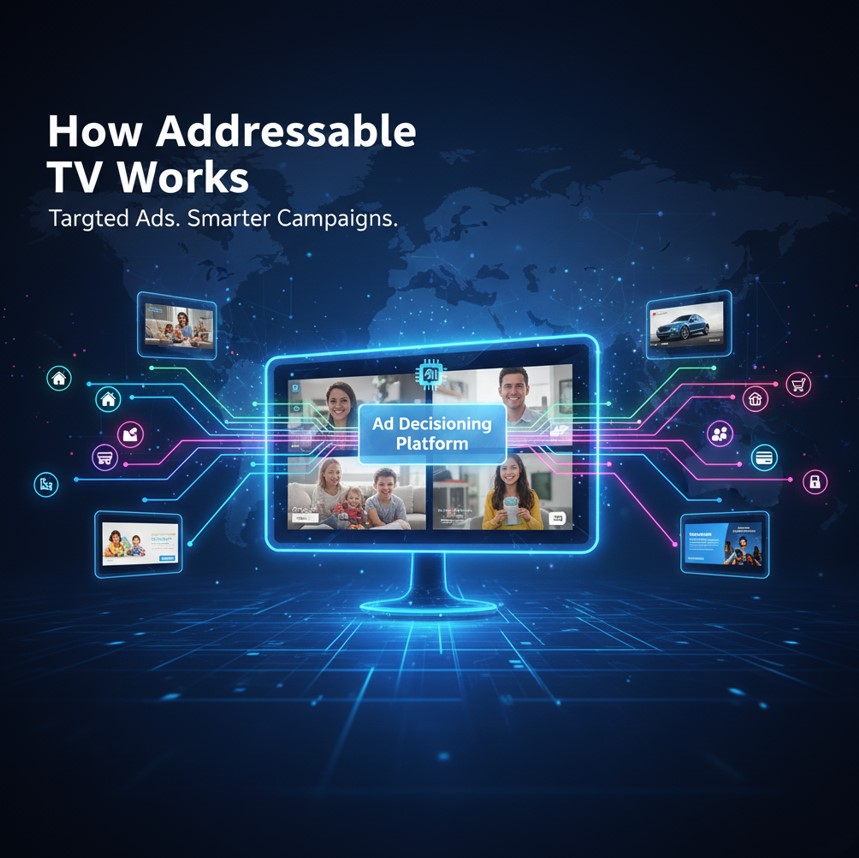
How Addressable TV Works
- Data Collection: First-party data from brands, second-party data from partners, and third-party data providers build audience profiles.
- Segment Definition: Advertisers define target groups based on attributes like age, income, lifestyle, and purchase intent.
- Ad Decisioning: At ad-break time, the addressable platform selects the appropriate creative variant for each household segment.
- Dynamic Insertion: Ads are swapped in real time, either at the set-top box level or via OTT infrastructure, ensuring households see the most relevant message.
- Reporting & Optimization: Detailed delivery and response metrics feed back into campaign dashboards for optimization.
Key Benefits of Addressable TV Advertising
- Improved Targeting: Reach only the audiences most likely to purchase, reducing waste and improving message relevance.
- Higher Engagement: Personalized creatives yield higher recall, click-through rates (for interactive OTT), and website visits.
- Cost Efficiency: By eliminating broad-reach spill, marketers reallocate budget to high-value households, maximizing ROI.
- Measurable Impact: Granular reporting on impressions, reach, frequency, and downstream conversions from digital integrations.
- Cross-Channel Synergy: Sync TV campaigns with online display, social, and search for unified audience journeys.
Improved targeting ensures brands reach only the audiences most likely to engage. This precision helps eliminate wasted impressions, complementing insights found in how effective TV advertisements really are. Marketers also enjoy higher engagement, cost efficiency, and measurable impact through attribution systems.
Implementing Addressable TV Campaigns
Launching an addressable TV campaign requires coordination among data partners, creative teams, and broadcast or OTT platforms. Key steps include:
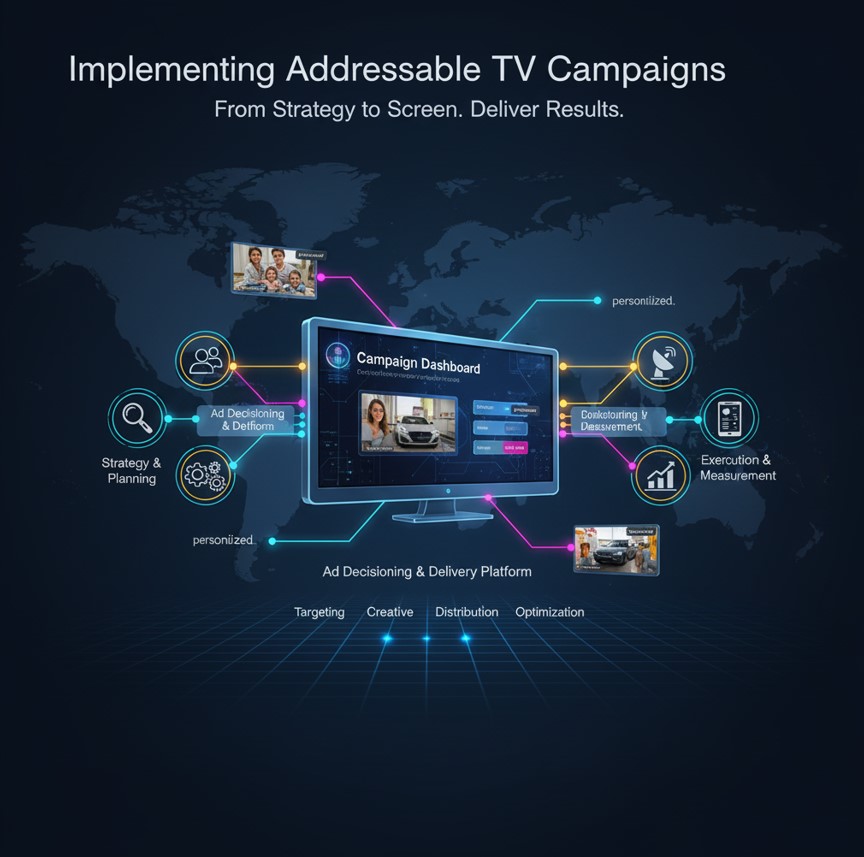
- Partner Selection: Evaluate COA (cable operator) platforms, DSPs (demand-side platforms), and managed service providers based on reach, technology compatibility, and data integrations.
- Data Onboarding: Secure and anonymize first-party customer lists, enrich with third-party segments, and map identifiers to device IDs or household IDs.
- Creative Development: Produce multiple ad versions tailored to each audience segment, ensuring messaging, visuals, and calls-to-action resonate with each group.
- Campaign Setup: Configure targeting rules, frequency caps, and flight dates within the addressable platform’s UI or via API.
- QA & Testing: Validate that dynamic ad insertion works across devices, and that reporting aligns with campaign objectives.
Selecting the Right Data Partners
Data is the fuel for addressable TV. Choose vendors that offer scale, data freshness, compliance, and strong integration APIs. Understanding data-driven programmatic addressable TV ads can help marketers enhance their targeting accuracy. Look for vendors that offer:
- Audience Scale: Coverage across millions of households to ensure target segments are large enough for TV buys.
- Data Freshness: Regularly updated demographic, behavioral, and purchase data to maintain relevancy.
- Privacy Compliance: Adherence to GDPR, CCPA, and other regulations, with secure data handling and anonymization protocols.
- Integration APIs: Seamless onboarding into major addressable platforms without manual file transfers.
Measuring and Optimizing ROI
Addressable TV offers unprecedented measurement granularity. To optimize ROI, employ these tactics:
- Unified Attribution: Integrate TV delivery data with digital analytics platforms to track website visits, form fills, and online sales triggered by TV exposure.
- Incrementality Testing: Run holdout groups to measure lift in brand metrics and conversions compared to exposed households.
- Frequency Management: Monitor frequency caps to avoid ad fatigue while ensuring sufficient repetition for memory encoding.
- Creative A/B Tests: Rotate alternative messaging or visual treatments among segments to identify top performers.
- Real-Time Dashboards: Use platform APIs to feed live delivery metrics into executive dashboards for agile optimization.
Real-World Case Studies
Several forward-thinking brands have already harnessed addressable TV to amplify campaign outcomes. For example:
- Automotive Launch: A major car manufacturer used demographic and intent data to serve distinct vehicle feature spots to families, millennials, and high-income professionals. The result was a 25% increase in dealership visits over linear TV benchmarks.
- Retail Seasonal Sale: A fashion retailer targeted past buyers with personalized sale alerts on smart TVs, driving a 40% lift in online coupon redemptions compared to standard broadcast ads.
- Financial Services Onboarding: A bank segmented prospects by life stage and income to deliver tailored messaging on mortgages, credit cards, and investment products. Conversion rates doubled, with a 30% reduction in cost per acquisition.
For comparison, marketers can explore national TV advertising cost structures to understand investments for broader campaigns.
Best Practices and Tips
- Start Small: Pilot with a few core segments before expanding to full national scale.
- Collaborate Early: Involve data scientists, creative teams, and platform engineers in kick-off meetings to align objectives.
- Maintain Creative Consistency: While tailoring messages, preserve brand look-and-feel to reinforce identity across segments.
- Monitor Frequency: Adjust caps based on segment responsiveness to avoid viewer burnout or underexposure.
- Iterate Quickly: Use daily or weekly performance check-ins to refine targeting, creative, and budget allocations.
Legal and Privacy Considerations
As with any data-driven practice, addressable TV must respect consumer privacy and comply with regulations. Brands should:
- Obtain Consent: Ensure households have opted in to data collection where required.
- Anonymize Data: Use hashed identifiers to prevent direct tracing back to individuals.
- Review Contracts: Negotiate data usage terms with platform providers to safeguard against unauthorized sharing.
- Audit Regularly: Perform privacy and security audits to maintain compliance and consumer trust.
Future Trends in Television Advertising
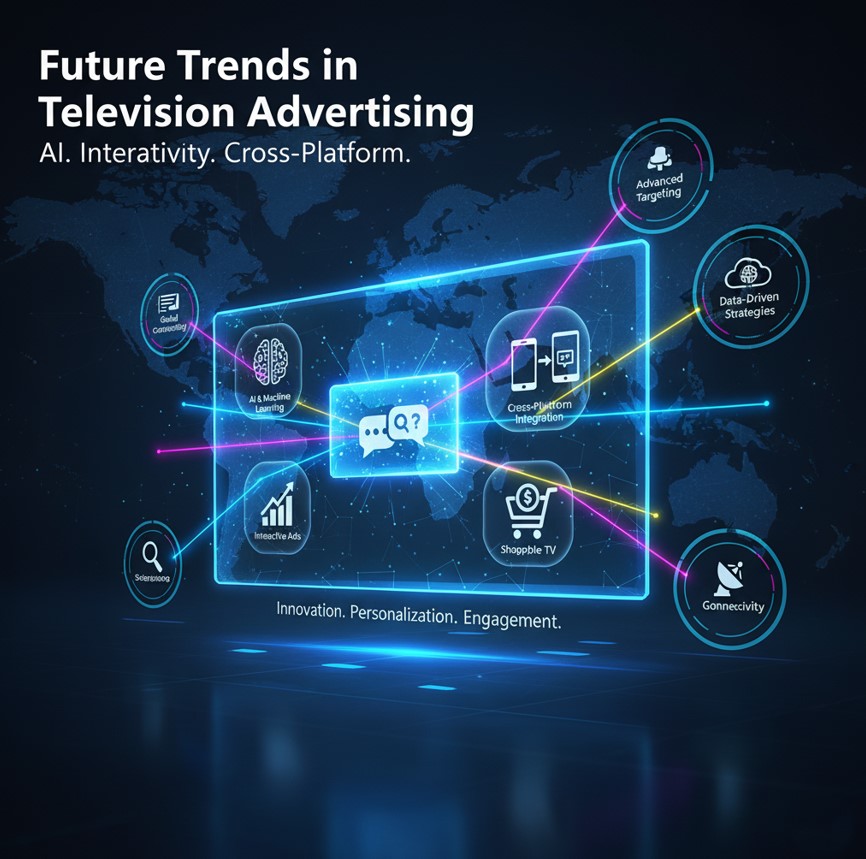
The addressable TV market continues to evolve, driven by emerging technologies and consumer habits. Key trends to watch include:
- Programmatic Linear TV: Automated buying of traditional broadcast inventory using data-driven algorithms.
- Cross-Device Synchronization: Seamless ad experiences across TVs, smartphones, and tablets, reinforcing messages through multiple screens.
- Interactive and Shoppable TV: Viewers can engage with ads via remote or mobile to learn more or purchase instantly.
- AI-Driven Creative Optimization: Machine learning generates and selects the best creative elements for each audience segment.
- Enhanced Attribution Models: Unified measurement across linear, addressable, and digital channels for holistic campaign insights.
The Creative Evolution in Addressable TV Advertising
Creative execution plays a far more pivotal role in addressable TV than in traditional linear advertising. Because different households receive different ad variations, brand storytelling must evolve from a one-size-fits-all narrative into a modular, adaptive framework. Instead of producing a single 30-second spot, brands develop creative ecosystems—multiple versions of scripts, visuals, offers, and calls-to-action that speak directly to each segment’s motivations.
This shift requires close collaboration between creative teams and data strategists. Creative directors must understand the nuances of each segment: what parents value, what high-income professionals look for, or what motivates first-time buyers. These insights influence tone, pacing, product highlights, and even casting decisions. Addressable TV’s strength lies in relevance, and relevance can only be achieved when creative variations mirror the needs and aspirations of each audience segment. As addressable TV continues to grow, modular storytelling will become the new creative standard, unlocking deeper emotional connections and stronger brand recall.
The Role of Data Clean Rooms in Secure Audience Activation
As privacy regulations tighten and third-party cookies phase out across the digital ecosystem, data clean rooms have become a critical component of addressable TV workflows. A data clean room is a secure environment where brands and media partners can match audience datasets without exposing personally identifiable information. Instead of sharing raw customer data, both parties upload hashed identifiers that the clean room uses to find overlap safely and compliantly.
This technology empowers brands to leverage their first-party CRM audiences for TV targeting without risking data leaks or regulatory violations. Clean rooms also allow marketers to combine purchase behavior, loyalty program data, and online engagement insights to build more precise household segments. As addressable advertising grows more sophisticated, data clean rooms will serve as the foundation of secure, scalable targeting—enabling brands to activate richer audience insights without compromising consumer trust.
Challenges and Limitations of Addressable TV
Despite its transformative potential, addressable TV still faces several challenges that advertisers must navigate. One of the biggest limitations is fragmentation. Different providers—such as cable operators, OTT platforms, and smart TV manufacturers—each control their own inventory, formats, and data structures, making campaign setup more complex than running a traditional national TV buy.
Measurement inconsistencies across platforms also pose a challenge, as not all providers report the same metrics or allow the same level of attribution insight. Additionally, the cost of producing multiple creative variations can increase production budgets if not planned strategically. Brands must also account for privacy regulations, ensuring that all data activation practices are fully compliant. Understanding these challenges upfront helps marketers build more efficient workflows and realistic performance expectations.
How Addressable TV Strengthens Brand Storytelling

Television has always been the most powerful medium for storytelling due to its emotional impact, cinematic quality, and household relevance. Addressable TV takes this strength a step further by allowing brands to tailor stories to the emotional triggers of specific audiences. This combination of targeted narrative delivery and the immersive nature of TV creates a deeper brand-to-consumer connection.
Brands can build story arcs that unfold across multiple exposures, with each exposure tailored to the viewer’s position in the customer journey. Someone discovering the brand for the first time may receive an awareness-focused message, while a warm prospect could see a promotional offer or testimonial spot. This level of tailoring makes the storytelling experience feel more personal and memorable.
Creative Personalization Frameworks for Addressable TV
Successful addressable TV campaigns rely on structured creative frameworks that allow brands to scale personalized messaging without dramatically increasing production costs. These frameworks typically include interchangeable elements—openers, product highlights, value propositions, offers, and CTAs—that can be mixed and matched across audience segments. By separating creative components into modular pieces, brands can efficiently build dozens of variations aligned with demographics, interests, buying stage, or regional preferences. This approach keeps costs manageable while unlocking deeper levels of relevance and emotional resonance.
Conclusion
Addressable TV advertising represents the convergence of television’s storytelling power with the precision of digital marketing. By leveraging detailed audience data, dynamic creative insertion, and rigorous measurement, brands can achieve greater relevance, engagement, and ROI than ever before. As programmatic buying, AI-driven optimization, and cross-device synchronization mature, addressable TV will become a cornerstone of integrated media strategies. Forward-looking marketers who embrace this evolution today will build stronger consumer connections and drive measurable business growth tomorrow.
For guidance on building an overall strategy, refer to how to build a data-driven marketing strategy.
Frequently Asked Questions (FAQ)
What is the difference between addressable TV and traditional linear TV?
Traditional linear TV broadcasts the same ad to all viewers watching a particular program. Addressable TV, on the other hand, delivers tailored ads to different households watching the same content. This personalization increases relevance and reduces wasted impressions.
Is addressable TV expensive?
Addressable TV often has a higher CPM than linear TV because of its precision targeting. However, advertisers typically see higher ROI due to reduced waste, improved engagement, and better conversion rates, making it cost-efficient overall.
Can small businesses use addressable TV?
Yes. Many OTT platforms and local cable operators offer affordable addressable packages that allow small and mid-sized businesses to run highly targeted campaigns without needing a national TV budget.
How is addressable TV data collected?
Data is sourced from a mix of first-party CRM data, third-party demographic and behavioral datasets, smart TV ACR technology, and set-top box viewership logs. All data is anonymized to protect consumer privacy.
Do viewers know they’re seeing personalized ads?
Generally, no. The experience is seamless, and ads appear like normal TV commercials. However, some viewers may notice personalization if the creative includes highly specific messaging or local offers.
What industries benefit the most from addressable TV?
Automotive, retail, financial services, healthcare, travel, and telecom tend to see strong performance because they rely heavily on segmentation and consider TV a key awareness channel.
Can addressable TV be measured like digital ads?
Yes. While not identical, addressable TV offers granular metrics such as impressions, reach, frequency, completion rates, and even post-exposure website visits or conversions when linked with analytics platforms.
What is the biggest barrier to launching an addressable TV campaign?
The most common hurdles are data onboarding challenges, fragmentation across platforms, and the need for multiple creative variations. Working with an experienced partner can simplify these complexities.