
TV advertising costs vary by platform, audience, and production quality. Strategic planning, creative storytelling, and digital integration help maximize ROI and boost brand engagement.
Television advertising remains one of the most powerful marketing channels for reaching mass audiences, but understanding the true cost can feel overwhelming. From prime-time slots that command six-figure price tags to local cable spots available for hundreds of dollars, TV advertising costs vary dramatically based on numerous factors.
This comprehensive guide breaks down everything you need to know about television advertising costs, from the variables that influence pricing to practical strategies for maximizing your advertising budget. Whether you’re a small business owner considering your first TV campaign or a marketing professional looking to optimize spending, you’ll discover actionable insights to make informed decisions about your television advertising investment.
We’ll explore the different types of TV advertising, examine real-world pricing examples, and provide practical tips for getting the most value from your television marketing budget.
Understanding the Television Advertising Landscape
Television advertising operates on a complex pricing structure influenced by multiple variables. Unlike digital advertising where you can set daily budgets and adjust spending in real-time, TV advertising requires more strategic planning and larger upfront investments.
The television advertising ecosystem includes several distinct categories, each with its own pricing model. Network television represents the most expensive option, featuring nationally broadcast programs with massive audiences. Cable television offers more targeted demographics at lower costs, while local television provides geographic specificity for businesses serving specific markets.
Streaming television has emerged as a significant player, blending traditional TV reach with digital advertising precision. This newer category often provides more flexible pricing options and detailed analytics compared to traditional television advertising.
Factors That Influence Television Advertising Costs

Audience Size and Demographics
The number of people watching a program directly impacts advertising costs. Shows with larger audiences command higher prices, but reaching the right demographic can justify premium rates. For guidance on how to target your audience with TV advertising, check our detailed guide.
Prime-time programming typically attracts the largest audiences, resulting in the highest advertising costs. However, niche programs with smaller but highly engaged audiences can also command premium pricing when they attract valuable demographics.
Time Slots and Seasonality
Television advertising costs fluctuate significantly based on when your advertisement airs. Prime-time slots (8 PM to 11 PM) cost substantially more than daytime or late-night alternatives. Morning news programs and evening news broadcasts also command premium pricing due to their engaged audiences. Explore video advertising guide: strategies & tips for complementary approaches.
Seasonal demand affects pricing throughout the year. The fourth quarter sees the highest television advertising costs as retailers compete for holiday shoppers. Major sporting events, award shows, and season finales create additional premium pricing periods.
Geographic Reach
National television campaigns require the largest investment, as you’re paying to reach audiences across the entire country. Regional campaigns cost less but still involve significant investment when covering multiple major markets.
Local television advertising offers the most affordable entry point, allowing businesses to target specific cities or metropolitan areas. However, local markets vary dramatically in size and cost, with major cities commanding higher prices than smaller markets.
Production Quality and Length
Beyond the cost of airtime, television advertising requires professional production. High-quality commercials with professional actors, elaborate sets, and sophisticated post-production can cost tens of thousands of dollars to produce.
Advertisement length affects both production and airtime costs. Thirty-second spots represent the standard format, while fifteen-second advertisements cost less but provide limited time to convey your message. Sixty-second spots offer more storytelling opportunity but double the airtime investment.
Network Television Advertising Costs

Network television advertising represents the pinnacle of television marketing investment. Major networks like ABC, CBS, NBC, and FOX command the highest prices due to their massive reach and premium programming.
Prime-time network advertising costs range from $100,000 to over $500,000 for a thirty-second spot, depending on the specific program and time of year. Popular dramas, comedies, and reality shows with strong ratings command the highest prices within this range.
Special events create exceptional pricing tiers. Major sporting events like playoff games and championship matches can cost $1 million or more for thirty seconds of airtime. Award shows, season premieres, and finale episodes also command premium pricing above standard rates.
Network advertising requires substantial minimum investments. Most campaigns involve multiple airings across different programs to achieve effective reach and frequency. A modest national network campaign typically requires budgets of $1 million or more when combining production costs with airtime purchases.
Cable Television Advertising Costs
Cable television advertising offers more targeted demographic reach at lower costs than network television. Popular cable networks like CNN, ESPN, HGTV, and Discovery Channel provide access to engaged audiences interested in specific content categories.
Prime-time cable advertising costs typically range from $5,000 to $50,000 for thirty-second spots, depending on the network and specific program. Niche networks with smaller audiences may offer spots for $1,000 to $10,000, while major cable networks approach network television pricing for their most popular shows.
Cable advertising provides more flexibility in terms of budget and targeting. Many cable networks offer package deals that include multiple airings across different time slots and programs. This approach helps advertisers achieve better reach and frequency while managing costs.
The demographic targeting available through cable networks often justifies the investment for businesses with specific target audiences. Food Network reaches cooking enthusiasts, while ESPN targets sports fans, allowing for more precise marketing alignment.
Local Television Advertising Costs
Local television advertising provides the most accessible entry point for businesses serving specific geographic markets. Costs vary dramatically based on market size, with major metropolitan areas commanding significantly higher prices than smaller markets.
In major markets like New York, Los Angeles, or Chicago, local television advertising costs range from $1,000 to $20,000 for thirty-second prime-time spots. Medium-sized markets typically see costs between $300 and $5,000, while smaller markets may offer prime-time advertising for $100 to $1,500.
Local news programs often provide the best value for businesses targeting engaged community audiences. Morning and evening news broadcasts attract viewers interested in local information, making them ideal for businesses like restaurants, retailers, and service providers.
Local television stations frequently offer production assistance as part of advertising packages. This can significantly reduce the total investment required, as stations provide professional production services at lower costs than independent production companies.
Cross-Platform Integration: TV Meets Digital
Television advertising is most effective when integrated with digital marketing channels. Running simultaneous TV and digital campaigns amplifies reach and reinforces messaging across multiple touchpoints. For instance, a commercial aired on a national network can be supported by social media retargeting or Google Ads campaigns, capturing viewers who seek more information online.
This approach also provides measurable insights into consumer behavior. TV ads may generate website visits, app downloads, or online purchases that can be tracked digitally, allowing marketers to quantify the campaign’s impact more accurately. Cross-platform integration bridges the traditional-digital divide and maximizes the overall value of television advertising spend.
The Impact of Creative Storytelling on Costs
The way an advertisement is crafted directly influences its effectiveness and perceived cost. High-quality storytelling creates emotional connections that resonate with viewers, often resulting in higher engagement and brand recall. While investing in professional production may seem expensive, well-told narratives increase the chance of converting viewers into customers, providing better returns on advertising spend.
Longer or more intricate commercials may cost more upfront, but if they effectively convey the brand’s message and drive action, they can outperform multiple shorter ads that fail to engage. Understanding the balance between production costs and creative impact is critical for maximizing ROI.
Evaluating Return on Investment (ROI) in TV Advertising
Measuring ROI for television advertising can be challenging, but it is essential for strategic decision-making. Advertisers track both direct and indirect outcomes, such as increased sales, brand awareness, web traffic, or engagement on social media. Using tracking mechanisms like promo codes, unique landing pages, or dedicated phone numbers helps quantify the direct impact of TV campaigns.
Beyond immediate conversions, ROI also includes long-term benefits like brand recognition and loyalty. Evaluating ROI ensures that future budgets are allocated efficiently and informs adjustments to creative content, scheduling, and audience targeting.
Emerging Technologies Shaping Television Advertising
Technology is transforming the television advertising landscape. Tools such as programmatic TV buying allow advertisers to purchase airtime automatically based on audience data, optimizing costs and improving targeting precision. Similarly, augmented reality (AR) and interactive elements in commercials are enhancing viewer engagement and providing new ways to measure campaign effectiveness.
Streaming platforms with advanced analytics offer insights that were previously unavailable in traditional TV advertising. Marketers can now track completion rates, audience demographics, and engagement patterns, enabling data-driven optimization of campaigns in real-time. Staying ahead of these technologies is essential for maximizing efficiency and keeping costs manageable while achieving measurable impact.
Balancing Budget and Frequency for Maximum Impact
Television advertising effectiveness depends on both budget allocation and ad frequency. Too few airings may fail to create awareness, while too many can lead to diminishing returns. Marketers must strike a balance between reaching a wide audience and maintaining frequency to reinforce messaging.
Strategic scheduling—focusing on prime-time slots, seasonal events, or targeted programs—ensures that each dollar spent contributes meaningfully to campaign objectives. Combining local, cable, network, and streaming ads allows businesses to achieve broad reach without overspending, creating a cost-efficient, high-impact television strategy.
Streaming and Connected TV Advertising Costs

Streaming TV has revolutionized the landscape, offering flexible pricing, detailed analytics, and lower minimum investments—sometimes starting at $5,000. Basic campaigns cost $10–$30 CPM, while premium targeting can exceed $50 CPM. Explore addressable TV advertising strategies and interactive TV ads for brand engagement for modern approaches.
The advantage of streaming television advertising lies in its measurability and flexibility. Unlike traditional television advertising, streaming platforms provide detailed analytics about viewer engagement, completion rates, and demographic breakdowns.
Minimum investments for streaming TV campaigns are typically lower than traditional television advertising. Some platforms allow campaigns to start with budgets as low as $5,000, making television-style advertising accessible to smaller businesses.
Maximizing Your Television Advertising Investment
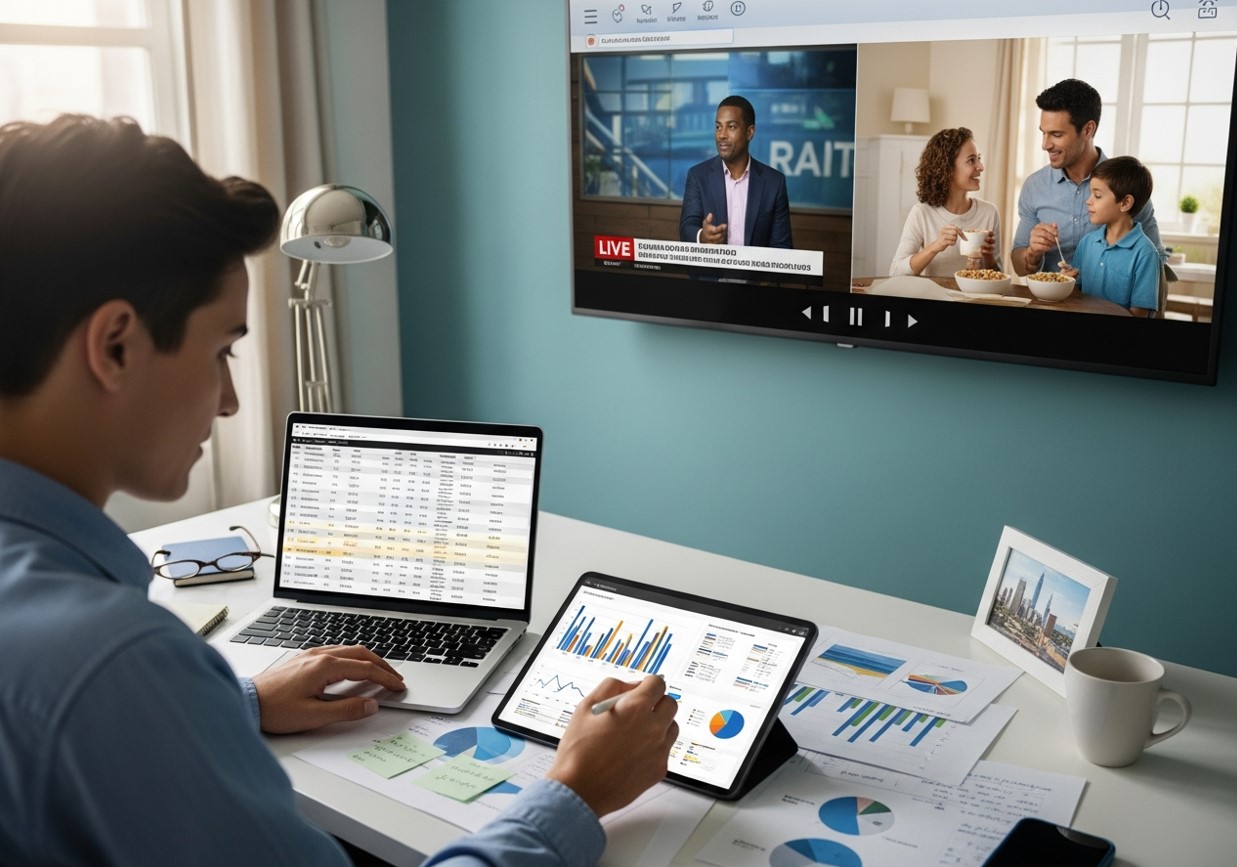
Strategic planning can significantly improve the efficiency of your television advertising investment. Define your target audience, select programs strategically, and mix local, cable, and streaming placements. Negotiate package deals for better value, and track results with promo codes, unique landing pages, or dedicated phone numbers. Learn more from our television advertising sales guide.
Consider mixing different types of television advertising to optimize your budget. Combining local advertising with selective cable or streaming placements can provide broader reach while managing costs. This hybrid approach allows for testing different messages and audiences without committing to expensive network television campaigns.
Negotiate package deals whenever possible. Television advertising sales teams often have flexibility to create custom packages that provide better value than individual spot purchases. Multi-month commitments or off-peak timing can unlock significant discounts.
Track and measure results carefully to optimize future campaigns. Use unique phone numbers, promotional codes, or landing pages to attribute responses directly to television advertising. This data proves campaign effectiveness and informs future budget allocation decisions.
Smart Strategies for Television Advertising Success
Television advertising success requires more than just buying airtime. The most effective campaigns combine strategic timing, compelling creative content, and careful budget management to achieve maximum impact.
Start with clear objectives and realistic budgets. Television advertising works best as part of integrated marketing campaigns that reinforce messages across multiple channels. Consider how television advertising will complement your digital marketing, print advertising, and other promotional activities.
Test different approaches when possible. Local television advertising provides an excellent testing ground for creative concepts, messaging, and timing before expanding to larger markets or more expensive media placements.
Build relationships with television advertising sales representatives who can provide valuable insights about audience trends, programming changes, and promotional opportunities. These relationships often lead to better pricing and more strategic campaign recommendations.
Focus on creative quality regardless of budget size. A compelling thirty-second commercial will outperform a mediocre sixty-second spot every time. Invest in professional production that reflects positively on your brand and resonates with your target audience.
Frequently Asked Questions (FAQ)
How much does a small business need to spend on TV advertising?
Small businesses can start with local television or streaming TV campaigns, which may cost as little as a few hundred to a few thousand dollars per month. Strategic targeting and creative execution ensure that even modest budgets can yield measurable results without the large upfront costs of national network advertising.
Is TV advertising worth it for niche products?
Yes, especially when using cable networks, local television, or addressable TV. These options allow advertisers to reach highly specific demographics with relevant content, providing better ROI than broad, untargeted campaigns.
How do streaming and connected TV compare to traditional TV in terms of cost?
Streaming and CTV generally offer more flexible pricing, often based on cost per thousand impressions (CPM) rather than flat rates. Minimum investment thresholds are lower than traditional network advertising, and advanced analytics allow for precise targeting and measurable engagement, making these platforms increasingly attractive for advertisers of all sizes.
Can television advertising complement digital campaigns?
Absolutely. Television advertising works best as part of an integrated marketing strategy. Coordinating TV campaigns with digital ads, social media promotions, and email marketing amplifies message reach, reinforces brand identity, and encourages multiple touchpoints with consumers, ultimately boosting conversions.
How do I evaluate the success of a television campaign?
Success is measured using a combination of reach, frequency, engagement, brand lift studies, and direct response metrics. Tracking website traffic, promo codes, phone calls, and social engagement following TV spots helps marketers attribute results accurately and optimize future campaigns.