Television advertising remains a powerful medium for building brand awareness, trust, and long-term loyalty. When integrated with digital channels, it ensures Television Advertising Effective strategies that drive engagement and measurable ROI. Creative storytelling, precise targeting, and cross-channel optimization make TV ads relevant in today’s multi-platform landscape.
Does TV still work? – Looking at TV advertising effectiveness
This white paper explores TV advertising effectiveness, examining how television fits within the broader marketing media mix and why it continues to hold a significant role despite the rise of digital channels. We look at TV’s unique strengths, the measurable impact it delivers, and how it adapts to the evolving media landscape. Understanding these factors is essential for marketers asking, “Does TV still work?” in today’s multi-channel environment.
The State of Television Advertising Today

Television ads generate nearly $70 billion annually in the United States, demonstrating that TV remains a critical component of advertising strategies. However, this impressive figure masks a fundamental shift in how audiences consume content. Traditional linear TV viewership has been declining steadily, especially among younger demographics. Adults aged 18–34 now watch just 1.5 hours of live television per day on average, down from 2.8 hours five years ago. For advertisers who have long relied on TV for mass reach, this represents a major shift in media consumption habits.
Despite declining live viewership, television still offers advantages that digital channels cannot fully replicate. The combination of cinematic visuals, storytelling, and emotional resonance creates a level of engagement that is difficult to achieve online. This is why TV advertising effectiveness remains strong for brand-building campaigns, particularly for products and services that benefit from visual demonstration or emotional storytelling. In a fragmented media landscape, TV continues to provide unparalleled scale and shared cultural moments, making it an essential part of an integrated marketing strategy.
Measuring Television Advertising Effectiveness
Brand Awareness and Recognition
Television advertising is very good at building a brand with a large audience. The interplay of sound, picture, and story provides moments you won’t soon forget—until the next ad comes on. Studies repeatedly reveal TV ads deliver 60–80% greater brand recall than digital-only campaigns. This increased awareness is reflected in the consideration that consumers accord while making purchase decisions, especially for high-involvement products like new cars, insurance, and financial services. For more on building brand recognition, see television advertising builds brand awareness
Sales Impact and ROI
You need increasingly sophisticated attribution models to figure out what television exposure is actually driving directly to sales. But, the numbers show that on average TV advertising returns $3–5 in sales for every dollar spent (although this can vary widely by industry and how well the ad is).
The sales response can often be longer lasting than just an immediate response. If you have TV campaigns, that actually creates a “halo effect” which uplifts all your other marketing channels. Branded search queries increase 20–30% with the airing of TV commercials, so TV drives online research and buying habits.
Long-term Brand Building
The real power of television advertising is with long-term brand building as opposed to short-term direct response. The medium allows for an emotional storytelling that a brand personality, values and differentiation cannot be communicated in a product- or feature-focused world of shorter digital content.
When brands stay on TV, they show more resistance to price pressures and enjoy higher customer loyalty. This upper level positioning could also rationalize increased advertising rates due to higher profit margins and higher customer lifetime value.
Television vs. Digital Advertising Effectiveness
Reach and Frequency
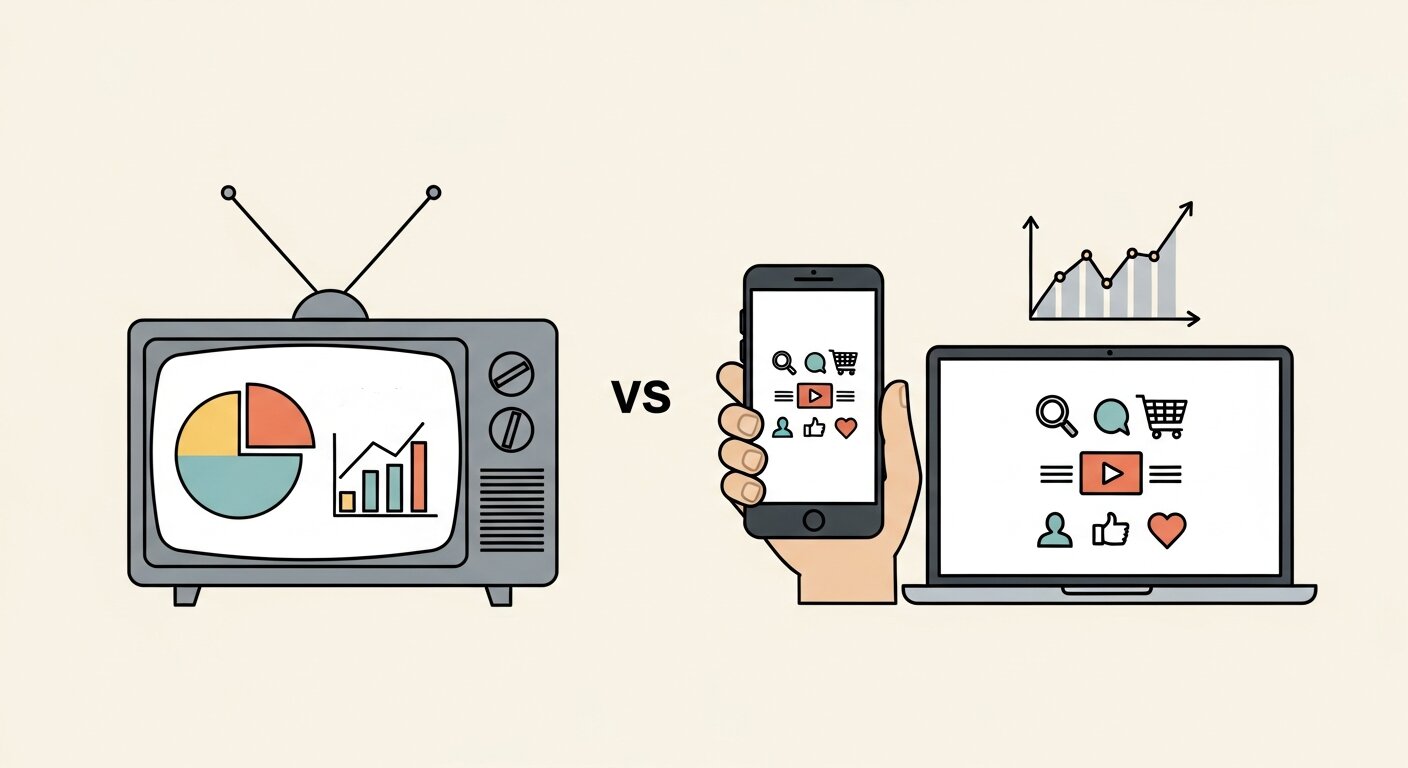
TV advertising still provides the best reach for broad demographic targets. A prime-time commercial can be seen by millions simultaneously, creating shared cultural moments rarely experienced through digital or print media. Digital channels offer precision targeting, but at the cost of smaller audience sizes. Check out the pros and cons of television advertising for more context.
Digital advertising has better targeting and can bring in individual segments more personalized messages. But that precision has a trade-off: targeting so specific that even the most tailored campaigns can only deliver to relatively tiny audiences.
Engagement and Attention
Viewing TV usually entails more attention compared to when consuming digital content. TV commercials will garner more attention, especially during live events or appointment viewing programming.
Ad blockers, banner blindness, and those short attention spans are pitfalls that digital channels can hardly overcome. To the extent that website advertising allows for user interactivity and immediacy of response that other media, such as print or television advertising, do not, there may be own effects of immediacy and user involvement that mitigate the effects of advertising clutter.
Cost Efficiency
The minimum investment is very high for TV advertising, so it’s mostly for big advertisers. The production of high-quality TV commercials typically exceeds $100,000, and media placement can run in the millions for national ad campaigns.
Compared to traditional advertising, it is easier for small companies to participate in digital advertising and adjust budgets. A small business can start a very successful digital campaign on a budget of less than $1,000, allowing trial and error for quick learning.
Read To Make Television Ads More Effective? More Thoughts from the Industry.
Creative Quality and Relevance
Creative execution is paramount to the effectiveness of these television spots. Well, ads that are memorable, funny or touching do hugely better than a generic or crappy one.
Most successful TV ads have some things in common—strong brand positioning, a compelling story, the right emotional tone, and/or some catchy or memorable visual or audio element. These creative elements can be the difference between a campaign that delivers ROI and one that doesn’t move needles for the business.
Audience Targeting and Timing
Thanks to advancements in advanced TV advertising platforms, advertisers can now target demographics, interests, and behaviors more clearly than ever. This growth also helps to compensate for traditional TV’s historic bluntness in audience targeting.
Timing still matters for TV commercials to be effective. Drive greater engagement and recall by promoting during relevant programming or events. When the audiences receive consistent messages across content and ad, the more the campaign will work better.
Integration with Other Channels
Television works best as part of an overall marketing effort. Integrated campaigns on TV, digital and traditional media, are greater than the sum of their parts.
Cross-channel attribution – TV advertising frequently starts customer journeys that are concluded online. This interrelated dynamic makes channel-centric evaluation less insightful than campaign-level evaluation.
Connected TV and Streaming Platforms
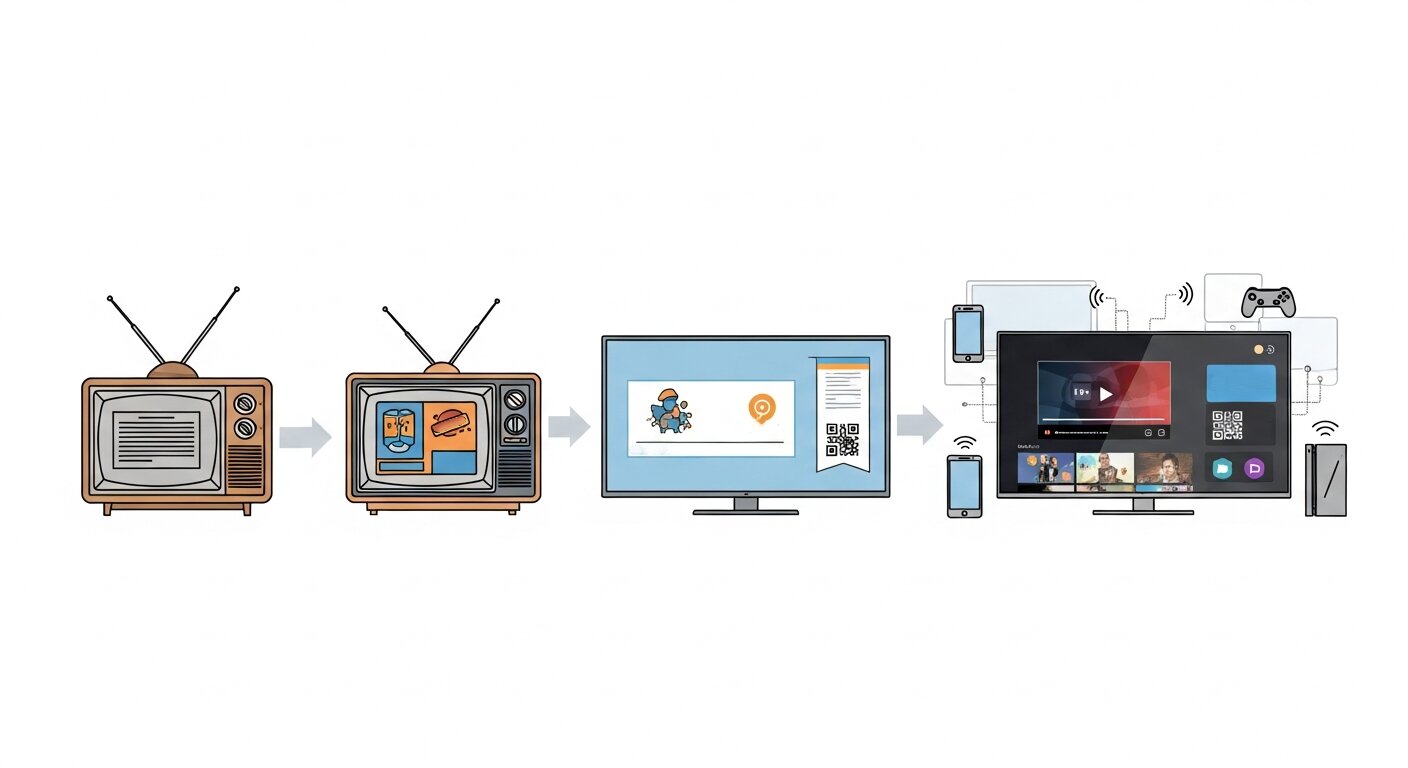
TV’s visual impact meets digital’s precise targeting. CTV/OTT streaming services are disrupting TV advertising, combining the impact of TV with the precision of digital. These platforms allow advertisers to target cord-cutters and still deliver the storytelling of television.
CTV, addressable TV, and interactive platforms allow precise targeting, personalized messaging, and measurable outcomes. For strategies, see addressable TV advertising strategies and interactive TV ads for brand engagement.
Streaming services provide detailed information about who is watching, which the traditional TV universe lacks, allowing more sophisticated audience targeting and a better sense of how a show is performing.
Addressable TV Advertising
Addressable TV technology enables individual homes to receive different adverts while watching the same programmed, offering a significant leap in targeting.
Early results from addressable TV campaigns indicate conversion rates that are 2–3x higher than what we observe in traditional TV advertising, and better targeting could be contributing to much of that.
Interactive TV Features
New interactive TV features allow viewers to interact directly with advertisements using their remote control or mobile device.
Interactive elements include ‘Allow me to buy it,’ information request and social media click-through generating actionable responses for cleaner ROI attribution and optimization.
Industry-Specific Effectiveness

Retail and E-commerce
Especially for promotional periods there are large numbers of visitors to retail websites and shops as a result of a TV spot.
When you pair the broad reach of TV advertising with the conversion tracking of e-commerce, you get some powerful attribution models that show very strong ROI.
Financial Services
Banks, insurance firms and investment banks are currently still spending large sums of money on TV ads because it brought with the ability to establish trust.
Television’s long format is perfect for intricate financial products as they can be explained and demonstrated thoroughly.
Automotive Industry
Car makers are among the most tenacious backers of TV advertising.
Television advertising which demonstrates the features, performance and lifestyle characters of the vehicle fits ideally with the types of interests targeted for automotive marketing.
Measuring and Optimizing Television Advertising
Attribution Models and Analytics
Nowadays, attribution models are developed to reflect the multifaceted influence of TVCs on consumer behavior.
The latest generation of analytics platforms now combines TV exposure data with tracking of digital behaviors, providing more comprehensive views of customer journeys.
A/B Testing and Optimization
Television advertising hasn’t had digital’s quick testing capabilities, but new technology allows more advanced experimentation.
Simply optimizing based on real-time performance is how TV ad effectiveness is maximized.
Future Outlook and Recommendations
The future of TV advertising hinges on how well brands adapt to rapidly changing viewing habits and emerging display technologies. To remain Television Advertising Effective, marketers will need to embrace innovations such as addressable TV, connected TV (CTV), and interactive streaming platforms, which allow for greater audience targeting, personalized messaging, and real-time measurement. The next chapter for television is not just about reach—it is about creating tailored experiences that complement digital channels, ensuring campaigns resonate with viewers on an individual level.
For TV campaigns to maintain their effectiveness, they must be integrated seamlessly into multi-channel strategies, leveraging data-driven insights to optimize timing, creative content, and audience engagement. As measurement capabilities improve and personalization becomes the norm, advertisers can better understand how TV contributes to the overall customer journey, from awareness to conversion. This evolution ensures that television remains not only a powerful branding tool but also a measurable, results-driven medium, demonstrating that Television Advertising Effective strategies are possible in today’s complex media landscape.
Maximizing Television Advertising Impact
Television advertising remains a powerful tool, but to ensure it is consistently Television Advertising Effective, campaigns must be approached strategically and evaluated holistically. TV’s unique combination of wide reach, visual storytelling, and emotional resonance allows brands to leave a lasting impression—something that is particularly valuable in industries such as travel, entertainment, automotive, and financial services. However, reach alone is no longer enough; effectiveness depends on how well campaigns are planned, executed, and integrated with other marketing channels.
To maximize impact, advertisers must target audiences precisely, deliver compelling creative content, and align TV campaigns with broader marketing initiatives. Well-crafted stories, memorable visuals, and emotional messaging help ensure that viewers not only recall the brand but also take action, whether that’s visiting a website, engaging on social media, or making a purchase.
The most effective approach combines the scale and storytelling power of television with the precision, measurement, and interactivity of digital platforms. By synchronizing TV campaigns with online advertising, social media, and mobile marketing, brands can drive stronger engagement, improve ROI, and create measurable outcomes that prove Television Advertising Effective strategies are achievable. This integrated, data-informed approach ensures that TV advertising continues to deliver meaningful results in today’s multi-channel, digital-first environment.
As you evaluate whether television advertising is effective in the digital age, it’s equally important to consider why creative advertising campaigns are vital to your brand’s success in capturing and retaining audience attention.
Frequently Asked Questions (FAQ)
Is Television Advertising Effective in today’s digital age?
Yes, television advertising is still Television Advertising Effective, especially when combined with digital marketing. Its ability to deliver broad reach, emotional storytelling, and brand credibility makes it a valuable tool for long-term growth and consumer trust.
How does TV compare to digital advertising in effectiveness?
TV provides unparalleled mass reach and high attention levels, making it a cornerstone of Television Advertising Effective strategies. Digital ads offer precise targeting and measurable results. The most successful campaigns integrate both, leveraging TV for awareness and digital channels for engagement and conversions.
Can small businesses benefit from television advertising?
While TV can be costly, small businesses can still achieve Television Advertising Effective results through targeted CTV or local TV spots. Integrating TV with digital campaigns ensures even smaller budgets create measurable impact, proving TV can work for businesses of all sizes.
How can brands measure TV advertising effectiveness?
Brands can evaluate Television Advertising Effective campaigns through brand recall studies, sales uplift, website traffic, and cross-channel analytics. Advanced models track TV-driven online searches and conversions, helping marketers optimize campaigns in real-time.
What industries see the most ROI from TV ads?
Industries like automotive, financial services, retail, and consumer electronics often see strong returns. Well-executed campaigns show that Television Advertising Effective strategies deliver both trust and measurable business results.
How does creative quality impact television advertising effectiveness?
Highly creative, emotionally resonant ads are key to Television Advertising Effective campaigns. They significantly boost recall, engagement, and conversions. Poorly executed ads, even with high spend, fail to move audiences. Quality storytelling, strong branding, and emotional connection are essential for success.